How to Brown Sugar (Trini-Style)
If you’ve ever had a good Trini stew chicken or beef, you’ve already tasted this magic trick. Browning sugar is the first step in building that deep, glossy color and flavor our stews are known for. It looks like a simple just melt sugar, right? But there’s a little art to it. In this post, I’ll show you how to brown sugar the Trini way and get it perfect every time.

There was a time when I could never seem to get this part right. Sometimes I’d wait too long, and the sugar would go from perfect to bitter in seconds. Other times, I’d panic and toss in the meat too early, only to end up with a pale stew that looked like it missed the sun entirely. It took a few burnt pots (and a lot of side-eye from my mom) to finally figure out how to brown sugar properly.
What does “browning sugar” mean?
In Caribbean cooking, browning sugar means melting sugar in a pot until it caramelizes and turns a deep brown syrup. This gives your stews that signature color and slightly smoky sweetness that makes a true Trini stew stand out.
You can use bottled browning instead; that’s what you’ll often find in Jamaican brown stew chicken or what we use in our black cake, but it’s not the same process. Bottled browning adds color, not flavor. When you brown sugar yourself, you’re creating caramelized depth that blends with your meat juices and seasoning to form that thick, glossy stew sauce.
Why we use brown sugar for stew
- Color and flavor: It gives stewed meats their signature dark brown hue and slightly sweet, smoky taste.
- Rich gravy base: Once the meat hits the pot, it blends with the caramel to make that silky stew sauce.
- Tradition: It’s a skill passed down through generations, with every Trini cook swearing their way is the way.
What you’ll need
- Brown sugar – Traditionally, we use brown sugar for stewing. I personally like large-grained cane sugar (like Florida Crystals) because it melts evenly and gives a rich flavor.
- Heavy-bottomed pot – Helps distribute the heat evenly so your sugar doesn’t burn too quickly.
- Long spoon – For stirring as the sugar melts and darkens.
- A little oil (optional) – Some people start their browning with a bit of oil to help control the melt and reduce sticking.
- Seasoned meat, ready to go – Have it close by! Once your sugar hits that perfect color, you’ll need to move fast.
Note: You can use white sugar, but it’ll take longer to brown and won’t have that same deep molasses flavor we love in our stews.
How to brown sugar for stewing
- Heat your pot on medium heat. If you’re using oil, add it first and let it warm slightly.
- Add the sugar in an even layer across the bottom of the pot.
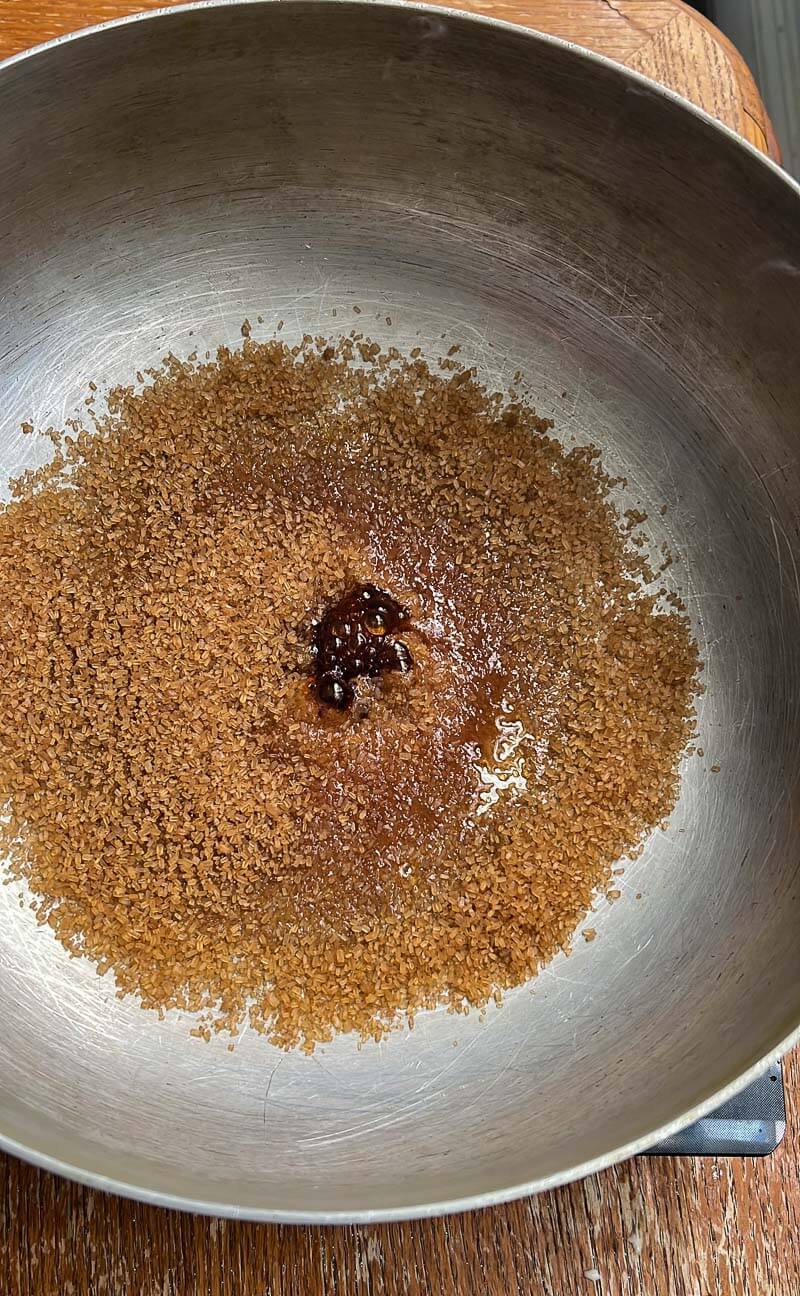
- Let it melt. Don’t stir right away. Once the edges start to melt, gently move the sugar around to help it brown evenly.
- Watch the color – it’ll go from light brown to amber to dark brown. That’s your cue.
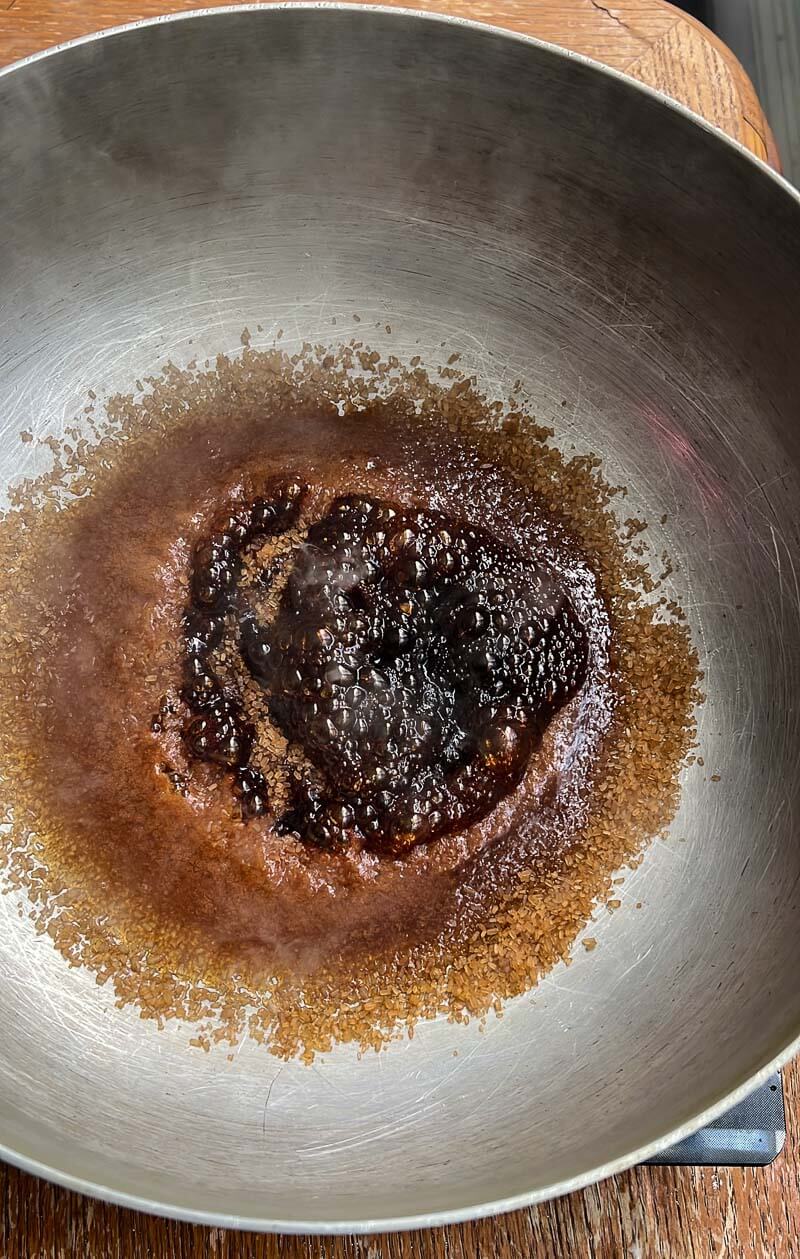
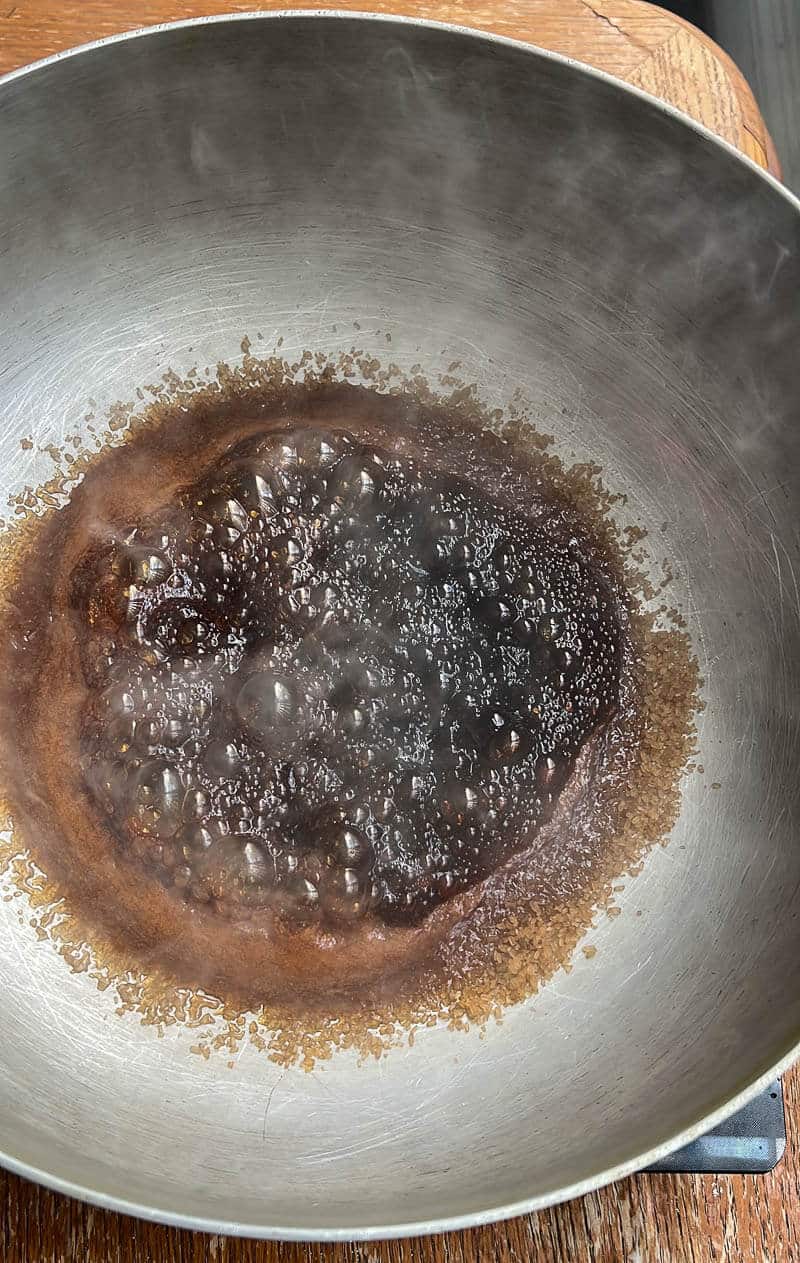
- When it starts to bubble and foam, it’s ready. Move quickly here.
- Add your seasoned meat right away to stop the sugar from burning, stirring to coat the meat evenly.
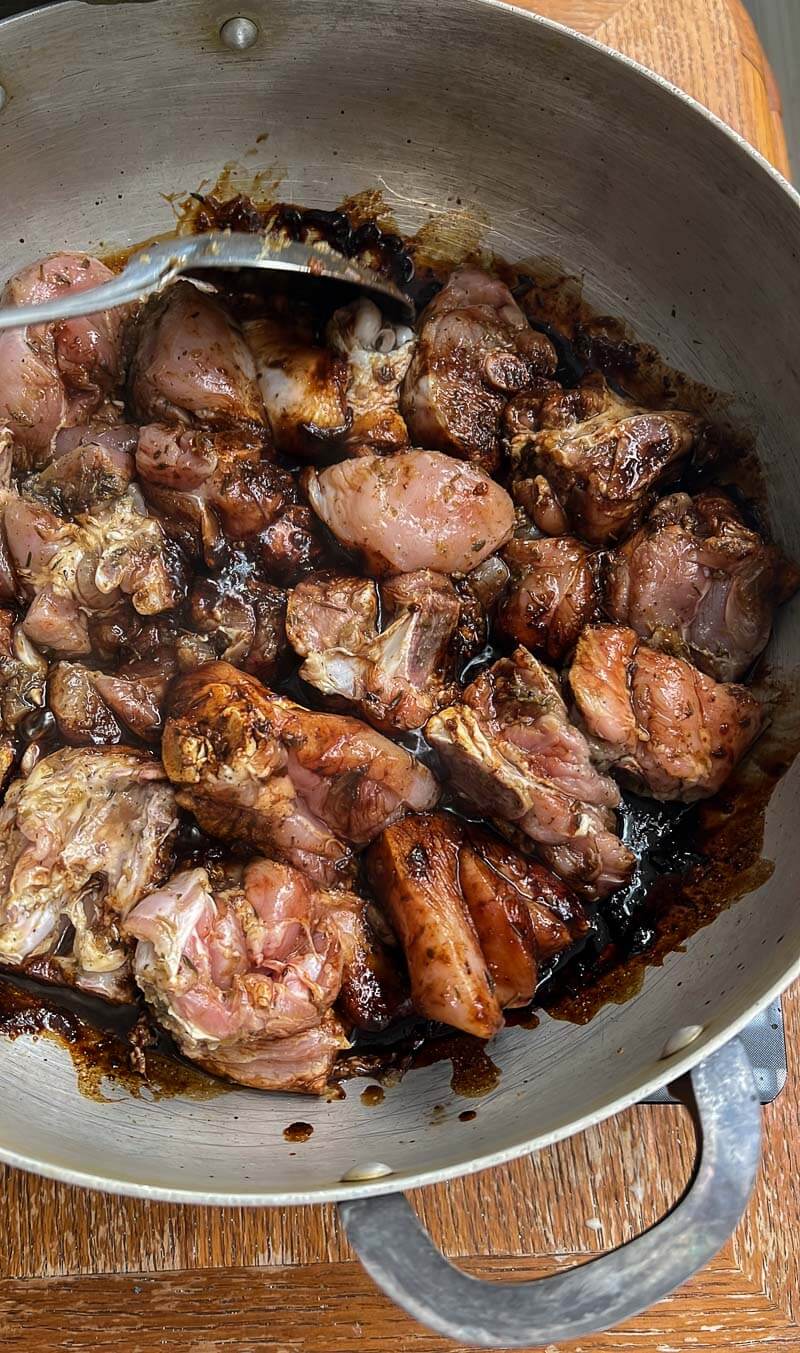
Tip: Keep your heat moderate. Too high and it’ll burn before it browns. Too low and it’ll clump instead of melt.
Common mistakes (and how to fix them)
- Burnt sugar: Too dark or smells bitter? Start over. Once it burns, that taste won’t disappear.
- Crystallized sugar: You stirred too early or used a wet spoon. Wipe and dry utensils before you start.
- Too light: Your stew won’t get that deep brown color. Let it darken a bit longer next time. Already added the meat to the light color, add a tups of bottled browning at a time to the liquid. It helps a little.
- Too dark but not burnt: Quickly add a splash of water or your meat to slow down the cooking.
Tips for perfect browning every time
- Don’t walk away. Sugar goes from perfect to burnt in seconds. Almost like frying plantains.
- A heavy pot gives you steady heat and better control.
- Start with brown sugar for faster melting and richer flavor.
- Each type of meat can handle different depths of browning. Chicken needs less than beef or pork.
- Practice with just sugar and water first if you’re nervous. You’ll get the feel for it.
FAQs
Yes! Many cooks add a touch of oil to help the sugar melt more evenly and reduce sticking.
Not really. It’s best done fresh — once the sugar cools, it hardens.
No. Bottled browning is made for color, not caramelization. Browning sugar yourself builds flavor, not just looks.
You can, but it takes longer, and the flavor won’t be as rich.
Bringing it all together
Once you master this, you’ll never be afraid of the “brown your sugar” step again. It’s the base of some of our best dishes and a little Trini cooking pride in every pot.
Now that you’ve got the technique down, put it to work in these classic recipes: