
Easy Guava Jam Recipe (No Pectin, Caribbean Style)
This easy guava jam recipe is the one I grew up making in Trinidad. Made with just 3 main ingredients and no added pectin, it’s packed with sweet tropical flavor in every spoonful. I recommend adding cinnamon and bay leaf for extra flavor.
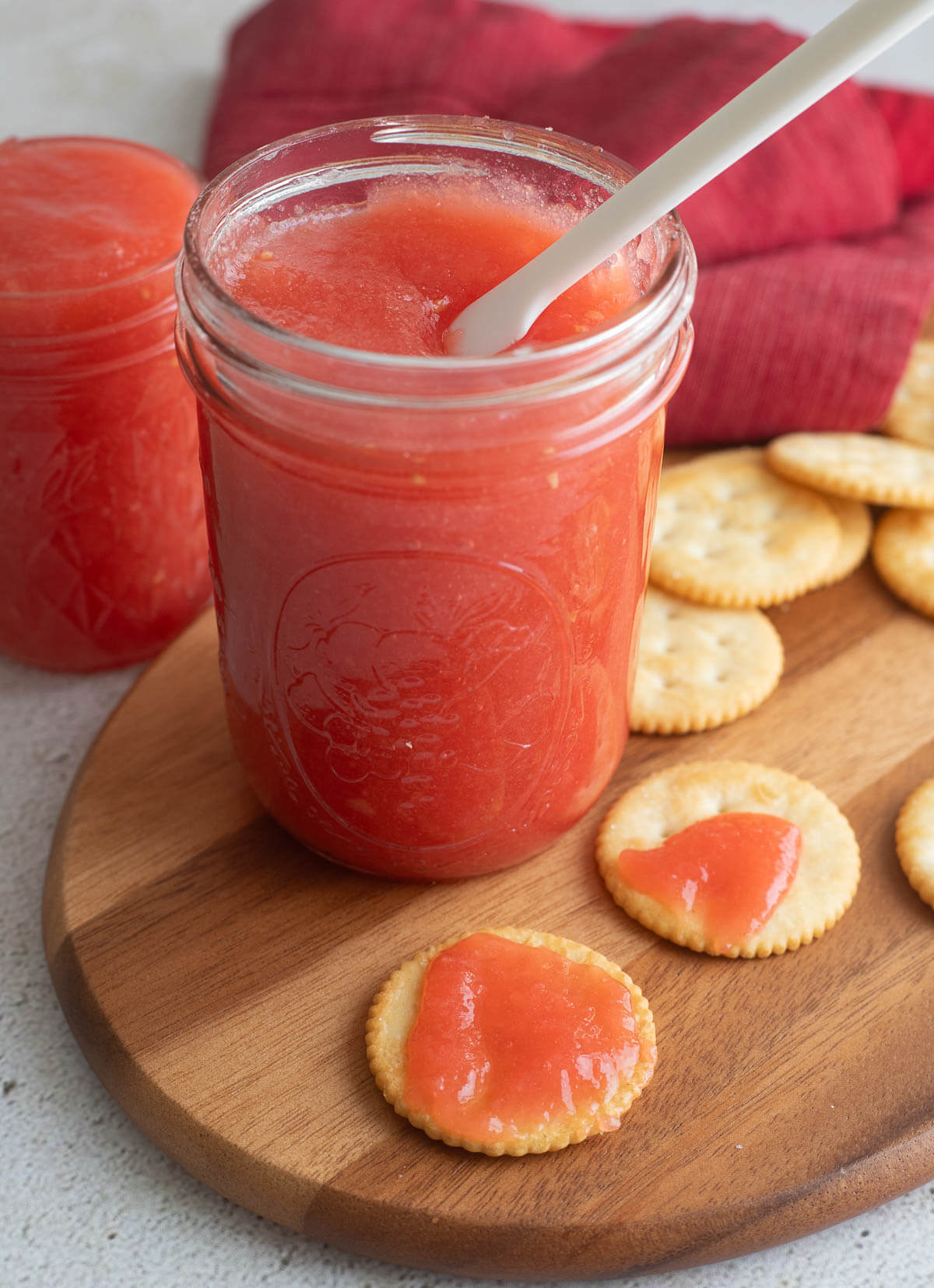
Growing up in Trinidad and Tobago, guava was everywhere. We had trees in our yard that produced more fruit than we knew what to do with. That meant plenty of guava juice, and even more guava jam.
At one point, I didn’t even want to see another guava. But of course, the love came back, especially when I learned how to turn those fruits into a jam that’s thick, luscious, and just the right balance of sweet and tangy.
Why You’ll Love This Recipe
This homemade guava jam is simple, flexible, and perfect for both beginners and experienced jam makers.
- Just 3 main ingredients. All you need are fresh guavas, sugar, and lime.
- No added pectin. Guavas naturally contain pectin, which helps the jam thicken.
- Smooth and spreadable. Perfect for toast, pastries, and desserts.
- Easy to customize. Adjust the sweetness and texture to your liking, and add cinnamon and bay leaf for extra flavor.
What is guava jam?
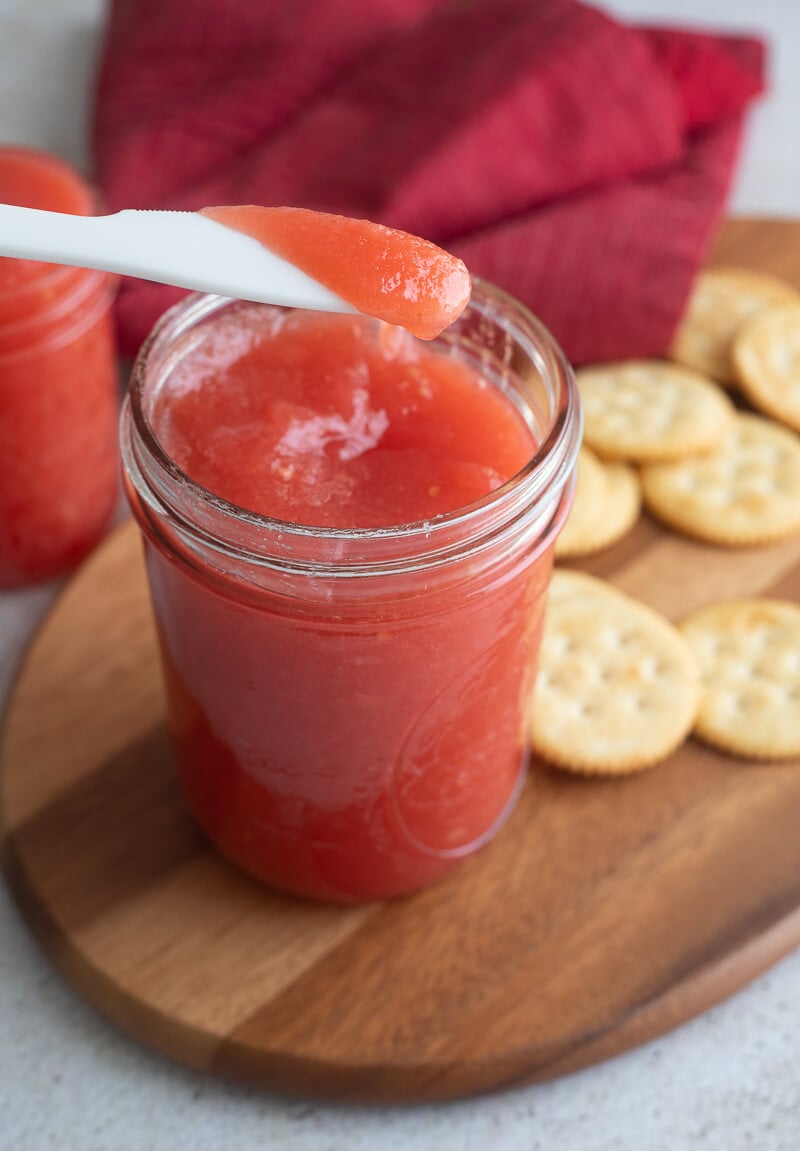
Guava jam is a sweet fruit spread made by simmering guava pulp with sugar and lime juice until thickened. The result is a smooth, glossy jam with a soft pink hue and bright tropical flavor. It’s commonly enjoyed on toast, with cheese, or in desserts and glazes.
This guava jam recipe is made without added pectin. It relies on the fruit’s natural pectin and thickens as it cooks and cools.
How to Make Guava Jam (Step-by-step recipe)
Key ingredients and their roles
You only need three main ingredients to make this guava jam, but I recommend adding cinnamon and bay leaf for extra flavor.
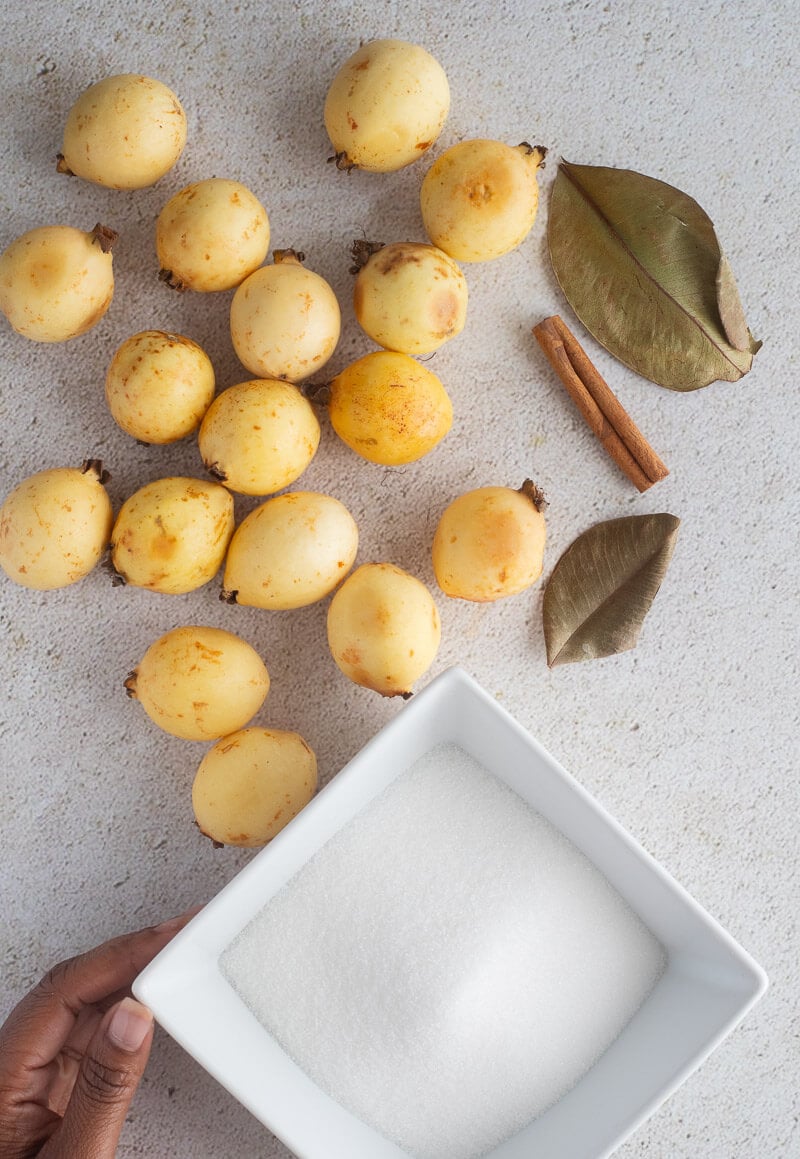
- Fresh guavas (or frozen guava pulp) – Ripe guavas provide the fruit flavor and natural pectin that helps the jam thicken. I used yellow guavas.
- Sugar – Granulated sugar adds sweetness and helps the jam thicken. Brown sugar can be used, but it will give the jam a darker color.
- Lime juice – Balances the sweetness and adds acidity.
- Bay leaf and cinnamon stick (optional) – Add warmth and depth to the jam.
- Food coloring (optional) – Adds a pink color, especially when using yellow or white guavas
Instructions
Making guava jam at home is a simple and satisfying process that allows you to customize the level of sweetness and texture to your liking using simple ingredients.
- Prep the guavas: Wash the guavas thoroughly. Trim the tops and bottoms, then cut them into smaller pieces.
- Cook down the guavas: Add the chopped guavas to a deep pot with enough water to just cover the fruit. Add the bay leaves and cinnamon stick, if using. Bring to a boil and cook until the guavas soften and begin to break down.
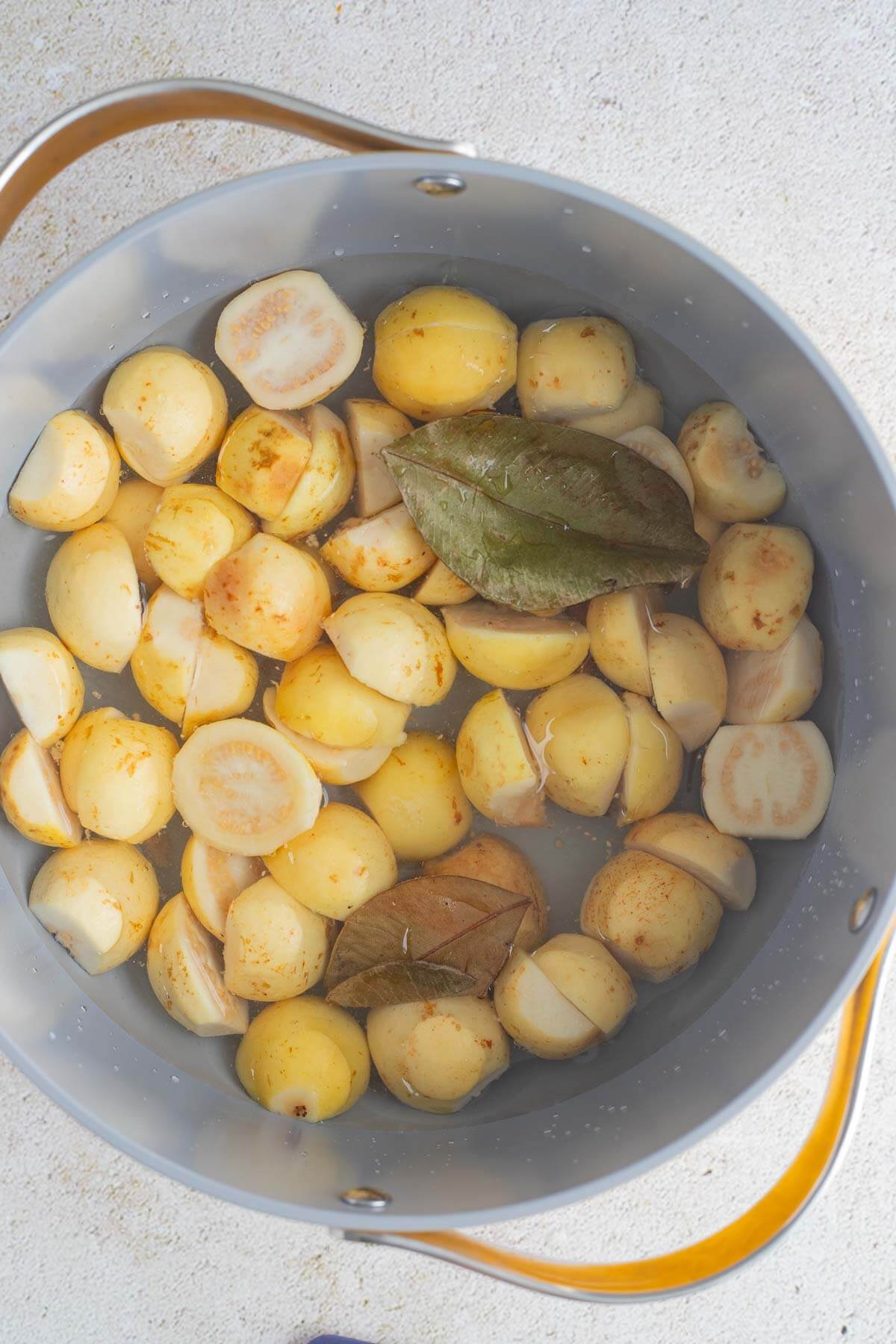
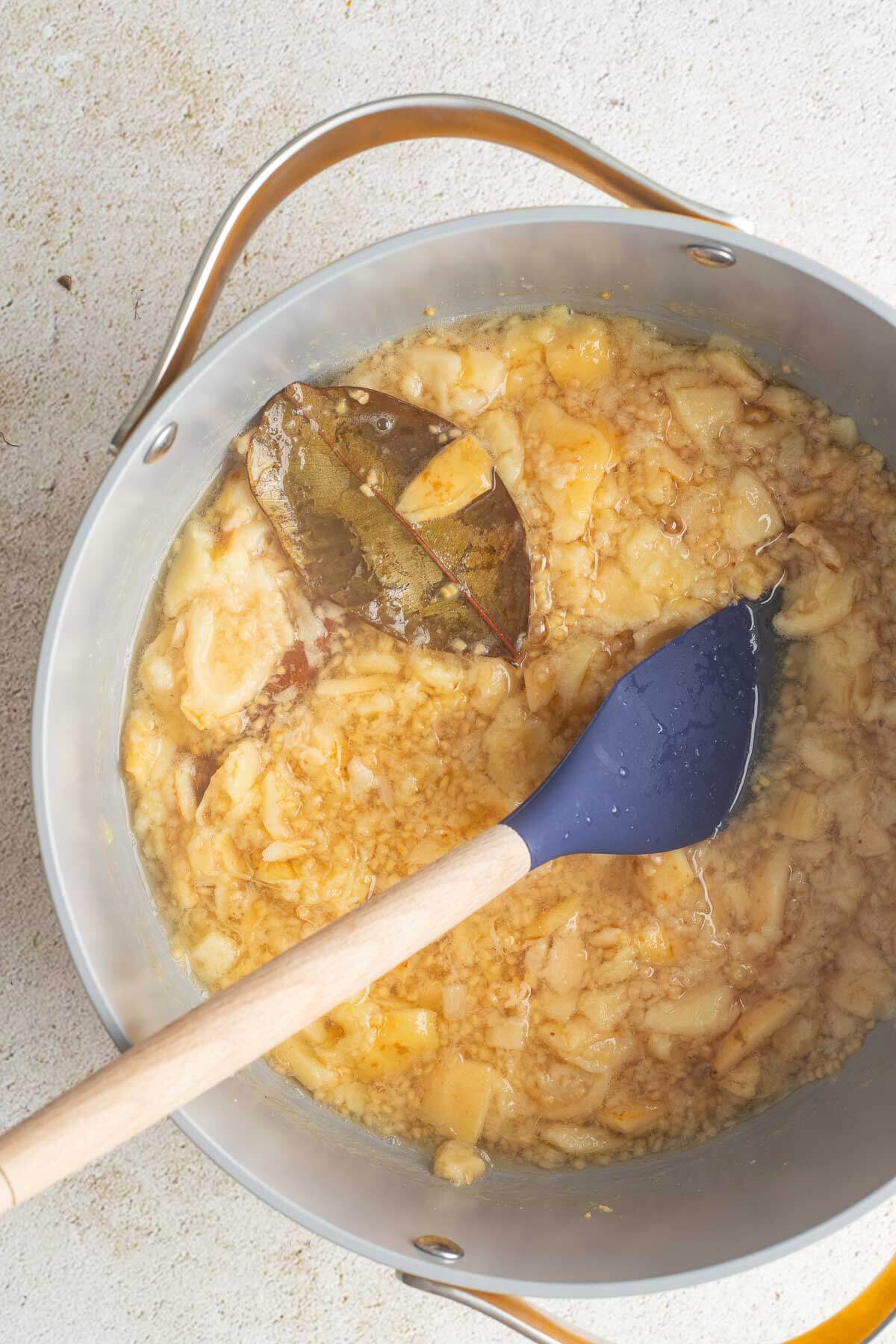
- Strain the pulp: Remove the pot from the heat and let it cool slightly. Discard the bay leaves and cinnamon stick. Working in batches, press the softened guavas through a strainer using a spoon or spatula to separate the pulp from the seeds.

- Simmer with sugar & lime: Transfer the strained guava pulp to a clean pot. Add the sugar and lime juice, then cook over medium heat, stirring until the sugar dissolves. Reduce the heat to low and allow the mixture to simmer, stirring occasionally to prevent sticking.
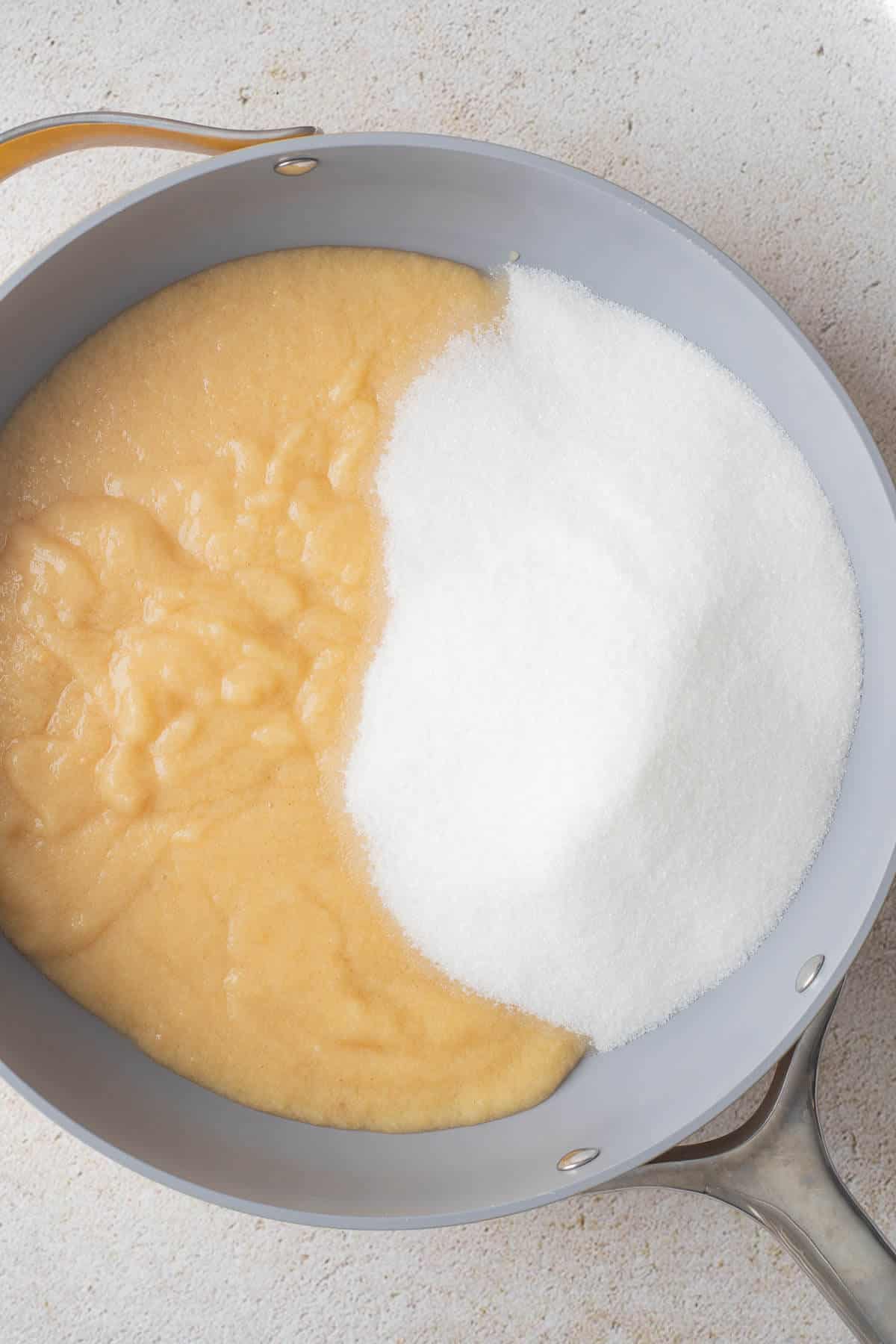
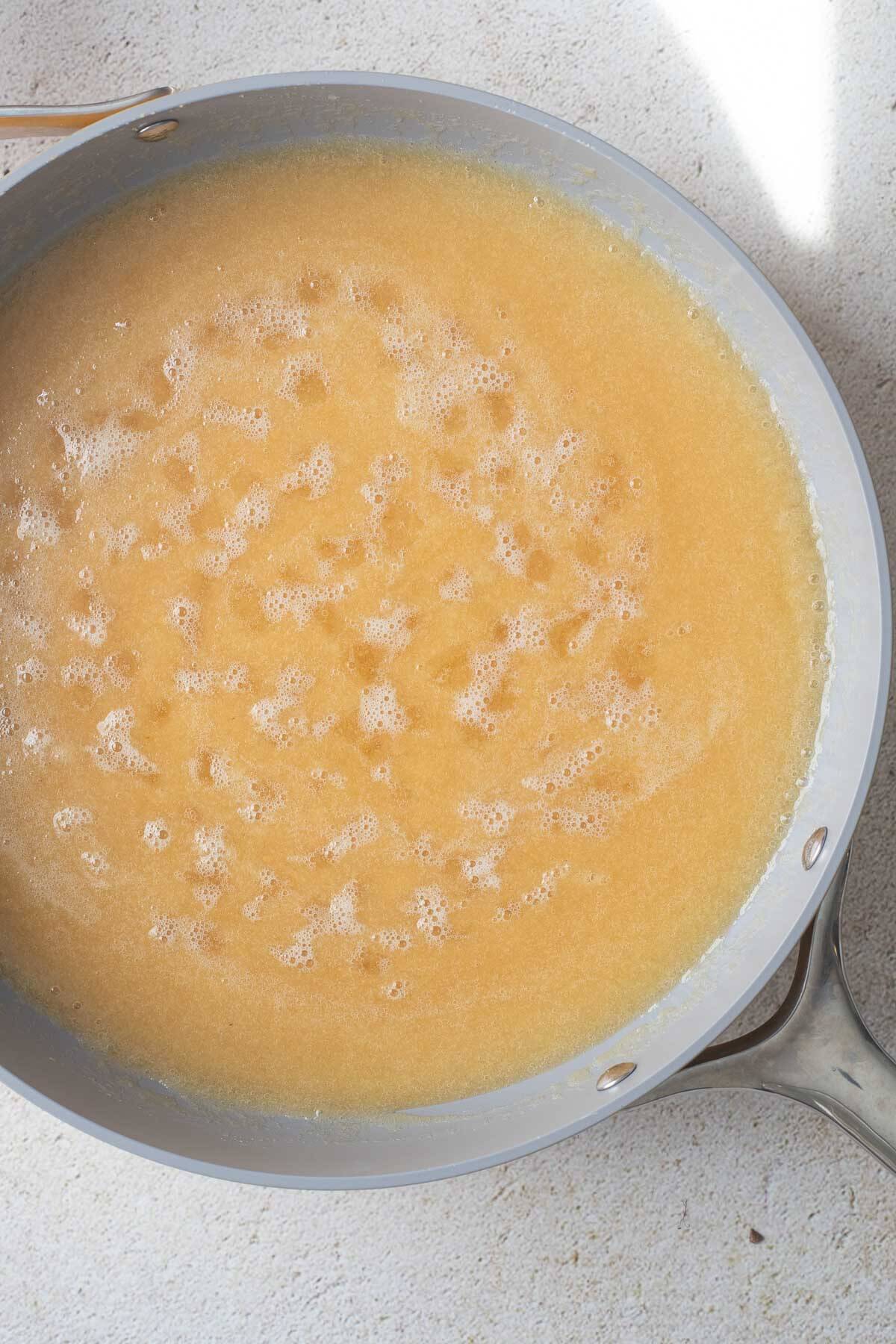
- Cook until thickened: Simmer for approximately 20–40 minutes, stirring more frequently as the jam thickens. The mixture should become noticeably thicker and move more slowly when stirred. Remember that the jam will thicken further as it cools. If you’re unsure whether it’s ready, place a small spoonful on a chilled plate, let it cool briefly, and gently push it with your finger. If the surface wrinkles and doesn’t immediately run back together, it’s ready. Add a drop or two of food coloring if desired.

- Bottle the jam: Carefully spoon the hot jam into clean, heat-safe jars, leaving a little room at the top. Allow to cool, then cover and refrigerate. This recipe is intended for refrigerator storage, not shelf-stable canning.
Tips for making guava jam
- Taste your guavas first. Their sweetness can vary, so taste the fruit before deciding whether to adjust the sugar. Remember that reducing sugar can affect how the jam sets.
- For a smoother jam, blend the strained pulp before adding the sugar and lime juice.
- For more texture, leave the strained pulp as it is rather than blending it.
- Watch the heat. Stir more frequently as the jam thickens to prevent it from sticking or scorching.
- Try different spices. Ginger, nutmeg, cardamom, or a little lemon zest can add another layer of flavor.
- Don’t overcook it. Guava jam continues to thicken as it cools, so don’t wait until it’s extremely thick in the pot.
How to store guava jam
- Refrigerator: Allow the jam to cool, then store it in clean, airtight jars in the refrigerator. For best quality, use within 3 weeks.
- Freezer: Transfer the cooled jam to freezer-safe containers, leaving room for expansion. Freeze for up to 6 months for best quality. Thaw overnight in the refrigerator before using.
- Pantry: This recipe is not intended for shelf-stable storage. Keep the jam refrigerated or frozen unless you’re following a separately tested canning recipe.
Food safety tip: Always use a clean spoon when serving your jam. If you notice mold, an unusual smell, or other signs of spoilage, discard the entire jar.
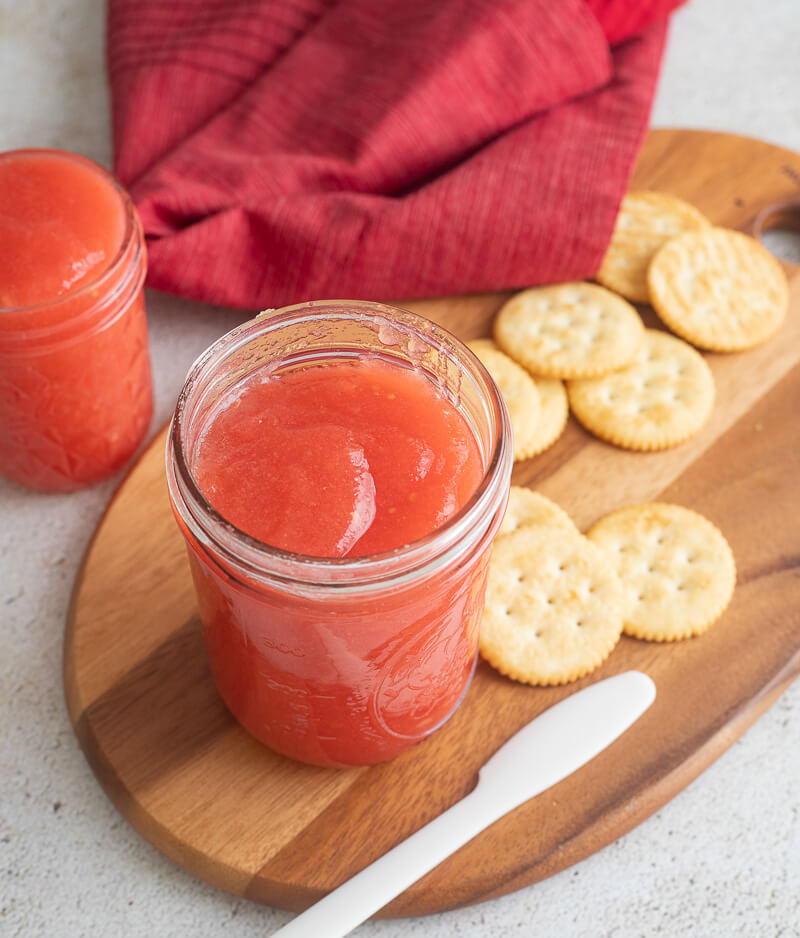
Ways to use this delicious jam
- Spread on toast, crackers, or coconut bake biscuits.
- Pair with cream cheese or brie.
- Use as a filling for pastries, croissants, or muffins.
- Brush onto grilled meats or BBQ wings as a sweet glaze.
- Swirl into yogurt or oatmeal.
- Spoon over cheesecake or ice cream.
More Caribbean condiments to try
Frequently Asked Questions
You can use slightly underripe guavas, but they’ll be firmer and more tart than ripe ones. They may take longer to soften, and you may need to adjust the sweetness. For the best flavor, I recommend ripe guavas.
Check Caribbean, Latin American, or Asian markets for fresh guavas. Frozen guava pulp is also a good alternative. I’ve used frozen, seedless guava pulp to make this jam, which saves time since you can skip cooking and straining the whole fruit.
No. Guavas naturally contain pectin, which helps the jam thicken as it cooks and cools.
Recipe
Guava Jam Recipe
Video
Ingredients
Method
- Wash the guavas thoroughly. Trim the tops and bottoms, then cut them into smaller pieces.
- Add the chopped guavas to a deep pot with enough water to reach the same level as the fruit.
- Add the bay leaves and cinnamon stick, if using. Bring to a boil and cook until the guavas soften and begin to break down.
- Remove from the heat and allow to cool slightly. Discard the bay leaves and cinnamon stick.
- Place a strainer over a large bowl. Working in batches, press the softened guavas through the strainer using a spoon or spatula to separate the pulp from the seeds.
- Transfer the guava puree to a nonstick pot over medium heat. Add the sugar and stir until completely dissolved.
- Add the lime juice and stir to combine. Once the mixture begins bubbling, reduce the heat to low.
- Simmer for approximately 20–40 minutes, stirring regularly and more frequently as the jam thickens. The jam is ready when it becomes noticeably thicker and no longer runs freely off the spoon. It will continue to thicken as it cools.
- If desired, add 1–2 drops of food coloring and stir to combine.
- Carefully transfer the jam into clean, heat-safe jars. Allow to cool, then cover and refrigerate.
Nutrition
Notes
Recipe Printed From ThisBagoGirl.com



Oh this was easier than I thought. I love that it’s simple ingredients too.