Jamaican Jerk Seasoning Paste
This homemade Jamaican jerk seasoning paste blends Scotch bonnet peppers, pimento, fresh thyme, scallions, garlic, and spices into a bold wet seasoning you can use on chicken, seafood, vegetables, and more.
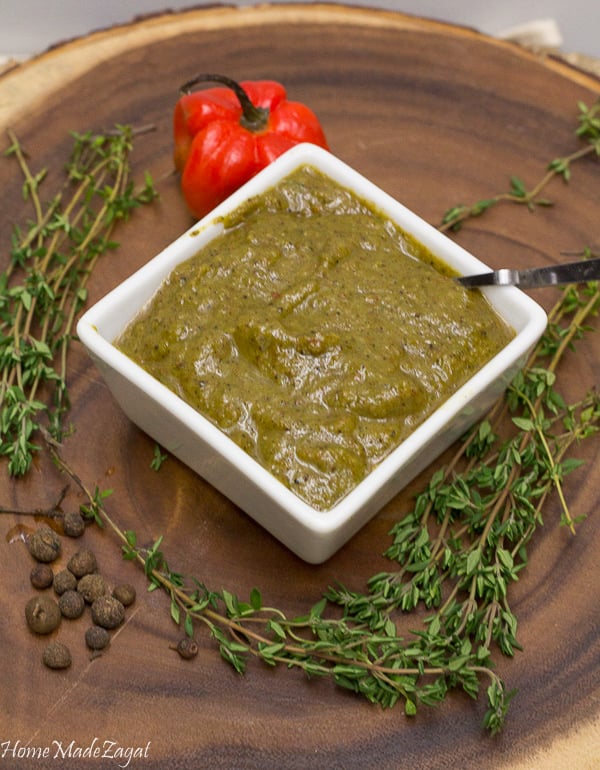
Making your own lets you adjust the heat and consistency to suit what you’re cooking. Use it as a jerk marinade, brush it onto food before grilling or baking, or add it whenever you want that unmistakable jerk flavor.
What is Jamaican jerk seasoning?
Jamaican jerk seasoning is a blend of herbs, spices, peppers, and aromatics used to give jerk dishes their distinctive spicy, savory flavor. Scotch bonnet peppers, pimento (allspice), and thyme are some of the ingredients most closely associated with the seasoning.
Jerk seasoning can be made as a dry spice blend or as a wet paste like this recipe. The paste combines the spices with fresh ingredients and liquid, making it easy to coat chicken, seafood, and other foods before cooking.
Wet vs. dry jerk seasoning
Jerk seasoning comes in both wet and dry forms. A jerk seasoning paste combines dried spices with fresh ingredients like Scotch bonnet peppers, scallions, thyme, and garlic, while a dry jerk seasoning is made with dried herbs and spices.
The paste works especially well as a marinade because it coats the food and gives the fresh aromatics time to season it. A dry blend is handy when you want a quick rub or don’t need the added moisture of a wet seasoning.
Ingredients you’ll need
This jerk seasoning paste uses a combination of fresh aromatics, peppers, herbs, and warm spices to build its flavor.
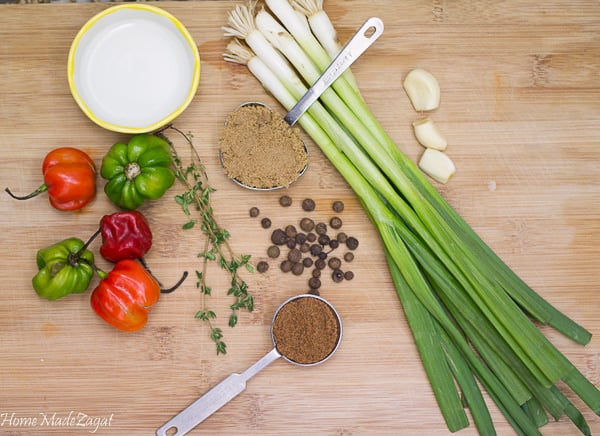
- Scotch bonnet peppers: Bring the signature heat along with a slightly fruity flavor. Habanero peppers are the closest substitute if you can’t find Scotch bonnets.
- Pimento (allspice): One of the key flavors in Jamaican jerk seasoning. We’re using ground allspice here.
- Scallions, garlic, and fresh thyme: These fresh aromatics form the base of the paste.
- Nutmeg and black pepper: Add warmth and another layer of spice.
- Brown sugar: Adds a little sweetness to balance the heat and spices.
- Vinegar: Adds acidity and helps loosen the mixture as it blends.
- Salt: Seasons the paste and brings the other flavors together.
- Oil: Use a little as needed to help everything blend into a paste.
How to make jerk seasoning paste
- Add the ingredients. Add everything except the oil to a blender or food processor.
- Blend the seasoning. Blend until the ingredients are well combined and you have a thick paste.
- Adjust the consistency. If the mixture is too thick or isn’t blending easily, add a little oil at a time until it reaches the consistency you want.
How to use it
Use jerk seasoning paste anywhere you want to add that spicy, aromatic jerk flavor. It works especially well as a marinade, but you can also brush it onto food before grilling, roasting, or baking.
Some of my favorite ways to use it include:
- Chicken: Use it for jerk chicken, wings, thighs, or pulled chicken. I usually start with about 1 tablespoon of paste per pound of chicken. If you’re short on time, marinate for at least 20 minutes. Letting it sit longer will give the seasoning more time to work into the chicken.
- Seafood: Try it with shrimp, fish, lobster, or crab.
- Vegetables: Toss a little with vegetables before roasting or grilling.
- Other dishes: Add some to sauces, stews, or even pasta when you want to bring in jerk flavor.
You can see it in action in my jerk shrimp tacos, oven baked jerk chicken, pulled jerk chicken sandwiches, and baked jerk crab legs.
Tips for the best results
- Adjust the heat: Use fewer Scotch bonnet peppers for a milder paste. You can also remove the seeds and membrane to reduce some of the heat.
- Use fresh ingredients: Fresh thyme, scallions, garlic, and peppers give the paste its fresh aromatic flavor.
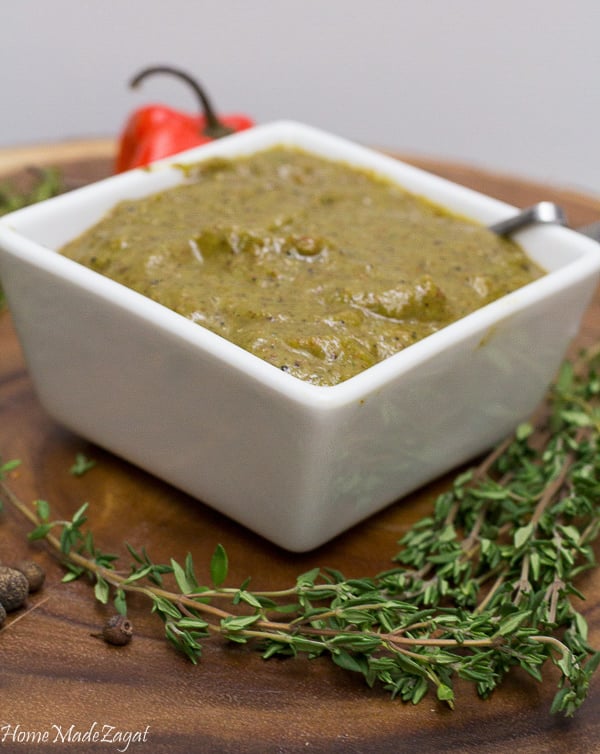
- Adjust the texture: If the mixture is too thick to blend smoothly, add a little oil at a time. You want a thick paste, not a runny sauce.
- Wear gloves: Scotch bonnet peppers are no joke. Wear gloves while handling them and avoid touching your face or eyes.
- Taste and adjust: Once blended, taste the seasoning and adjust the salt or other seasonings to suit your preference.
Storage and freezing
Store homemade jerk seasoning paste in a clean, airtight container in the refrigerator. I usually keep mine for up to about a month, always using a clean utensil when taking some out.
For longer storage, freeze the paste in small portions so you can thaw only what you need. An ice cube tray works well for portioning. Once frozen, transfer the portions to a freezer-safe container or bag.
If you notice any changes in smell or appearance, or other signs of spoilage, toss it.
Frequently asked questions
Not exactly. Jerk seasoning can refer to either a dry spice blend or a wet seasoning paste. This jerk paste can be used as a marinade by coating your food with it and letting it sit before cooking.
Yes. Habanero peppers are a good substitute when Scotch bonnets aren’t available. The flavor isn’t exactly the same, but you’ll still get plenty of fruity heat.
Scotch bonnet peppers make jerk seasoning naturally spicy, but you can control some of the heat by using fewer peppers or removing the seeds and membrane.
Yes. Freeze it in small portions so you can thaw only what you need. Ice cube trays are handy for portioning the paste before transferring the frozen portions to a freezer-safe container.
If you’re short on time, about 20 minutes works. Letting the chicken marinate longer gives the seasoning more time to work into the meat and develop more flavor.
More Jamaican recipes I love
If you love Jamaican food, here are more recipes to explore:
Recipe
Jamaican Jerk Seasoning Paste
Ingredients
Method
- Add all the ingredients except the olive oil to a blender or food processor.
- Blend until well combined and a thick paste forms.
- If needed, add the olive oil a little at a time until the paste reaches your desired consistency.
- Transfer to a clean, airtight container and store in the refrigerator.
Nutrition
Notes
Adjust the number of Scotch bonnet peppers and how much of the seeds and membrane you remove depending on your heat preference.
Wear gloves when handling Scotch bonnet peppers, and avoid touching your face or eyes.
If the paste is too spicy, add a few squeezes of fresh orange juice to help mellow the heat.
Store refrigerated for up to about one month, using a clean utensil each time.
Recipe Printed From ThisBagoGirl.com