Trinidad Tamarind Balls (Tambran Balls)
Tamarind balls are a classic Caribbean treat made with tangy tamarind pulp, sugar, and just enough pepper and salt to create the perfect balance of sweet, sour, salty, and spicy flavors. Known as tambran balls in Trinidad and Tobago, they’re chewy, sticky, and the kind of snack that’s almost impossible to stop eating after just one.
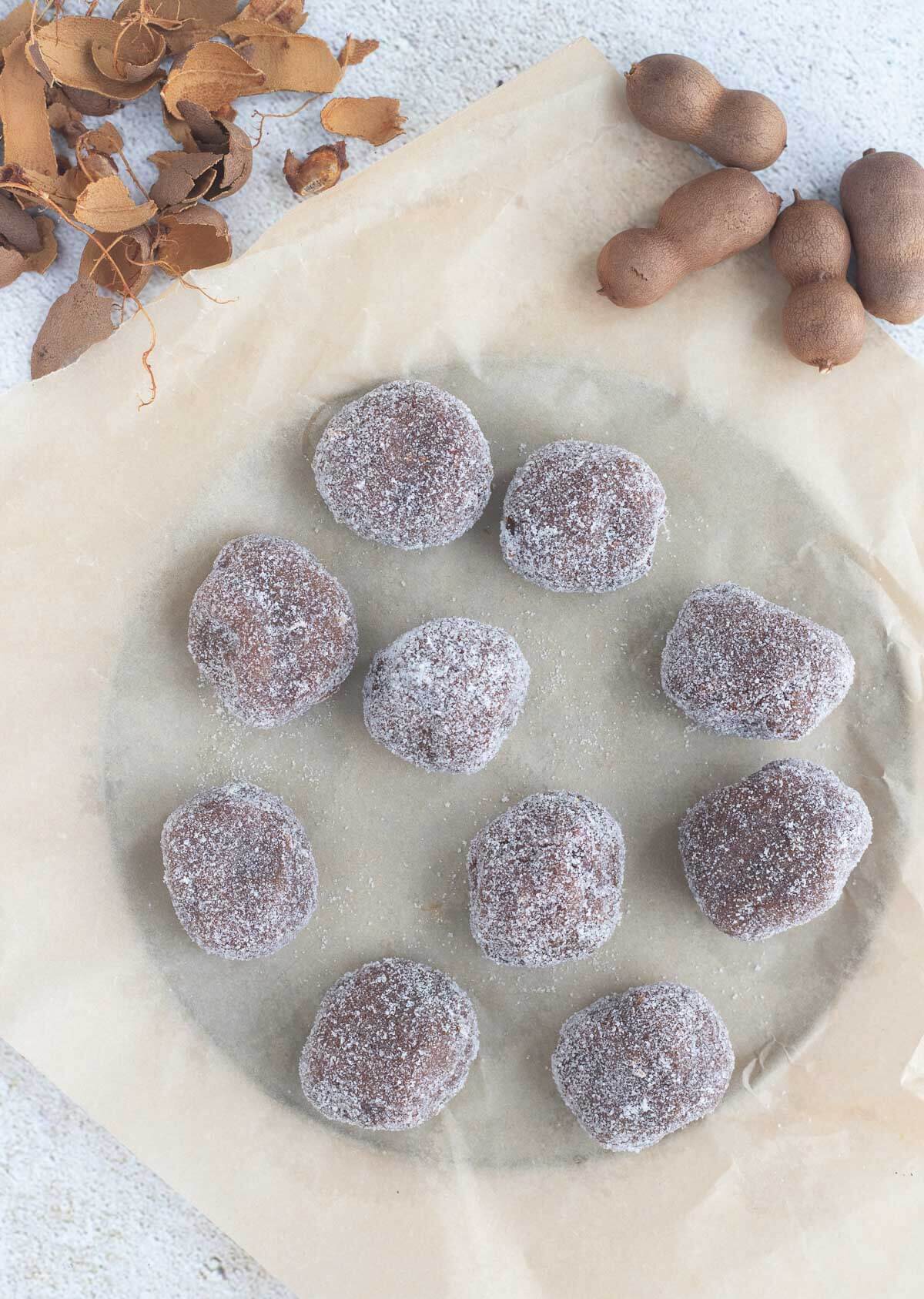
Growing up in Tobago, tamarind balls (or tambran balls, as we call them) were one of those treats you could find almost anywhere. They sat in jars in roadside parlors, school canteens, and airport gift shops alongside bene balls, sugar cake, paw paw balls, and fudge. While every family has their own twist, this homemade version captures that same bold flavor with just a handful of simple ingredients.
If you’ve always wanted to make your own, I’ll show you exactly how to make tamarind balls at home, step by step.
Quick Answer: Tamarind balls are a popular Caribbean candy made by mixing tamarind pulp with sugar and seasonings before rolling the mixture into bite-sized balls. Depending on the island or family recipe, they may be sweet, sour, salty, or spicy. In Trinidad and Tobago, they’re often called tambran balls and commonly include Scotch bonnet pepper for an extra kick.
What are tamarind balls?
Tamarind balls are a traditional Caribbean candy made from tamarind pulp mixed with sugar and seasonings, then rolled into bite-sized balls. Depending on the island or even the family making them, they can be sweet, sour, salty, spicy, or a combination of all four.
In Trinidad and Tobago, they’re often called tambran balls and are commonly made with brown sugar and Scotch bonnet pepper. Some versions also include garlic or ginger for another layer of flavor.
While tamarind balls are enjoyed throughout the Caribbean, every island has its own twist. This recipe is the Trinidad and Tobago version I grew up eating in Tobago.
If you enjoy the bold sweet-and-sour flavor of tamarind, you’ll also love my homemade tamarind juice, a refreshing Caribbean drink made from the same fruit.
What is tamarind?
Tamarind, known as tambran in Trinidad and Tobago, is a tropical fruit that originated in Africa but is now widely grown throughout the Caribbean, India, and many other tropical regions. It grows inside brown, pod-like shells on the tamarind tree (Tamarindus indica), with a sticky pulp surrounding large seeds.
The pulp has a bold sweet-tart flavor and is used to make drinks, sauces, chutneys, marinades, candies, and, of course, tamarind balls. Depending on how ripe the fruit is, it can be quite sour or naturally sweeter, making it perfect for balancing with sugar in this recipe.
How to make tamarind balls
Ingredient notes
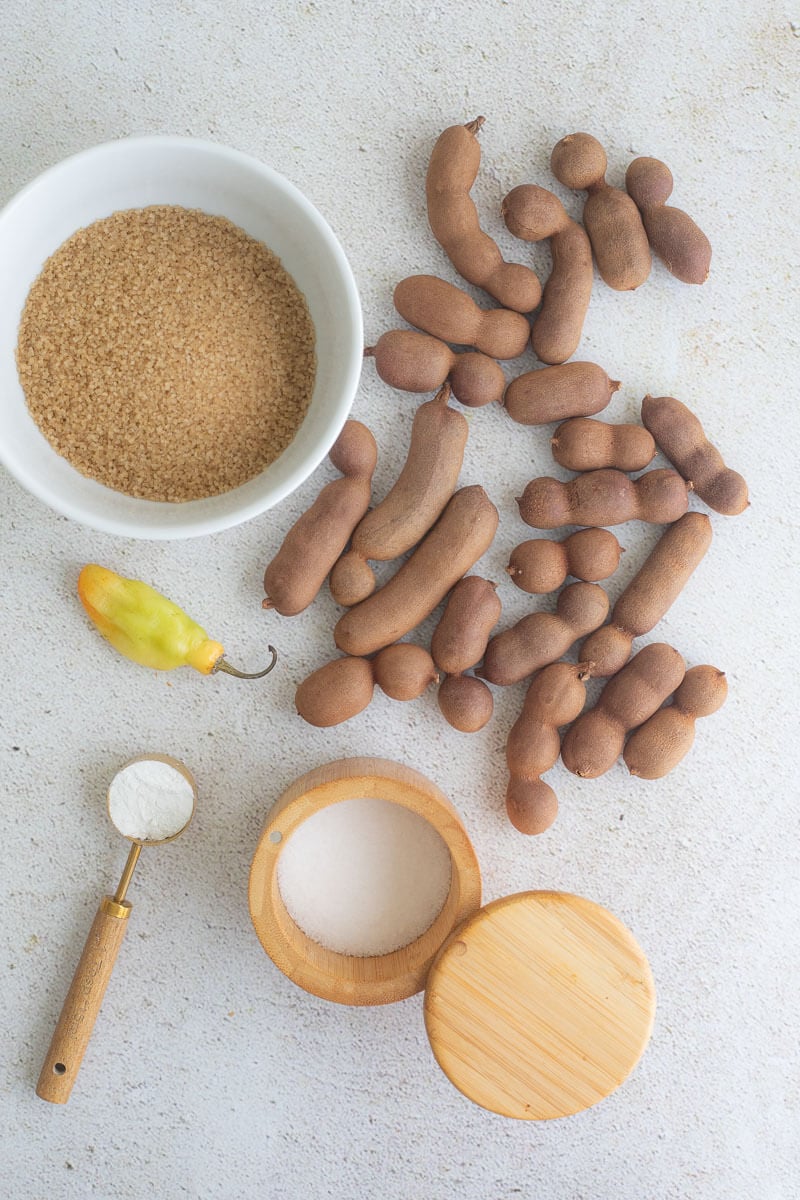
- Tamarind pulp. Start with fresh tamarind pods by removing the brittle shells and stringy membranes to reveal the sticky pulp inside. You can use either sour or sweet tamarind, but if using sweet tamarind, you may not need as much sugar.
- Brown sugar. Brown sugar gives tamarind balls their deep caramel-like sweetness and balances the naturally tart tamarind. I like using demerara sugar for the filling because it adds a little texture and rich flavor.
- Granulated sugar. I use white sugar for coating the finished tamarind balls. It gives them the classic crunchy sugar coating that’s common on Caribbean tamarind balls.
- Baking soda. This helps soften the tamarind pulp, making it easier to work the pulp away from the seeds and mix everything. It also takes the edge off some of the tamarind’s tartness.
- Salt (optional). Just a pinch helps balance the sweetness and enhances the tangy tamarind flavor.
- Scotch bonnet pepper. Finely chopped Scotch bonnet gives Trinidad-style tamarind balls their spicy kick. Adjust the amount depending on how hot you want them.
- Garlic (optional). Not every recipe includes garlic, but it’s a common addition in Trinidad and Tobago. It doesn’t make the tamarind balls taste garlicky. Instead, it adds a subtle savory note that balances the sweet, sour, and spicy flavors.
- Fresh ginger (optional). Adds a little warmth and pairs beautifully with the tamarind and pepper without overpowering the candy.
- Oil. Lightly oil your hands before rolling the tamarind balls to prevent the mixture from sticking. Vegetable oil works best because it has a neutral flavor.
See the recipe card below for the full list of ingredients and exact measurements.
Step-by-step method
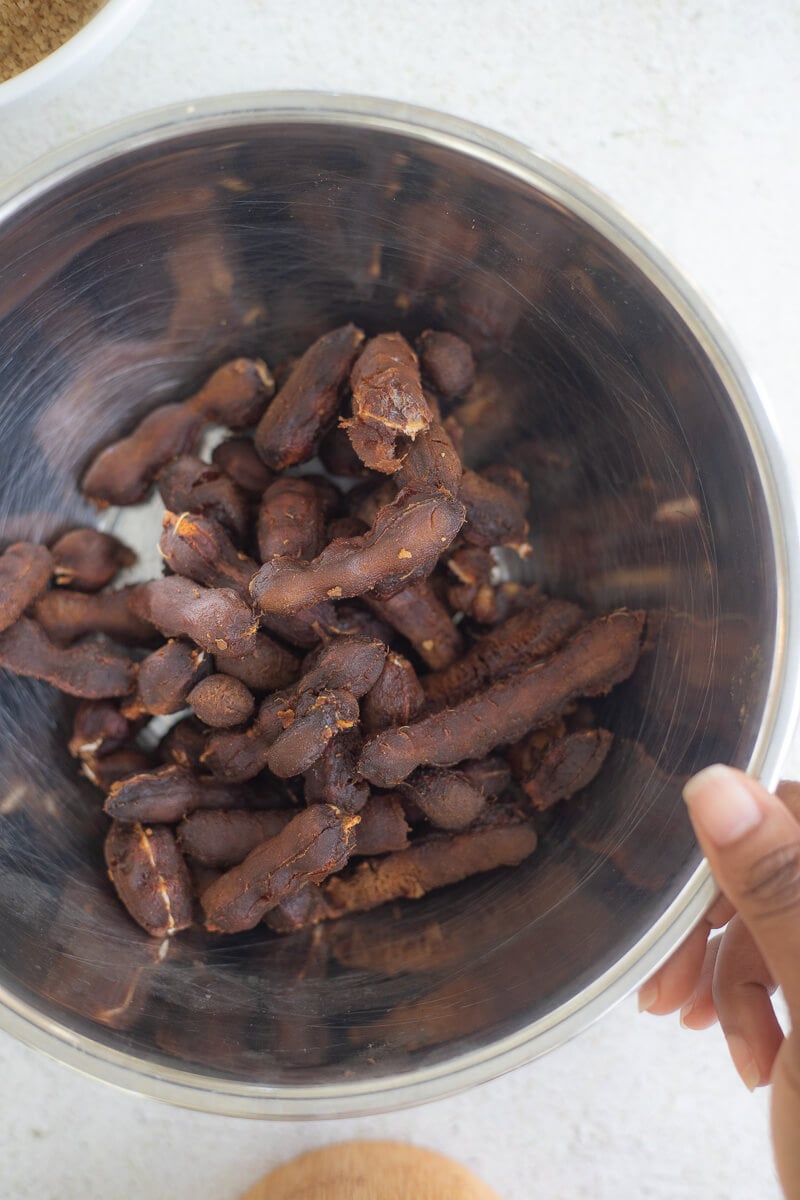
Step 1: Remove the tamarind from the pods. Crack the shells open using your fingers or a knife, then peel away the brittle shells and stringy membranes to reveal the sticky brown pulp. Don’t worry about removing all the seeds at this point.
Step 2: Place the tamarind pulp in a mixing bowl. Add the salt and baking soda, then carefully pour the boiling water over the pulp. The mixture will foam slightly. Stir as the pulp softens, working it away from the seeds. Remove most of the seeds, or leave a few in if you like. I usually leave a few because that’s how I grew up eating tamarind balls.
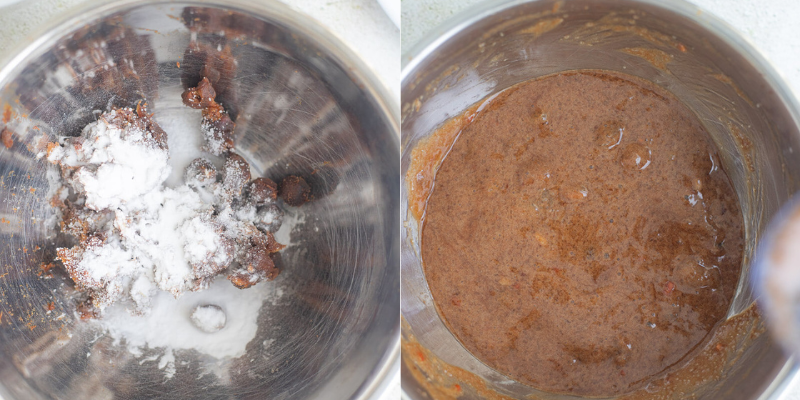
Step 3: Blend the Scotch bonnet pepper, garlic, ginger if using, and a little of the brown sugar until finely ground. Add this mixture to the tamarind along with 2 cups of the brown sugar and mix until evenly combined. If you have the time, cover and let the mixture rest for several hours or overnight. This gives the flavors more time to come together and can make the mixture easier to work with, but you can continue with the recipe right away.
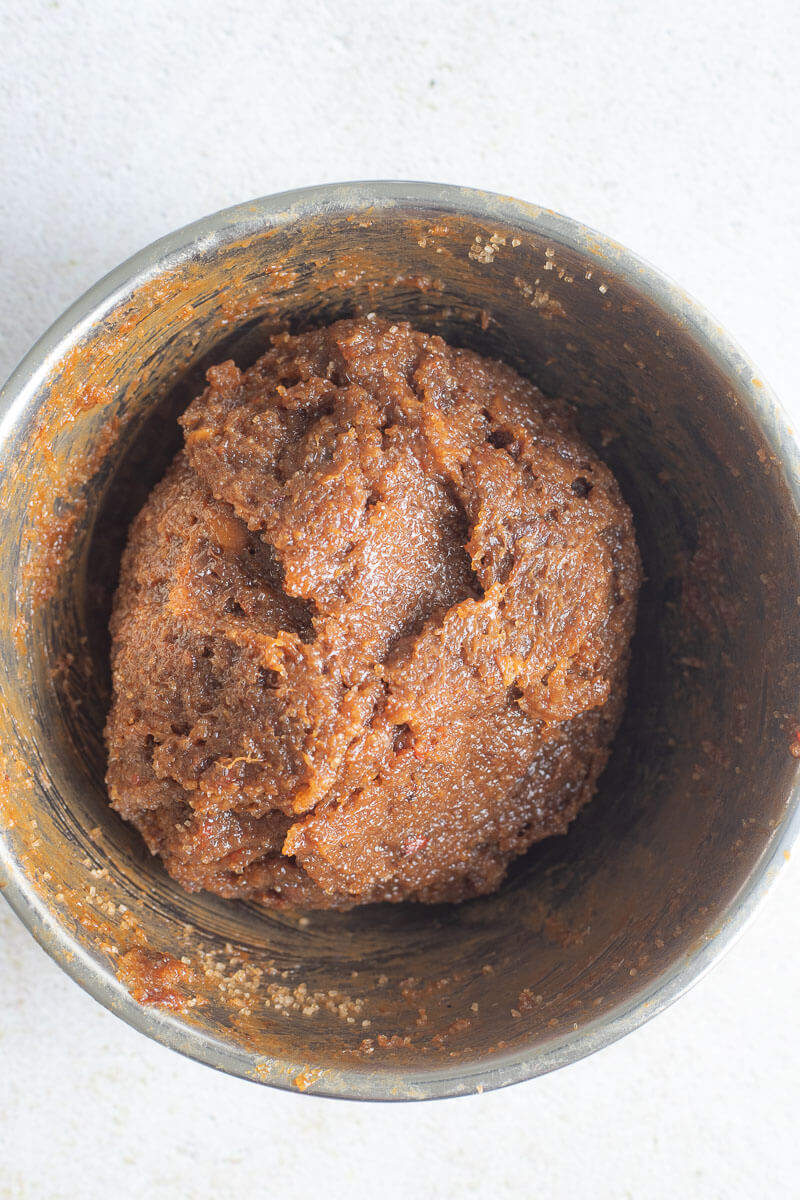
Step 4: Add the remaining brown sugar a little at a time until the mixture reaches your preferred sweetness. Depending on how tart your tamarind is, you may not need all of the sugar. The mixture should be thick and sticky, but still firm enough to roll into balls without falling apart.
Step 5: Lightly oil your hands to prevent sticking, then scoop small portions of the tamarind mixture and roll them into balls. Make them as small or as large as you like.
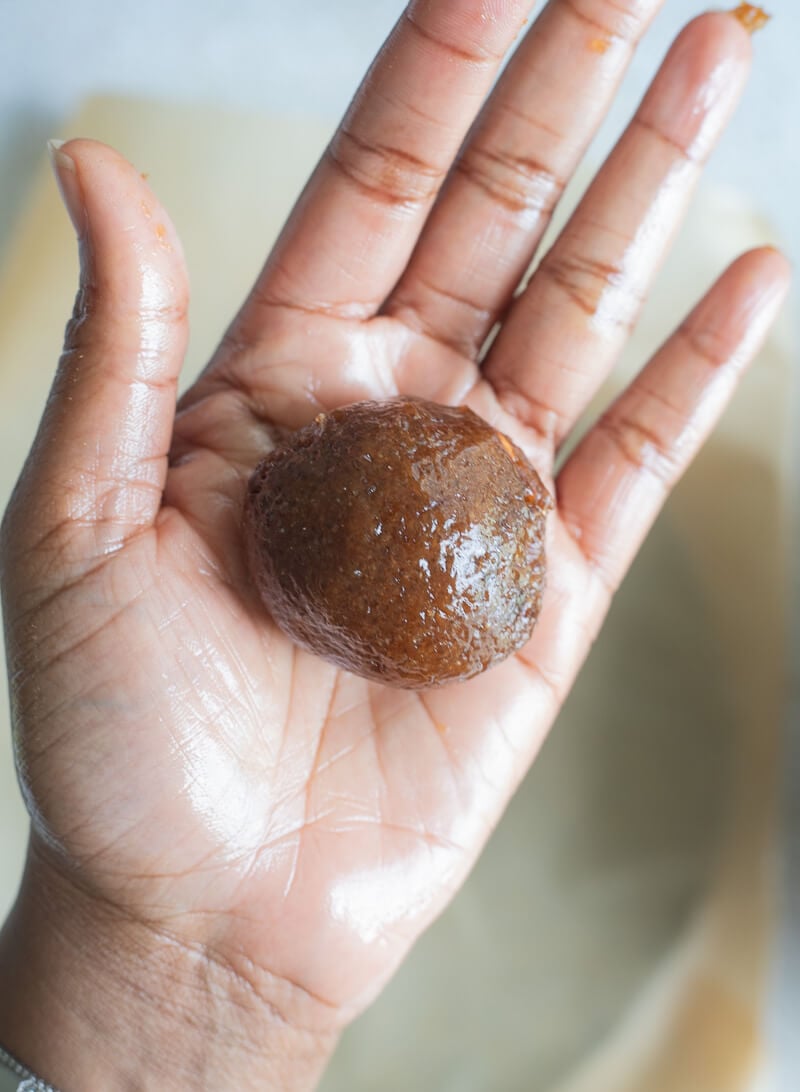
Step 6: Roll each tamarind ball in granulated sugar until coated, then shake off any excess. Roll each ball in the sugar a second time. I find the first coating tends to disappear into the sticky tamarind, while the second gives the balls that visible sugar coating on the outside.
Step 7: Let the tamarind balls air dry for 2 to 3 hours, or until the outside is slightly firm. This helps the sugar coating set while the flavors continue to develop.
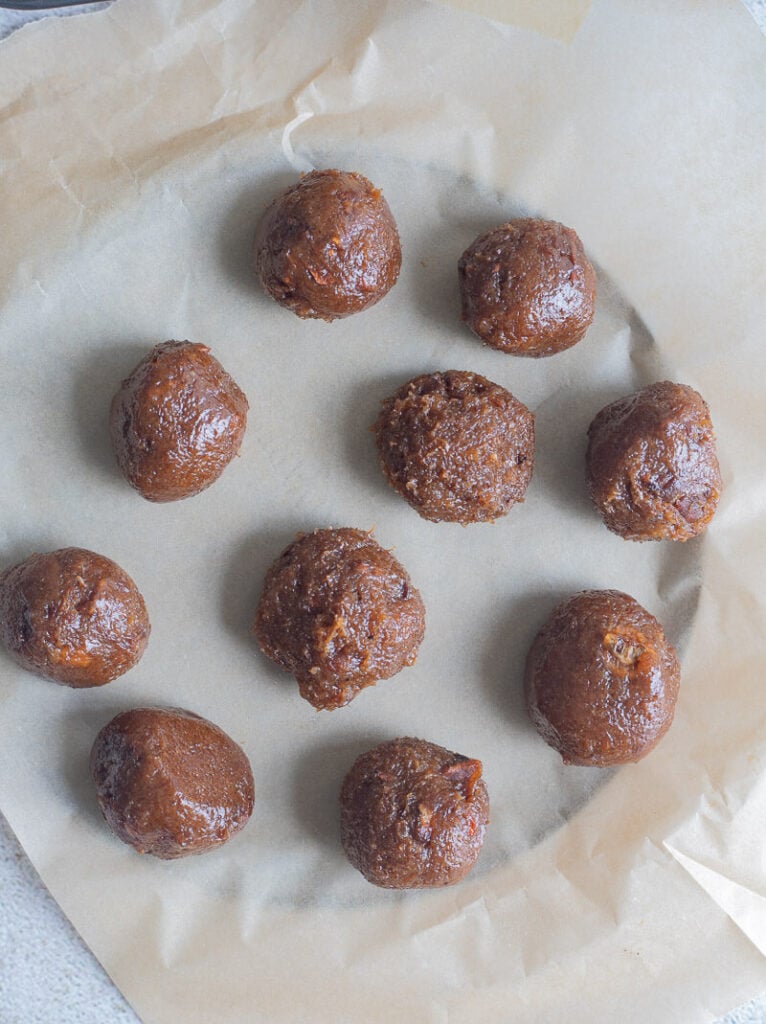
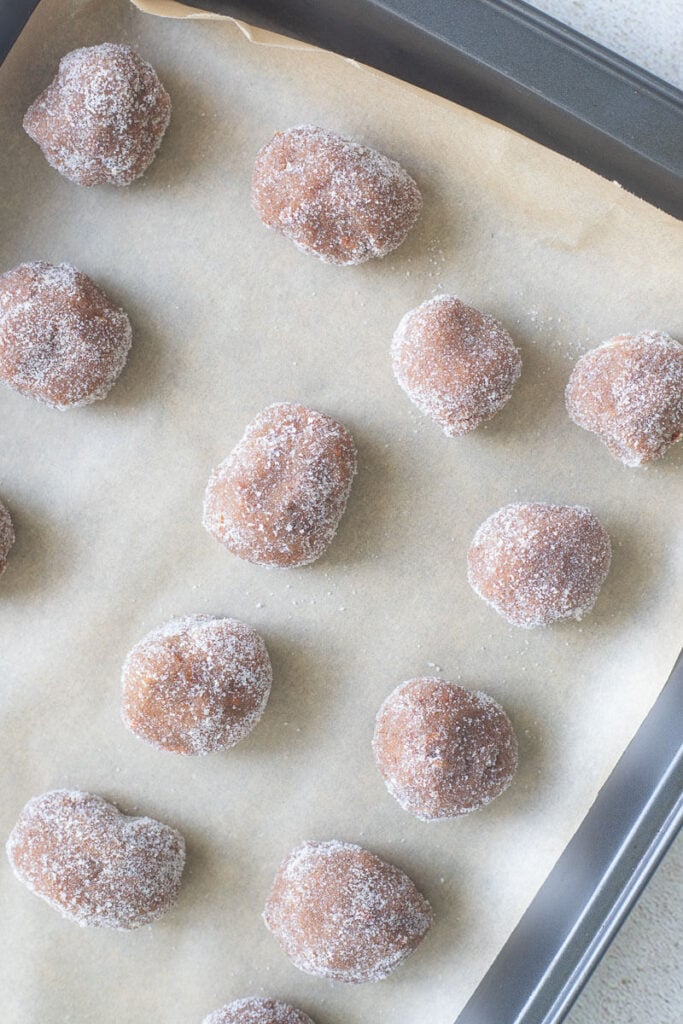
Step 8: Store the finished tamarind balls in an airtight container at room temperature. They’re ready to enjoy right away, but I think they taste even better the next day once the flavors have had more time to come together.
Tips
Here are some things I learned (some the hard way) from making these treats:
- Soften the tamarind first. Add the baking soda and boiling water after all of the tamarind pulp is in the bowl. This softens the pulp, making it easier to work away from the seeds and mix with the sugar.
- Short on time? Store-bought tamarind paste works well if you don’t want to shell fresh tamarind or remove the seeds. Just make sure you’re buying plain tamarind pulp and not a sweetened concentrate.
- Too sticky? If the mixture feels too soft to roll, add a little more brown sugar until it becomes thick and easy to shape. Since tamarind naturally varies in moisture and tartness, you may need to adjust the sugar slightly from batch to batch.
- Blend the seasonings well. Grinding the pepper, garlic, and some of the sugar together first helps distribute the flavor evenly throughout the tamarind mixture.
- Use two different sugars. I prefer demerara sugar in the mixture for its rich flavor and slight texture, then coat the finished tamarind balls in granulated sugar for the classic crunchy finish.
- Keep your hands lightly oiled. The mixture is naturally sticky, so reapply a small amount of oil as needed while rolling the balls.
- Start with less pepper. You can always add more Scotch bonnet, but you can’t take it out once it’s mixed in. If you’re making these for kids or people who don’t like spicy food, start with a small amount.
Substitutions
- Brown sugar: I prefer demerara sugar for its rich flavor and slight texture, but you can use another brown sugar or granulated sugar if needed.
- Scotch bonnet pepper: You can substitute another hot pepper or a small amount of cayenne pepper. You can also leave the pepper out if you prefer tamarind balls without the heat.
- Garlic and ginger: Both are optional and can be omitted. They add another layer of flavor but aren’t essential to the recipe.
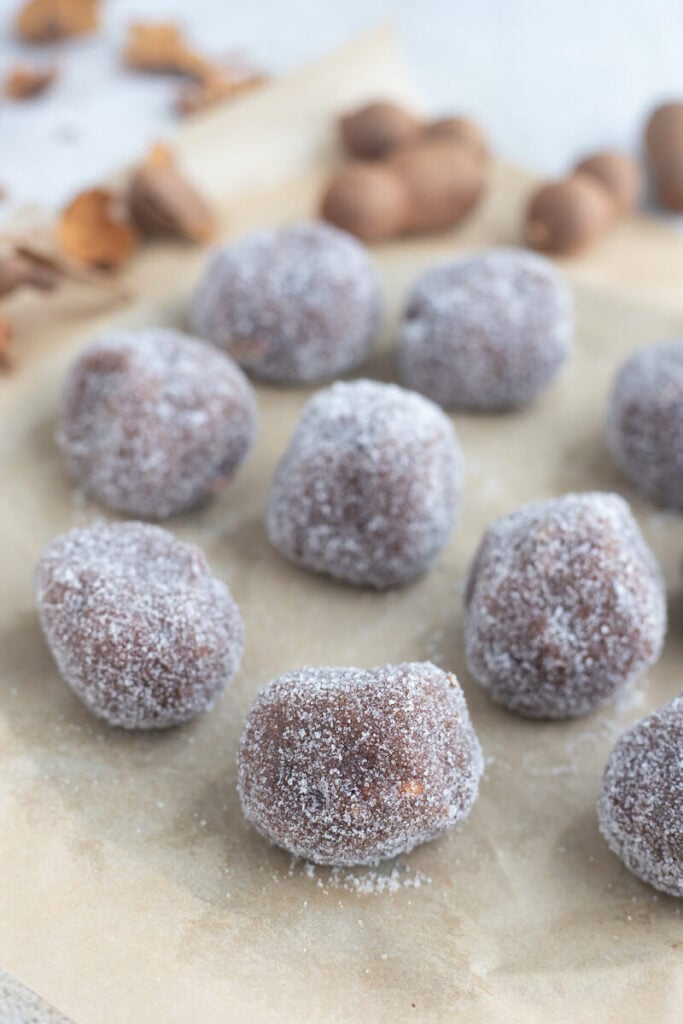
How to store tamarind balls
Store tamarind balls in an airtight container at room temperature for up to 2 weeks. We usually keep tamarind balls right on the counter, and I find the flavor gets even better after a day or two as everything has more time to come together.
Make sure the tamarind balls have finished air-drying before storing them so the sugar coating has time to set.
FAQs
If the mixture is too sticky to roll, mix in a little more brown sugar until it’s thick enough to hold its shape. Tamarind naturally varies in moisture and tartness, so the amount of sugar you need can vary from batch to batch.
No. You can remove all of the seeds or leave a few in. I usually remove most of them but leave a few because that’s how I grew up eating tamarind balls.
Yes, but the baking soda helps soften the tamarind pulp, making it easier to separate from the seeds and mix with the other ingredients. Without it, you’ll have to work the pulp a little more.
Store tamarind balls in an airtight container at room temperature for up to 2 weeks. Make sure they’ve finished air-drying before you put them away so the sugar coating has time to set.
More Caribbean Sweet Treats
Tamarind balls are one of those treats that instantly take me back to Tobago. Sweet, tangy, a little spicy, and wonderfully chewy, they’re surprisingly easy to make once you have the tamarind cleaned and ready to go. I hope this recipe brings back a few memories if you grew up eating them, or introduces you to a new Caribbean favorite if it’s your first time trying them.
If you tried this recipe, I’d love to hear how it turned out! Leave a comment below, give the recipe a rating, and let me know if you like your tamarind balls extra sweet, extra peppery, or somewhere in between.
Recipe
Trini Tamarind Balls
Ingredients
Method
- Place the shelled tamarind in a mixing bowl. Add the baking soda and salt.
- Carefully pour in the boiling water. Stir as the tamarind softens, working the pulp away from the seeds. Remove most of the seeds, or leave a few in if you prefer.
- Blend the Scotch bonnet pepper, garlic and ginger, if using, with a little of the brown sugar until finely ground.
- Add the blended seasonings and 2 cups of brown sugar to the tamarind. Mix until evenly combined.
- Cover and let the mixture rest for several hours or overnight if you have the time. You can also continue with the recipe right away.
- Add more brown sugar a little at a time, up to 2 additional cups, tasting as you go. The amount you need will depend on whether you’re using sweet or sour tamarind and how sweet you like your tamarind balls. The mixture should be thick, sticky and firm enough to roll.
- Lightly oil your hands. Scoop portions of the tamarind mixture and roll them into balls, reapplying a little oil to your hands as needed.
- Roll each ball in granulated sugar, shake off the excess, then roll it in sugar a second time. The first coating tends to disappear into the sticky tamarind, while the second gives the balls a visible sugar coating.
- Place the finished tamarind balls on a lined tray and air-dry for 2 to 3 hours, or until the outside is slightly firm and the sugar coating has set.
- Store in an airtight container at room temperature for up to 2 weeks.
Nutrition
Recipe Printed From ThisBagoGirl.com