
Trinidad Pastelle Recipe
Trinidad pastelles are savory cornmeal pies filled with seasoned meat, wrapped in banana leaves, and cooked until tender. They’re a cornerstone of Christmas in Trinidad and Tobago and one of those dishes that immediately feels like the holidays.
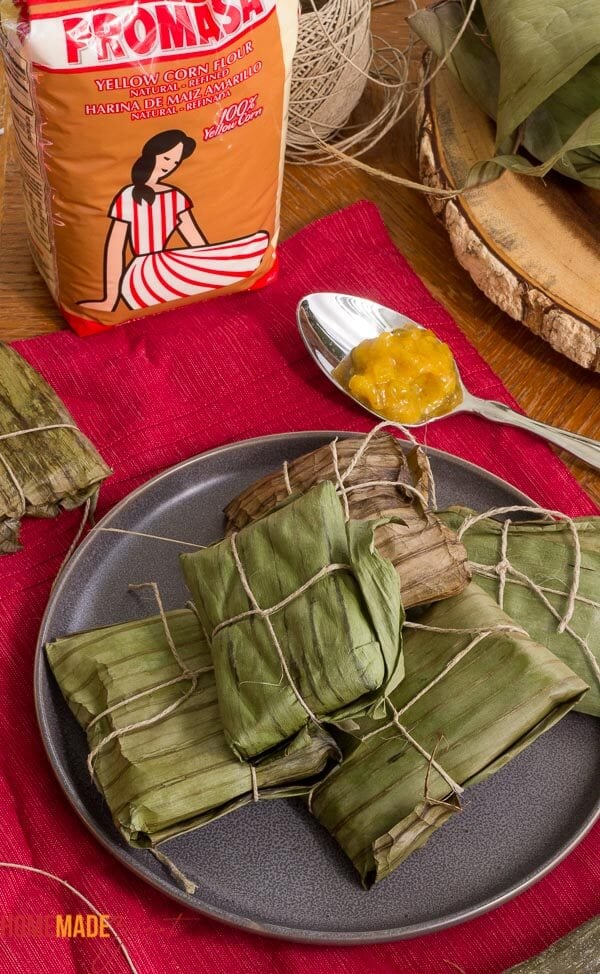
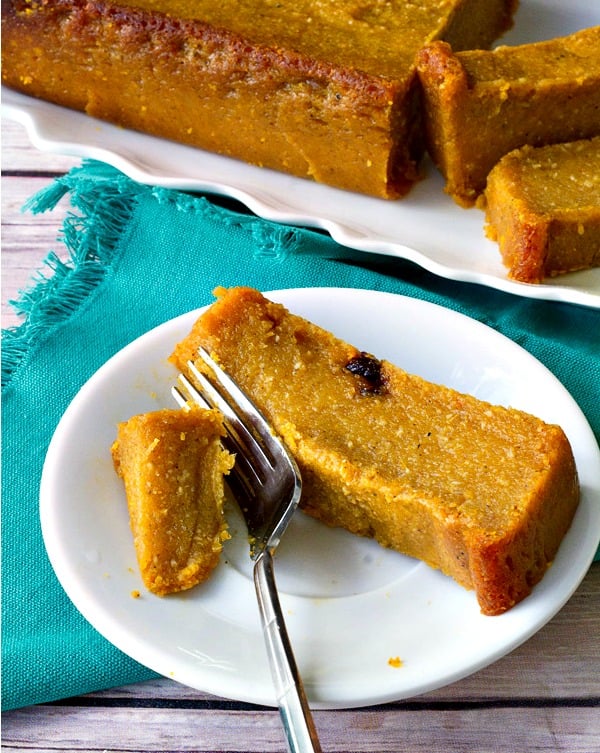
If you’ve never tried one, imagine a perfectly seasoned meat filling encased in a delicate cornmeal dough, with hints of olives, capers, and raisins for a burst of flavor. This iconic Caribbean dish pairs beautifully with chow chow and other holiday favorites like black cake, ginger beer, and sweet bread.
Making pastelles can feel intimidating at first because there are several steps, but once you break the process down, it’s much easier to manage. I’ll take you through preparing the filling and dough, folding and wrapping each pastelle, and cooking them so you can make your own batch at home.
What are Trinidad pastelles?
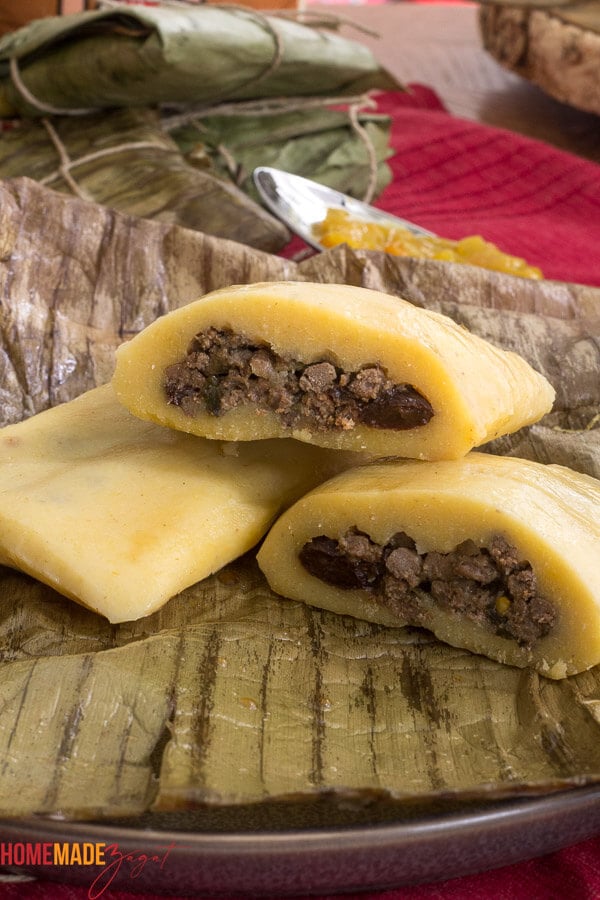
Pastelles are soft cornmeal pies traditionally filled with seasoned ground beef, chicken, fish, or vegetarian alternatives. The dough is wrapped in banana leaves and then boiled or steamed until tender.
While pastelles are sometimes compared to tamales, they have their own distinct place in Trinidad and Tobago’s food culture. They’re believed to be related to the Venezuelan hallaca, with the Trinidad version developing its own flavors and traditions over time.
Why pastelles are a Christmas favorite
Pastelles are more than just food; they’re part of the fabric of a Trinidadian Christmas. From the scent of seasoned meat to the ritual of wrapping them in banana leaves, these little parcels represent tradition, family, and the holidays.
Making pastelles is often a group effort. Once you commit to the process, you’re likely making dozens at a time, which means calling in help to form a full-on pastelle assembly line. And for good reason, six pastelles won’t last long!
They’re enjoyed at family gatherings, gifted to neighbors, and served alongside festive dishes like baked ham and stuffing. Pastelles bring people together, which is what Caribbean Christmas is all about.
How to make Trinidad pastelles
Ingredients
For the dough:
- Corn flour – I use Promasa corn flour for the pastelle dough. It creates a soft, smooth dough that holds its shape when folded and cooked.
- Oil – Adds moisture to the dough, making it easier to work with.
- Salt and sugar – Help balance the flavor of the dough without overpowering the filling.
- Warm water – Gradually added to bring the ingredients together into a pliable, non-crumbly dough.
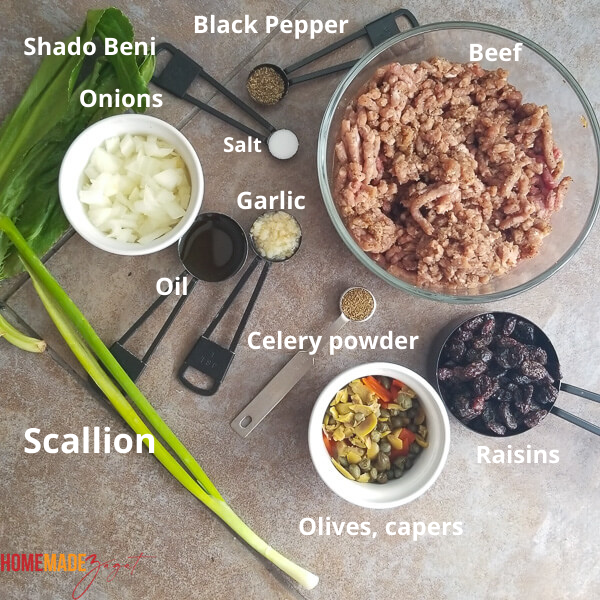
For the filling:
- Ground meat – Beef is traditional, but I’ve also made pastelles with chicken and fish. Vegetarian versions can also be made with fillings like seasoned lentils.
- Aromatics – Onion, garlic, chive, pimento, celery, and chadon beni build the savory base flavor.
- Briny and sweet add-ins – Capers, olives, and raisins add a signature burst of tang, salt, and a hint of sweetness to the mix.
- Salt and black pepper – Season to taste for a well-balanced filling.
Everything should be finely chopped to avoid poking through the thin dough.
Equipment needed
- Banana leaves – for wrapping the pastelles. Foil or parchment can be used if banana leaves aren’t available.
- Food-safe twine for tying
- A press or plate to flatten the dough
- Large pot with a colander or steamer basket for cooking.
Instructions
Step 1: Prepare the Banana Leaves
Clean the banana leaves and trim away the thick center rib and any rough edges. Fresh banana leaves need to be softened before wrapping, so they’re pliable and don’t split when folded.
To soften fresh banana leaves:
- Pass them over a low flame until they soften, or
- Dip them briefly in boiling water.
If using frozen banana leaves, which is what I use now, thaw them completely, wipe them clean with a damp cloth and diluted vinegar water, and pat dry before using.
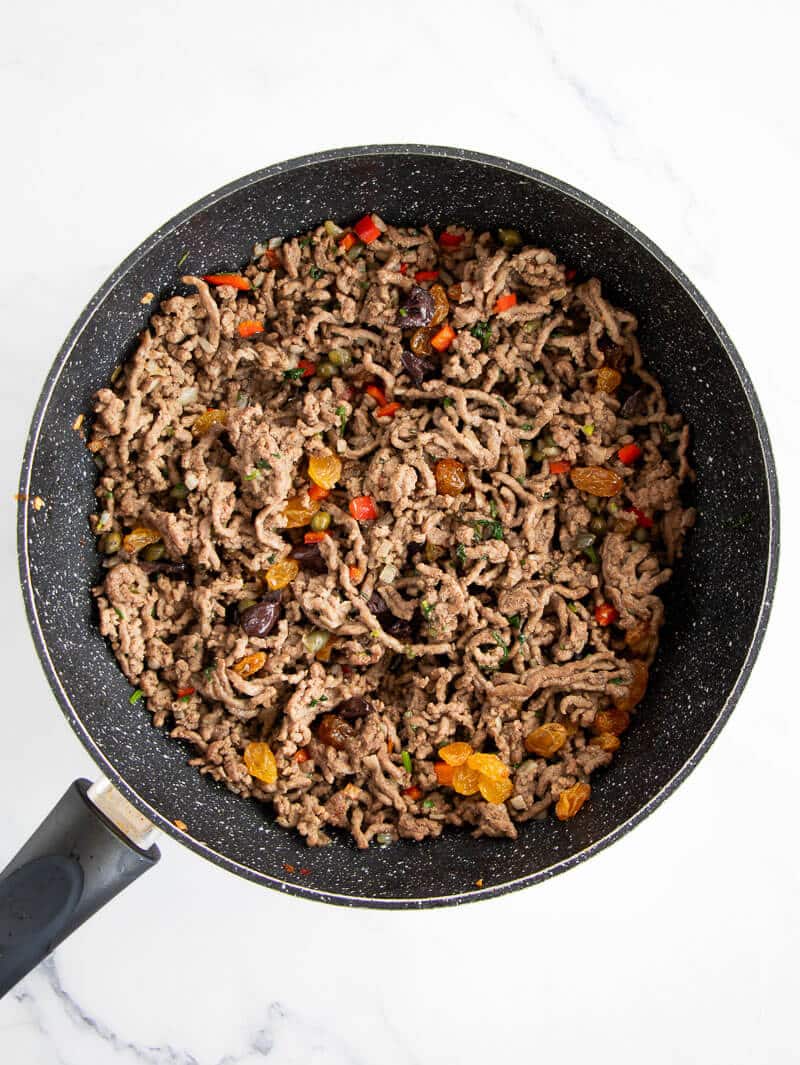
Step 2: Cook the Filling
- Heat oil in a pan and sauté onion, garlic, and chive until soft.
- Add ground meat and cook until browned.
- Stir in seasonings: pimento, celery, chadon beni, black pepper, and salt.
- Once the meat is cooked through, remove from the heat and mix in olives, raisins, and capers.
- Set aside to cool.
Step 3: Make the Dough
- In a bowl, mix corn flour, salt, sugar, and oil.
- Gradually add warm water and knead into a soft, pliable dough.
- Divide the dough and roll it into balls, adjusting the size depending on how large you want your pastelles.
- Cover with a damp cloth to keep them from drying out.
How to fold and wrap pastelles
- Lightly grease one side of a banana leaf with oil.
- Place a ball of dough in the center and flatten it into a thin circle using your hands, a plate, or a press.
- Add a spoonful of filling to the center.
Tip: Don’t press the dough too thin or add too much filling, as either can cause the pastelle to tear when folded. If the dough feels too soft to handle easily, it may have too much water and need a little more corn flour.
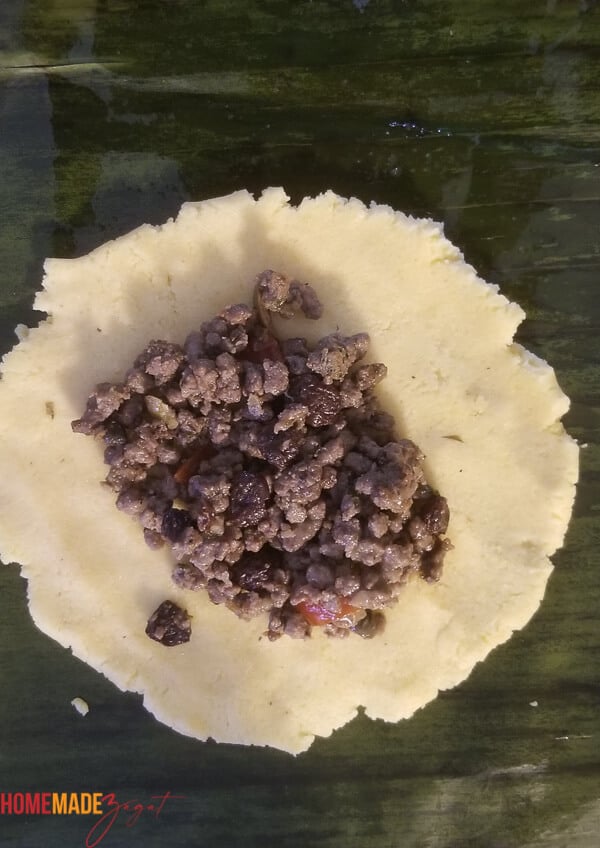
- Fold one side of the leaf over and peel it back to leave the folded dough in place.
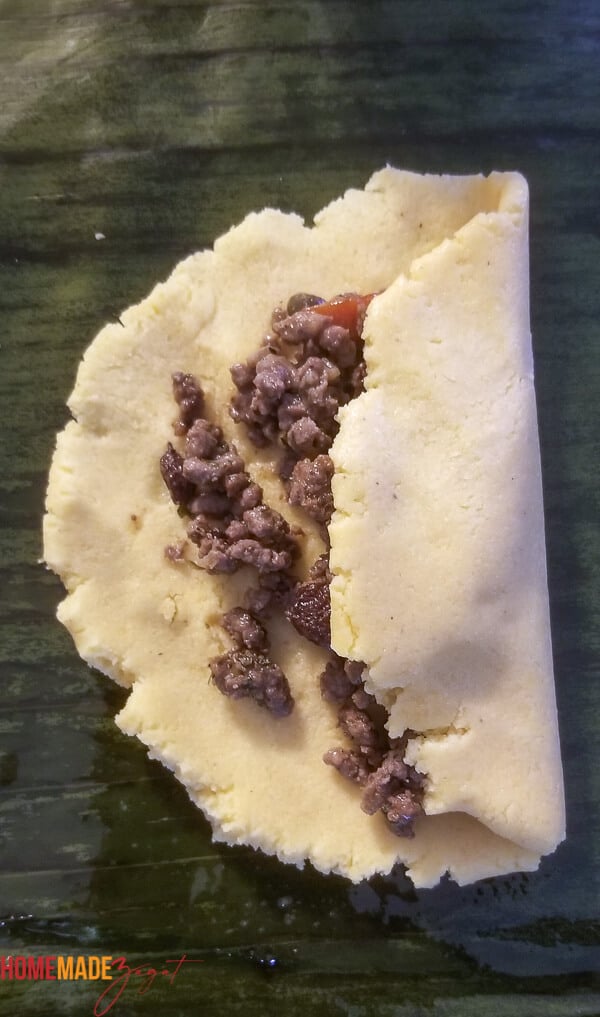
- Repeat with the opposite side, then the top and bottom to fully seal the filling inside.
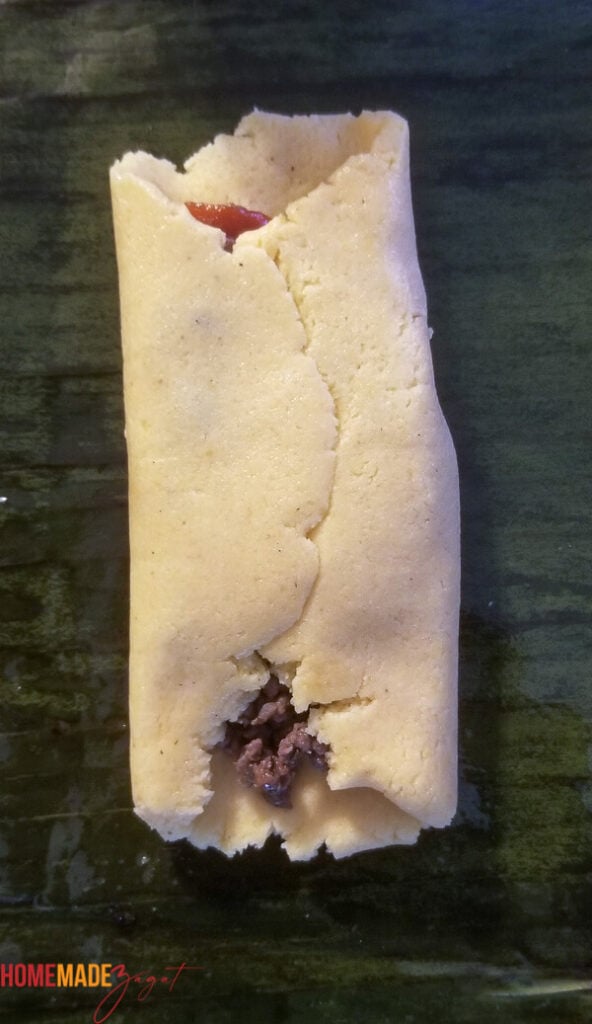
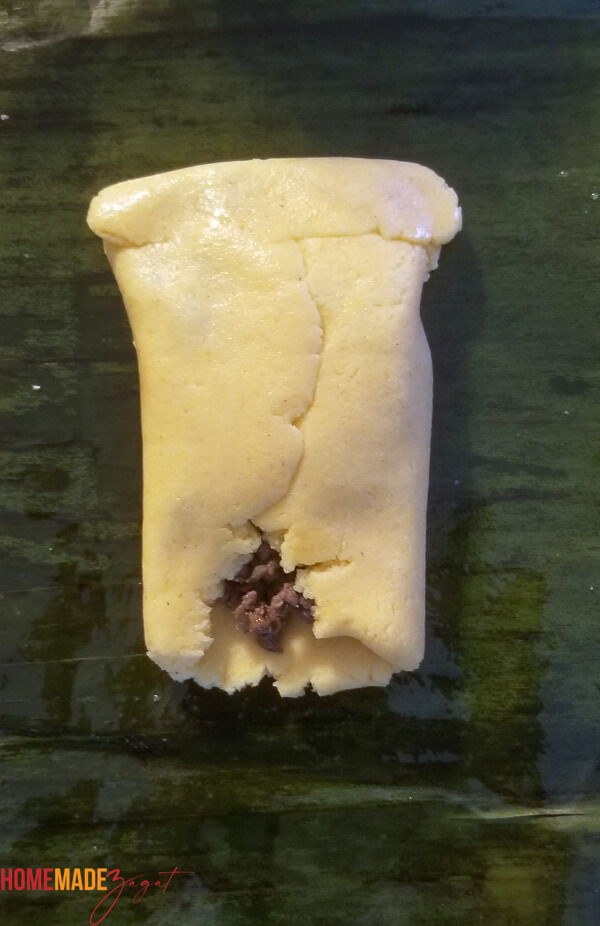
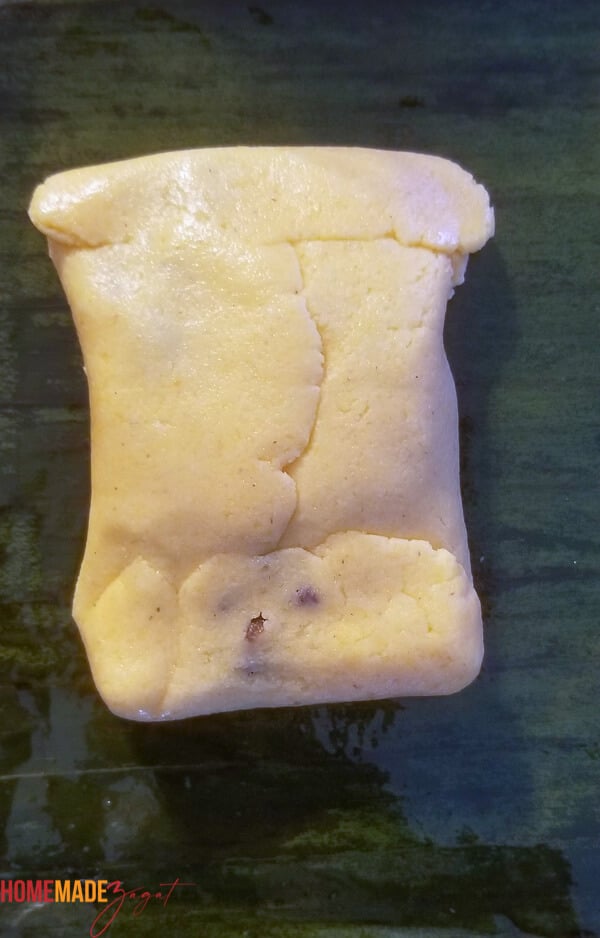
- Wrap the banana leaf securely around the dough.
- Tie with twine to hold it closed.
Repeat the process until all your dough and filling are used.
Optional: If you don’t have banana leaves, you can wrap the pastelles in foil instead. You can also use a banana leaf inside and foil outside for extra security while cooking.
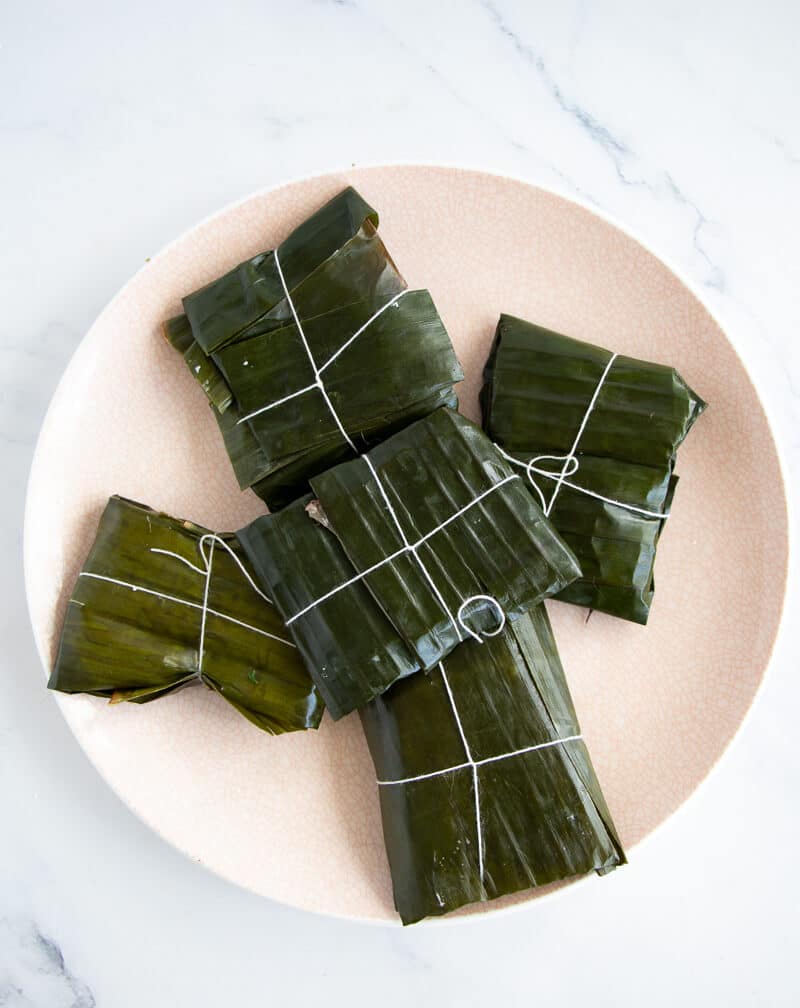
How to cook Trinidad pastelles
I usually boil my pastelles, but you can also steam them. Both methods work well.
Boiling Method:
- Bring a large pot of salted water to a boil.
- Add the pastelles and boil for 25–30 minutes.
- Remove with a slotted spoon and let drain.
Steaming Method:
- Place pastelles in a colander or steamer basket over boiling water (without touching the water).
- Cover and steam for 25–30 minutes.
- Remove and let cool slightly before serving.
Storage
Refrigerator:
- Cooked pastelles can be stored in an airtight container in the refrigerator for up to 3 days. For longer storage, freeze them.
Freezer:
- Cooked or uncooked pastelles can be stored in freezer-safe bags or containers for up to 1 year. Label and date them so you know how long they’ve been frozen.
Reheating:
- Reheat frozen pastelles by boiling or steaming them directly from frozen for 10–15 minutes.
- You can also microwave them in a pinch, but the edges may dry out or become a little crunchy.
Make ahead: Pastelles are great for making ahead for Christmas. Prepare and freeze them cooked or uncooked, then boil or steam them straight from frozen when you’re ready to serve.
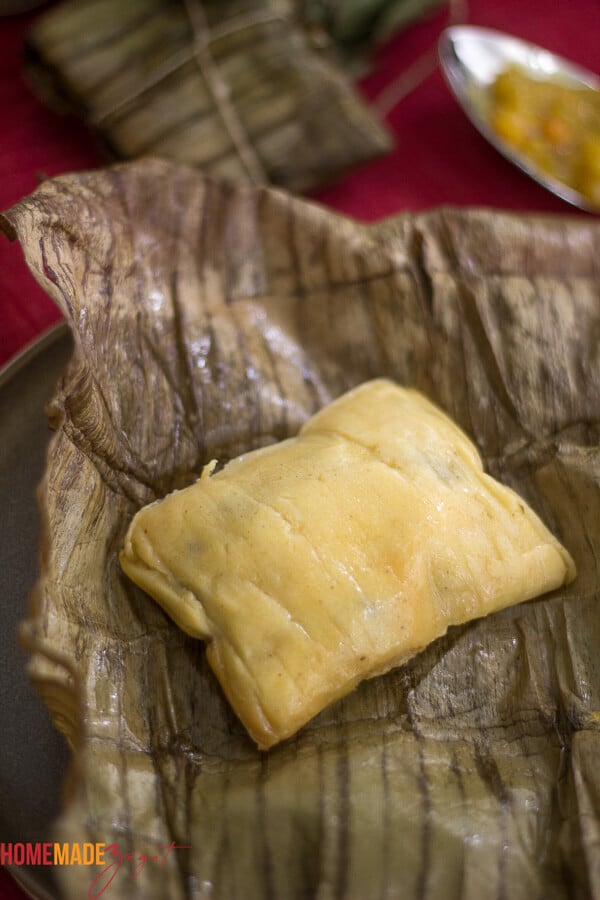
What to eat with pastelles
Pastelles are commonly topped with chow chow, a tangy relish that cuts through the richness of the meat and dough.
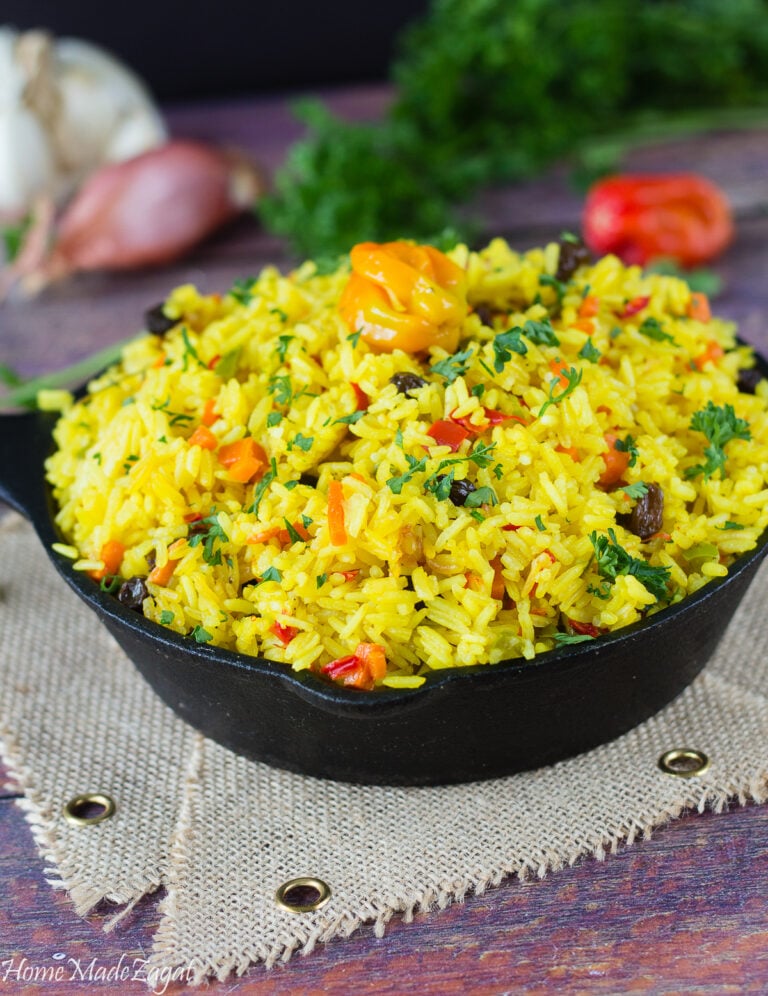
Pastelles can be eaten on their own as a snack or served as part of your Christmas spread alongside baked ham, Christmas rice, stuffing, callaloo, and other holiday favorites. And honestly, during Christmas, they can show up at just about any time of day.
Frequently asked questions
Yes! You can freeze them cooked or uncooked for up to a year.
Boil or steam frozen pastelles for 10–15 minutes. You can also microwave them wrapped in a damp paper towel to help prevent them from drying out.
You can use foil if banana leaves aren’t available. You can also use parchment paper with foil wrapped around the outside for extra security.
Yes. Pastelles can be made with vegetarian fillings. Lentils are one option I’ve had in place of the traditional meat filling.
In Trinidad and Tobago, we commonly call and spell them pastelles. You may also see the spelling “pastel” used elsewhere in the Caribbean and Latin America for similar or related dishes.
Cooked pastelles can be stored in an airtight container in the refrigerator for up to 3 days. For longer storage, freeze them.
Making pastelles for Christmas
Making pastelles is a labor of love, but it connects us to our culture, our families, and our favorite Christmas memories. Whether you’re making six or sixty, every pastelle wrapped is a little piece of home.
Tried this recipe? Let me know in the comments what filling you used or who helped you wrap them up this year.
Recipe
Trinidad Pastelle Recipe
Ingredients
Method
- In a large bowl, mix corn flour, oil, sugar, and salt.
- Gradually add the warm water, mixing as you go, until a soft, pliable dough forms. Add a little more water only if needed.
- Divide the dough into 12 balls. Make them smaller if you prefer smaller pastelles.
- Heat oil in a skillet.
- Sauté onion and garlic until fragrant.
- Add ground beef and cook through.
- Season with salt, black pepper, and pimento.
- Stir in the chive, celery, and chadon beni. Cook until the meat is tender.
- Remove from the heat. Mix in the raisins, capers, and olives. Set aside to cool.
- Lightly oil one side of a banana leaf square.
- Place a ball of dough on the oiled side and flatten it into a thin, even circle using oiled fingers, a bottle, plate, or press. The dough should be thin enough to fold easily without being so thin that it tears.
- Spoon about 2 tablespoons of filling into the center. Avoid overfilling, as this can cause the dough to tear when folded.
- Fold the left side of the leaf to cover the filling. Pull the leaf back.
- Fold the right side of the leaf to cover the filling. Pull the leaf back.
- Fold in the short ends the same way to completely enclose the filling.
- Wrap the banana leaf securely around the pastelle and tie with twine.
- Repeat for all dough balls.
- Add pastelles to a large pot of boiling salted water. Boil for 25–30 minutes.
- Alternatively, place them in a colander or steamer basket over boiling water, making sure they don’t touch the water. Cover and steam for about 30 minutes.
Nutrition
Notes
- You can use other meats (chicken, pork, turkey) or try a vegetarian version with mushrooms.
- For a smoother filling, pulse the cooked meat in a food processor before stuffing.
Recipe Printed From ThisBagoGirl.com

Best recipe – simple, straightforward and explains procedure very well.
Thank you so much!!
This worked out great for me. Really thanks for breaking it down into sections. Made it very easy.
5 full stars from me! I’ve used this recipe time and again with stellar results. This is my go to for trini pastelles! Love it.
Yess. Thanks!!
Omg as a Bago girl now living abroad I am so glad I stumbled upon this recipe! We used to have a huge assembly line with my in-laws but I tried this on my own with some green seasoning in the meat and it was spectacular! I used PAN pre-cooked fine corn meal.Fabulous recipe thank you so much for breaking it down so well 💕
Yesss. So glad it worked for you. I literally broke it down as I needed it for myself!!