Trinidad Pumpkin Choka (Pumpkin Talkari)
A simple, flavorful Caribbean side dish made from steamed pumpkin (or squash) and basic aromatics. This Trinidad pumpkin choka, also known as pumpkin talkari, is perfect with sada roti or rice. Quick to make and oh so comforting.
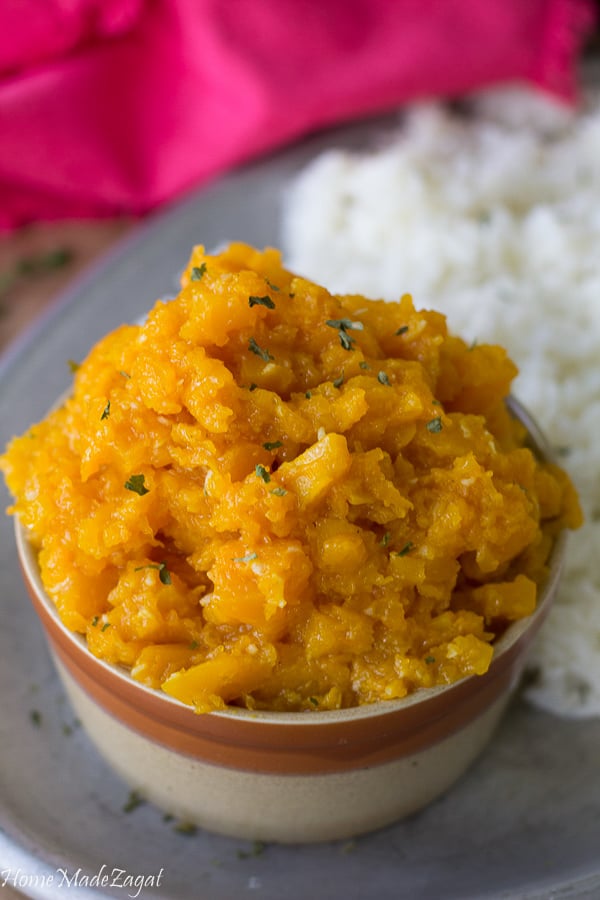
Let’s be honest, some of the best Caribbean dishes require barely any ingredients. This is one of those. Pumpkin is slowly steamed with garlic until soft, then finished with oil and cooked down into a savory-sweet mash. It’s the kinda dish that slides perfectly onto a plate next to curry chicken, aloo, or even macaroni pie.
What is pumpkin choka?
Pumpkin choka is a simple Trinidadian dish made by cooking pumpkin with garlic until tender, then mashing it and cooking it down to your preferred consistency. It’s commonly served with sada roti for breakfast or as a side with other Trini dishes.
You may also hear it referred to as pumpkin talkari or stewed pumpkin. Like plenty of Trini recipes, how it’s seasoned depends on who is making it. Some people add onion, hot pepper, or other seasonings, while my version keeps it simple with garlic and optional ground geera.
Unlike baigan choka or tomato choka, the pumpkin isn’t roasted first. It cooks directly in the pot until soft.
How to make pumpkin choka
Ingredients you’ll need
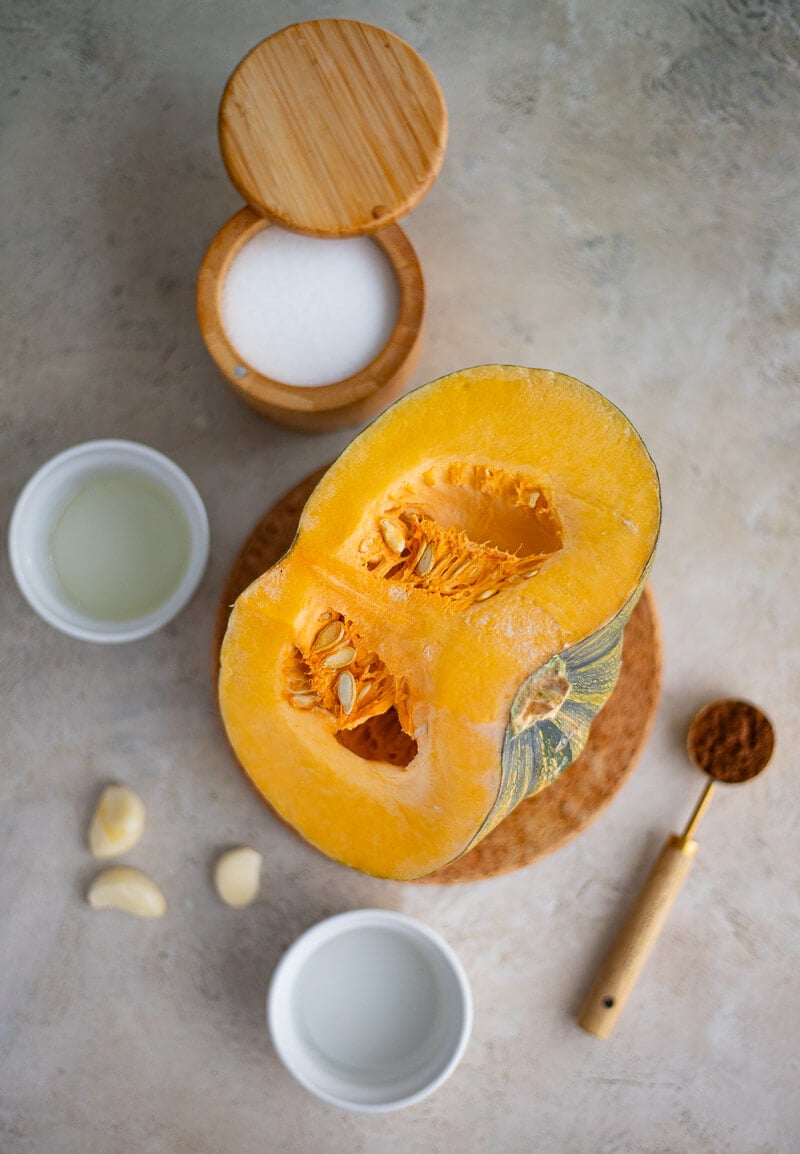
- Pumpkin or calabaza: Use a pumpkin or squash with good flavor and some natural sweetness. Calabaza pumpkin works especially well and is a good option if you’re in the U.S. and looking for the type of pumpkin commonly used in Caribbean cooking. Pre-cut pumpkin is also a great time-saver.
- Garlic: This is the main aromatic in my pumpkin choka. I grate it so the flavor distributes throughout the pumpkin as it cooks.
- Oil: Added after the pumpkin has softened to give the finished choka a richer flavor and texture. Use a neutral cooking oil you like.
- Salt: Add to taste to balance the natural sweetness of the pumpkin.
- Ground geera (cumin): Optional, but it adds a warm, earthy flavor. I like adding it toward the end of cooking.
- Sugar, if needed: Taste your pumpkin first. Some pumpkin and squash available in the U.S. aren’t as naturally sweet as Caribbean pumpkin, so a little sugar can help when needed.
Step-by-step instructions
- Prep the pumpkin. Peel the pumpkin if needed, remove the seeds, and cut the flesh into chunks. They don’t need to be perfectly sized since the pumpkin will soften and break down as it cooks.
- Steam the pumpkin. Add the pumpkin, grated garlic, water, and a little salt to a heavy-bottomed saucepan. Cover and cook over low heat until the pumpkin is very tender and beginning to break down.
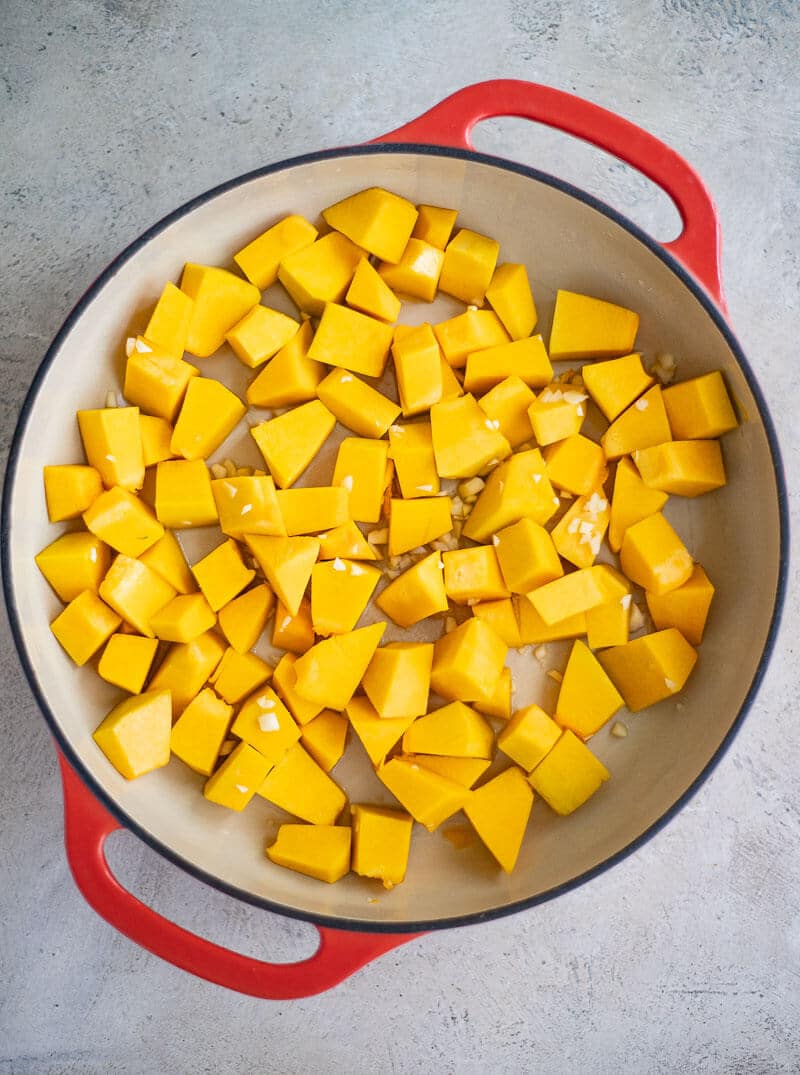
- Mash and add the oil. Use your spoon to mash and stir the softened pumpkin right in the pot. Add the oil and ground geera, if using, and mix well.
- Cook it down. Continue cooking over low heat until the pumpkin reaches the consistency you like. It should be thick and soft, but you don’t have to cook away every bit of moisture.
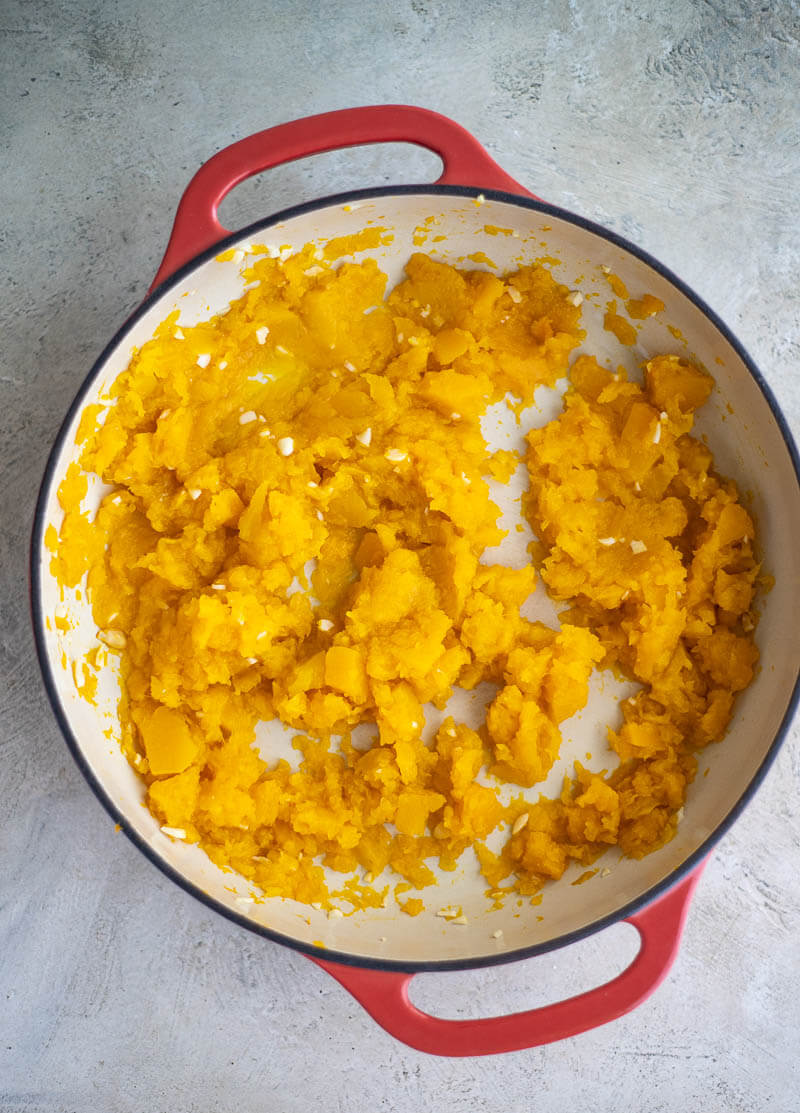
- Taste and adjust. Add more salt if needed. If your pumpkin isn’t naturally sweet, stir in a little sugar and let it simmer for another minute or two.
Tips for making the best pumpkin choka
- Taste before adding sugar. Some pumpkin is naturally sweeter than others. If yours isn’t sweet enough, especially when using pumpkin or squash available in the U.S., add a little sugar at the end and adjust to taste.
- Choose a flavorful pumpkin. Calabaza is a great option, especially in the U.S. Look for pumpkin or butternut squash with good flavor and some natural sweetness. Pre-cut pumpkin is also a great time-saver.
- Don’t add too much water. Pumpkin releases moisture as it cooks, so you only need a small amount to help it steam. If the pot gets too dry before the pumpkin is tender, add a tablespoon or two more.
- Cook it low and slow. Keep the pot covered and the heat low while the pumpkin softens. This gives it time to steam and break down without scorching.
- Adjust the texture to your preference. Pumpkin choka can be smoother and softer or thicker with more texture. I prefer mine on the thicker side with some soft pieces of pumpkin left throughout, so I don’t mash it completely smooth.
What to eat with pumpkin choka
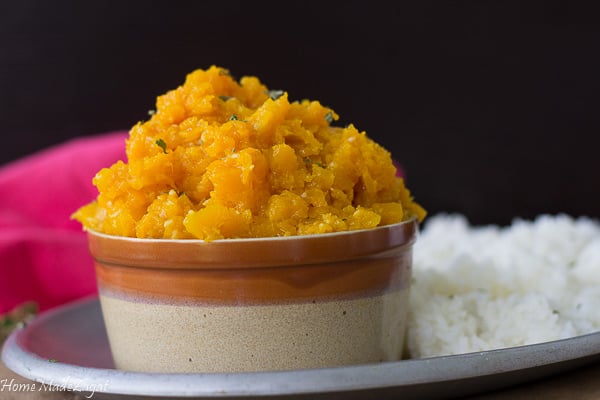
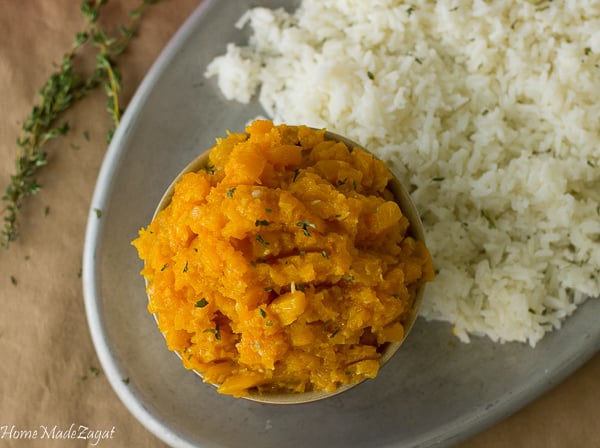
Pumpkin choka is especially good with sada roti, whether you’re having it for breakfast or as part of a larger meal. It also works well alongside rice, curries, and other Caribbean sides, so don’t feel like you have to save it for one particular meal.
- Sada roti. One of my favorite ways to eat it, especially when you want something simple.
- Rice. Serve it alongside plain rice with your favorite curry or stew and a side of fry bodi.
- Curry chicken or curry channa and aloo for a fuller meal.
- Roti and curry dishes. Pumpkin works beautifully as one of the sides tucked into a dhalpuri or paratha roti meal.
- Shrimp. You can also pair the two together like I do in my pumpkin and shrimp recipe.
Storage & Reheating
Store leftover pumpkin choka in an airtight container in the fridge for up to 3 days. Reheat it gently on the stove with a splash of water if needed, or microwave until heated through, stirring halfway.
More pumpkin recipes
This pumpkin choka is simple enough for breakfast with sada roti or as a side with your favorite curry. Give it a try, and let me know how you like your pumpkin. Smooth, a little chunky, or somewhere in between? Or just make it whenever your spirit says, “We’re eating pumpkin today.”
Recipe
Pumpkin Choka (Pumpkin Talkari)
Ingredients
Method
- Prep the pumpkin. Peel and dice the pumpkin into chunks.
- Steam the pumpkin. Add the pumpkin, water, grated garlic, and a little salt to a heavy-bottomed saucepan. Cover and cook over low heat until the pumpkin is very tender and beginning to break down.
- Mash and season. Mash and stir the softened pumpkin with your spoon. Add the oil and ground geera, if using, and mix well.
- Cook it down. Continue cooking over low heat, stirring occasionally, until the pumpkin reaches your preferred consistency. Don’t let all the liquid cook away.
- Taste and adjust. Add more salt if needed. If the pumpkin isn’t naturally sweet enough, add a little sugar to taste and simmer for another minute or two.
Nutrition
Notes
- Calabaza or butternut squash can be used in place of Caribbean pumpkin.
- Pumpkin choka can be made smoother or left with more texture. I prefer mine thicker with some soft pieces of pumpkin remaining. Pumpkin releases moisture as it cooks. If it becomes too dry before it’s tender, add a little more water as needed.
- Some pumpkin or squash available in the U.S. isn’t as naturally sweet. Taste it near the end of cooking and add a little sugar only if needed.
- Store leftovers in an airtight container in the refrigerator for up to 3 days. Reheat gently with a splash of water if needed.
Recipe Printed From ThisBagoGirl.com