What is saltfish and how to cook with it
Saltfish is a staple ingredient in Caribbean cooking, showing up in everything from buljol and accra to hearty stews and rice dishes. Made by salting and drying fish, usually cod, saltfish has been used for generations across the islands because it stores well, cooks up flavorful, and stretches into countless meals.
In this guide, you’ll learn what saltfish is, how it’s made, how to prepare it for cooking, and the different ways it’s used in Caribbean cuisine. Whether you’re trying saltfish for the first time or grew up eating it on a Sunday morning, this post breaks it all down.
What Is Saltfish?
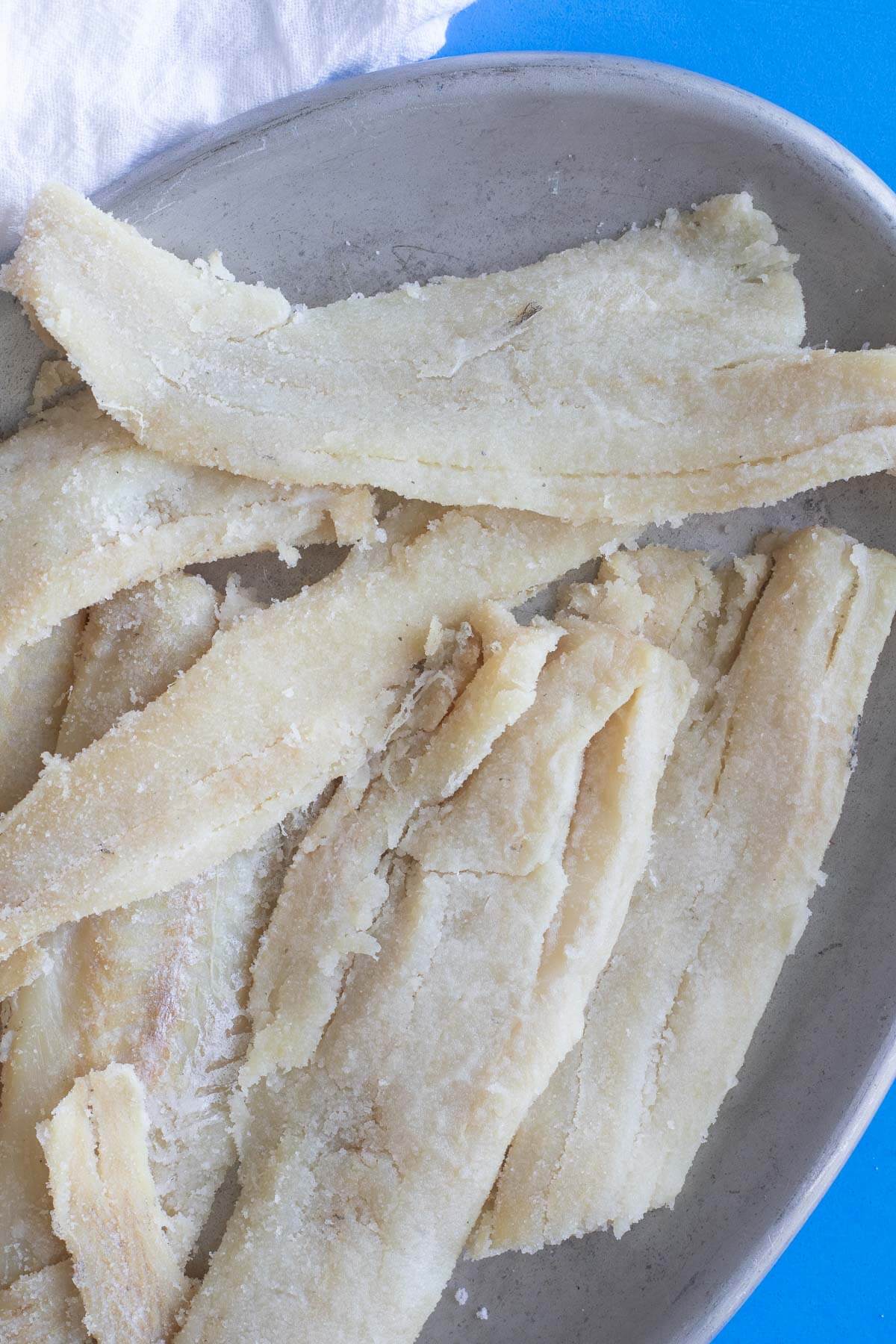
Saltfish is fish, usually codfish, that has been heavily salted and dried to preserve it. Popular throughout the Caribbean and other parts of the world, it must be soaked or boiled before cooking to remove excess salt.
Saltfish in Caribbean Cooking
Saltfish, also called salted cod, bacalao, or baccalà, is that salty, dried fish we’ve been soaking and cooking for generations. It’s usually made from cod, haddock, or pollock that’s been preserved with salt and dried out so it can last a long time without spoiling.
What makes saltfish so valuable? It’s budget-friendly, a good source of protein, and has a rich, savory flavor that works in all kinds of dishes. Plus, it stores well, making it useful when fresh fish isn’t available.
From buljol on a Sunday morning to stewed saltfish with dumplings, this humble ingredient holds a permanent spot in our Caribbean kitchens.
History of Saltfish
Saltfish has been around for centuries, long before fridges and freezers were a thing. Salting and drying fish was one of the earliest ways to keep it from spoiling, and it made seafood more accessible to people living far from the coast.
Salted fish became an important part of Caribbean foodways during the colonial period, when preserved fish was imported into the region. Over time, saltfish became deeply woven into the cuisines of islands across the Caribbean.
These days, a lot of the saltfish we use comes from places like Norway and Canada, where it’s still made using traditional methods.
What started as a practical way to preserve fish became an important part of Caribbean food culture and remains a staple today.
How Saltfish is Made
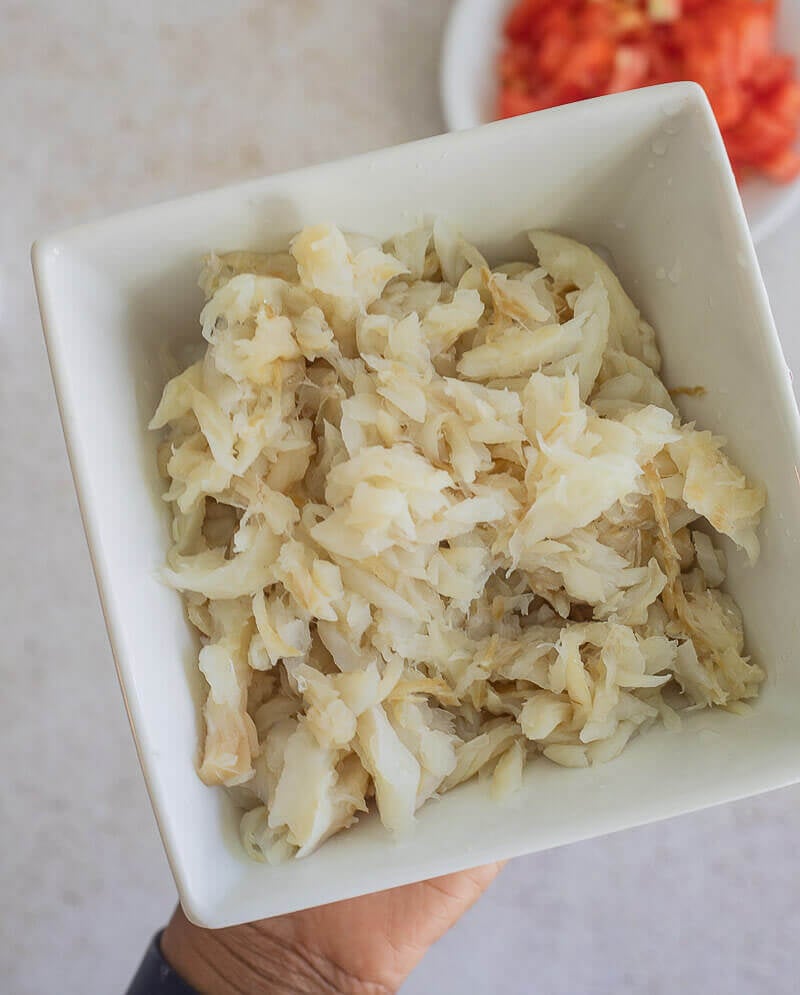
Saltfish is made by preserving fish with salt and drying it to remove moisture. Depending on the production method, the fish may be salted directly or soaked in a saltwater brine before drying. The result is firm, salty fish that keeps much longer than fresh fish.
How to Prepare Saltfish for Cooking
Saltfish isn’t ready to cook straight out of the package, unless you’re trying to get your blood pressure up. Before you can enjoy it, you’ve got to remove most of the salt and rehydrate the fish.
There are a few tried-and-true methods to get it prepped, and which one you use depends on how much time (and patience) you’ve got.
Boiling method – for when you are in a hurry
This is the quick route. Rinse the fish first, then boil it in a pot of water for a few minutes. Drain, refill with fresh water, and boil again. Repeat this 2–3 times or until the salt level is where you like it.
This method softens the fish a bit more, so it’s great if you’re shredding it into something like buljol or a stew.
Soaking method – for overnight prep and better texture
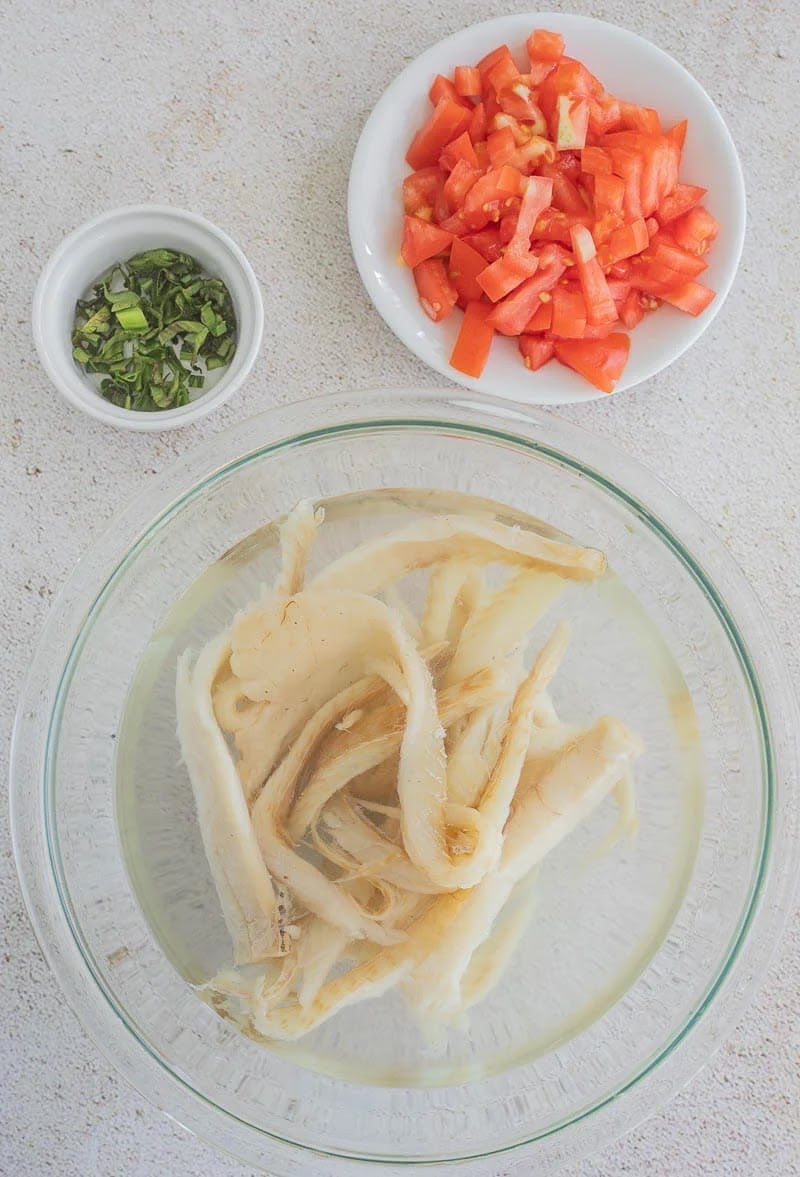
This is the method I use most often. Rinse the saltfish to remove the surface salt, then place it in a bowl of cold water. If you’re planning ahead, let it soak overnight in the refrigerator.
If you’re short on time, soak it in cold water and change the water about every 30 minutes. Sometimes two water changes are enough, depending on how salty the fish is.
Taste a small piece before using it to make sure enough of the salt has been removed. You still want the fish to have some salty flavor without being overpowering.
Washout Method
This one’s hands-on. Chip up the fish, toss it into a colander over a bowl, and let cold water run over it while you “wash” it with your fingers. Massage the salt out, pouring off the water as it fills up.
It takes a bit more effort, but it gives you control, and it works great for boneless pieces or when you’re only making a small batch.
No matter which method you use, always taste a little bit before cooking. You want saltfish, not salty fish.
How to Tell When Saltfish Is Ready
Saltfish should still taste lightly salty after soaking or boiling, but it shouldn’t be overpowering. The fish should flake easily and feel rehydrated instead of stiff or dry.
When in doubt, taste a small piece before cooking. It’s much easier to remove more salt than to fix an overly salty dish later.
Where to Buy Saltfish
You can find saltfish in most Caribbean or international grocery stores, and sometimes even in the seafood section of larger supermarkets. It usually comes in a few forms:
- Bone-in with skin – This is the most budget-friendly option, but it takes the most prep. You’ll need to debone, remove the skin, and soak it longer.
- Boneless, skinless fillets – My go-to. A little more expensive, but way easier to work with—especially if you’re short on time.
- Canned/flaked saltfish – The most convenient, but also the priciest. Just open and use (though I still like to rinse it).
If you’re new to saltfish, start with the boneless kind so you can focus on the cooking, not the clean-up.
Popular Caribbean Saltfish Dishes
Saltfish is used in all kinds of Caribbean recipes, from breakfast dishes to hearty dinners and fried snacks. Here are some popular ways to enjoy it across the islands. You can also browse my collection of Caribbean saltfish recipes for more ways to cook with it.
Breakfast Favorites
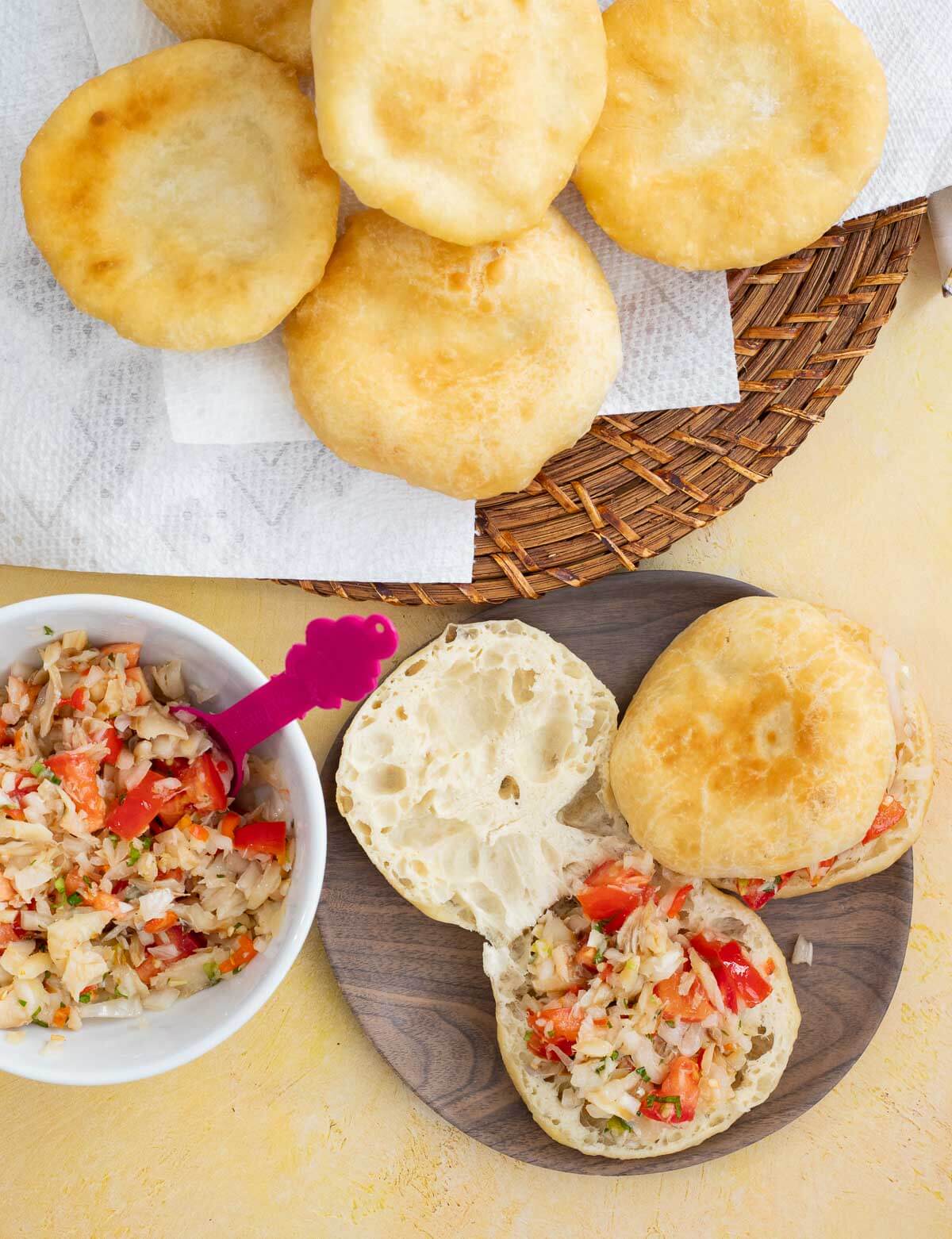
Saltfish Buljol
A fresh saltfish dish mixed with onions, tomatoes, peppers, and oil. Often served with fried bake or coconut bake.
Ackee and Saltfish
Jamaica’s national dish is made with saltfish, ackee, onions, and seasoning.
Snacks and Appetizers
Saltfish Accra
Deep-fried fritters made with seasoned batter and flaked saltfish.
Saltfish Balls
Crispy saltfish balls made with provisions like green banana or breadfruit.
Saltfish Pies
Pastries stuffed with seasoned saltfish filling.
Lunch and Dinner Ideas
Saltfish Rundown
Saltfish simmered in coconut milk with herbs and ochro.
Stewed Saltfish
Saltfish cooked with tomatoes, onions, and seasoning.
Saltfish and Rice
A one-pot Caribbean dish made with coconut milk, herbs, and flaked saltfish.
Saltfish Buljol Pizza
A Caribbean fusion pizza topped with saltfish buljol.
However you choose to cook it, saltfish adds a bold, briny kick to any meal. It’s one of those ingredients that stretches far, pairs well with countless Caribbean dishes, and never goes out of style.
Frequently Asked Questions
Most saltfish is made from cod, but you’ll also find versions made with haddock or pollock. It all depends on where it’s sourced and what’s available.
Saltfish is preserved by salting and drying, but it still needs to be prepared before you use it in a dish. Soak or boil it to remove the excess salt, then use the prepared fish in your recipe.
I wouldn’t recommend it. Saltfish is heavily salted for preservation, so it needs to be desalted before you use it in a dish.
Both are preserved fish, but saltfish is salted and dried, while smoked herring is, well, smoked! Smoked herring has a stronger, more intense flavor and is often used differently in recipes.
Unopened saltfish can keep for a long time because of the salting and drying process. Follow the storage instructions and use-by date on the package. Once opened, keep it refrigerated according to the package directions.
Final thoughts
Saltfish is one of those ingredients that tells a story of trade, tradition, and survival. It’s a pantry hero in Caribbean cooking, showing up in everything from casual breakfast to Sunday lunch to street snacks.
Whether you’re just discovering it or looking for new ways to use it, there’s no shortage of recipes to try. From classic buljol to coconut-rich rundown, saltfish proves time and again that humble ingredients can bring big flavor.
Have a favorite way to use saltfish? Share it in the comments, or let me know if you’re trying it for the first time!