
Trinidad Green Seasoning Recipe
A homemade Trinidad green seasoning recipe is the go-to Caribbean marinade that brings bold, herby flavor to your meats, soups, and stews. Made with chadon beni, garlic, and fresh herbs, this green paste is a must-have in every Trini kitchen.
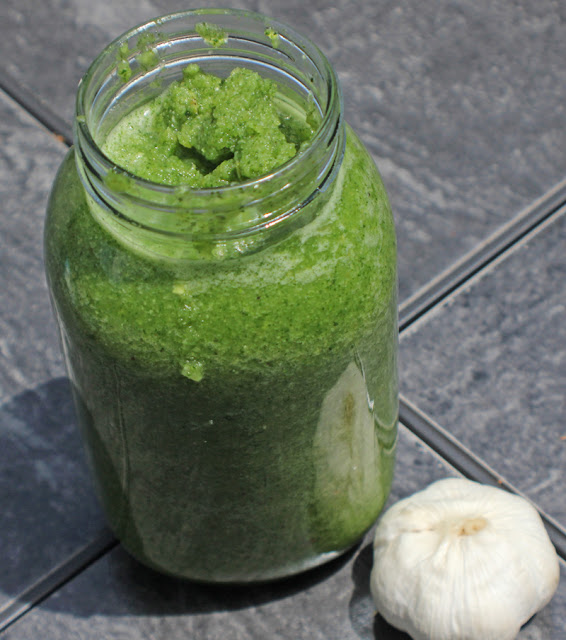
What is Trinidad green seasoning?
Green seasoning is the unofficial MVP of Trinbagonian cooking. It’s a vibrant mixture of fresh herbs and aromatics used to add flavor to all kinds of dishes. If you’ve ever wondered why Caribbean food has that extra depth of flavor, chances are green seasoning had a part to play.
We use it to season meats and seafood and add flavor to soups, stews, rice dishes, and more. And if you’re cooking anything from stewed chicken to callaloo or pelau, you already know… green seasoning is non-negotiable.
Trinidad Green Seasoning Recipe
Ingredients
There’s no single recipe for green seasoning, and every household tends to make it a little differently. My version uses plenty of fresh herbs and aromatics, with pimento peppers adding one of my favorite flavors.
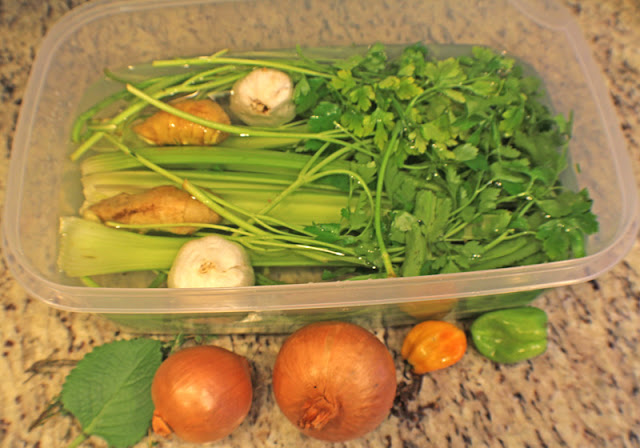
Fresh herbs
- Chadon beni (culantro): One of the main herbs in my green seasoning. Cilantro can be substituted if you can’t find it.
- Spanish thyme (broad leaf thyme): I use this along with regular fresh thyme.
- Fresh thyme: I blend the sprigs right in, stems and all. You can remove thicker stems if you prefer.
- Parsley: Adds to the fresh herb base.
- Celery and scallions: Both go straight into the blend.
Aromatics and peppers
- Onion and garlic: Form part of the aromatic base.
- Ginger: Adds another layer of flavor without overpowering the herbs.
- Pimento peppers: I usually lean toward more because I love their flavor.
- Red bell pepper: Optional. I’ve made green seasoning without it and it comes out just fine.
- Scotch bonnet or habanero: Optional if you want some heat.
Liquid and seasoning
If I’m using a blender, I start with a little water or vinegar to help everything move, adding more only if needed. With a food processor, I generally don’t need to add any liquid.
Salt is optional. I usually add little or none because I’d rather control the salt when I’m cooking.
Instructions
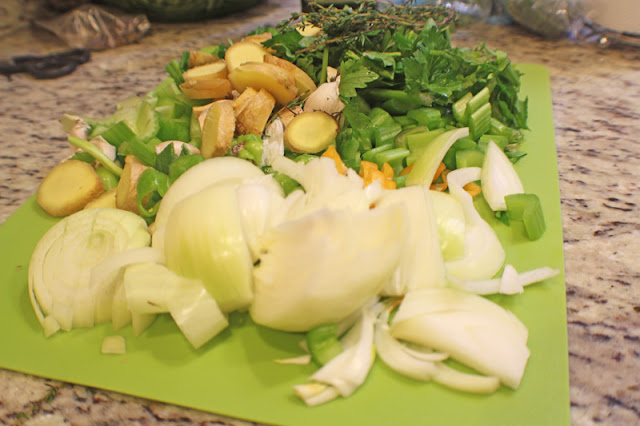
- Prep the ingredients: Wash the herbs and vegetables well, then roughly chop the larger ingredients so they’ll fit easily into your blender or food processor.
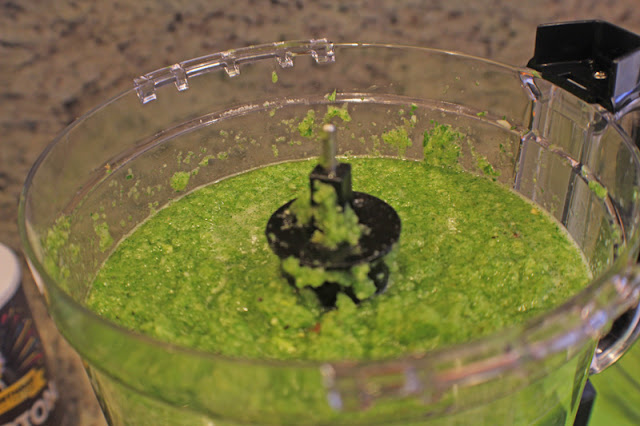
- Process or blend: Add everything to a food processor and process until finely blended. If you’re using a blender, start with about ¼ cup of water or vinegar to help the blades get everything moving.
- Adjust the consistency: Add more liquid a little at a time only if your blender needs it. A food processor generally doesn’t need any added liquid.
- Taste: Add salt if you want it in your green seasoning. I usually use little or none because I prefer to adjust the salt when I’m cooking.
How to use green seasoning
Green seasoning isn’t just for marinating meat. I use it throughout my cooking to build flavor:
- Rub it into chicken, beef, lamb, or seafood before cooking.
- Stir it into soups, stews, or rice dishes like ochro and rice.
- Use it when making curry or pelau.
- Add it to simple dishes like fried bitter melon (caraille) for extra flavor.
For meat, I usually start with about 2 heaping tablespoons of green seasoning per pound, then adjust depending on what I’m making and the other seasonings I’m using.
Green seasoning storage tips
Store homemade green seasoning in a clean, airtight container in the refrigerator and use it within a few days. If you make more than you can use quickly, freeze the extra in small portions or ice cube trays, then transfer the frozen portions to a freezer-safe container or bag.
Freezing it in smaller portions makes it easy to take out only what you need for seasoning meat, soups, stews, and other dishes.
Why make it at home?
Making green seasoning at home lets you adjust it to suit the way you cook. You can add more pimento, leave out the hot pepper, control the amount of salt, and make it as thick or loose as you prefer.
Once you’ve made it a few times, you’ll probably start adjusting the ingredients without even thinking about it. Every household has its own version, and that’s part of the beauty of green seasoning.
More recipes that use Trinidad green seasoning
Frequently Asked Questions
Yes. If you can’t find chadon beni, you can substitute cilantro. The flavor won’t be the same, but cilantro works as an alternative when chadon beni isn’t available.
Not necessarily. The pimento peppers add flavor without much heat, and the Scotch bonnet or habanero is optional. Leave the hot pepper out for a milder green seasoning, or add it if you want some heat.
Yes. Green seasoning isn’t just for meat and seafood. You can use it to add flavor to lentils, soups, stews, rice dishes, or recipes like curry channa and aloo.
Yes. Freeze green seasoning in small portions or ice cube trays, then transfer the frozen portions to a freezer-safe bag or container. This makes it easy to take out only what you need when cooking.
Recipe
Trinidad Green Seasoning
Ingredients
Method
- Wash the herbs and vegetables well. Roughly chop the larger ingredients so they fit easily into your blender or food processor.
- Add all the ingredients to a food processor and process until finely blended. If using a blender, start with ¼ cup water or vinegar and blend, adding a little more liquid only as needed to keep everything moving.
- Blend until the green seasoning reaches your preferred consistency. Taste and add salt, if using.
- Transfer to a clean airtight container and refrigerate, or portion and freeze for longer storage.
Nutrition
Notes
You can blend the fresh thyme with the stems. Remove any thicker stems if you prefer.
A food processor usually doesn’t need any added liquid. The water or vinegar is mainly to help the ingredients move when using a blender.
I tend to use little or no salt in my green seasoning because I prefer to control the salt when seasoning whatever I’m cooking.
This recipe makes approximately 16 ounces, although the final amount can vary depending on the ingredients and how much liquid you add.
Recipe Printed From ThisBagoGirl.com


This sounds awesome! I can't wait to make some and give it a try!
Hi Mandee,
I love it and i find it so easy to just scoop and go.
You made green seasoning look so good =) nice pics and really nice blog. When I lived overseas the one thing that always made me feel like "home" was making green seasoning.
I can't seem to function without it. Lol. When I'm out of it I feel like my meat is missing something lol
Is a flavor pepper a green bell pepper? And, what, exactly is a "head of chive"? Yes, you can tell I'm not a native of the islands 🙂
Hehe.. that's fine. No flavor pepper is almost like a hot pepper but it has no heat. They look. Chive is kind of like scallion/green onions but skinnier/thinner. You can use about 4 stalks
hi i believe chives are actually different to scallions, as scallions are spring onions white longish bulb or big round bulbs with green stalks! which their flavour is a very light version of onions! & chives are almost paper thin green like stalks like blades of grass basically, with a different kinda flavour altogether no heat nothing like onions but nice herb to use in mash or garlic butters or butter etc
Hi. yes they are different. But we do interchangeably use them if we don’t have one or the other, or even use them both.
Flavor pepper is pimento pepper
How long can you keep it refrigerated or should I freeze this?
I've kept this in the fridge for months. You can freeze also but i prefer it just sit in the fridge
Can you use this as a marinade or rub and grill the meat?
Yes you can. I do it and just grill the chicken when I'm ready.
12 cloves of what? You already have 2 heads of garlic!
Hello. Just 12 cloves. The flower buds… 12 of those. Here's a link to what cloves are https://www.thespruceeats.com/what-are-cloves-995621
I don't like cilantro, is there something else I can use?
I don't like cilantro, is there something else I can use?
You can use some parsley
It sounds very similar to Peruvian green sauce which I absolutely love