Cow Heel Souse Recipe
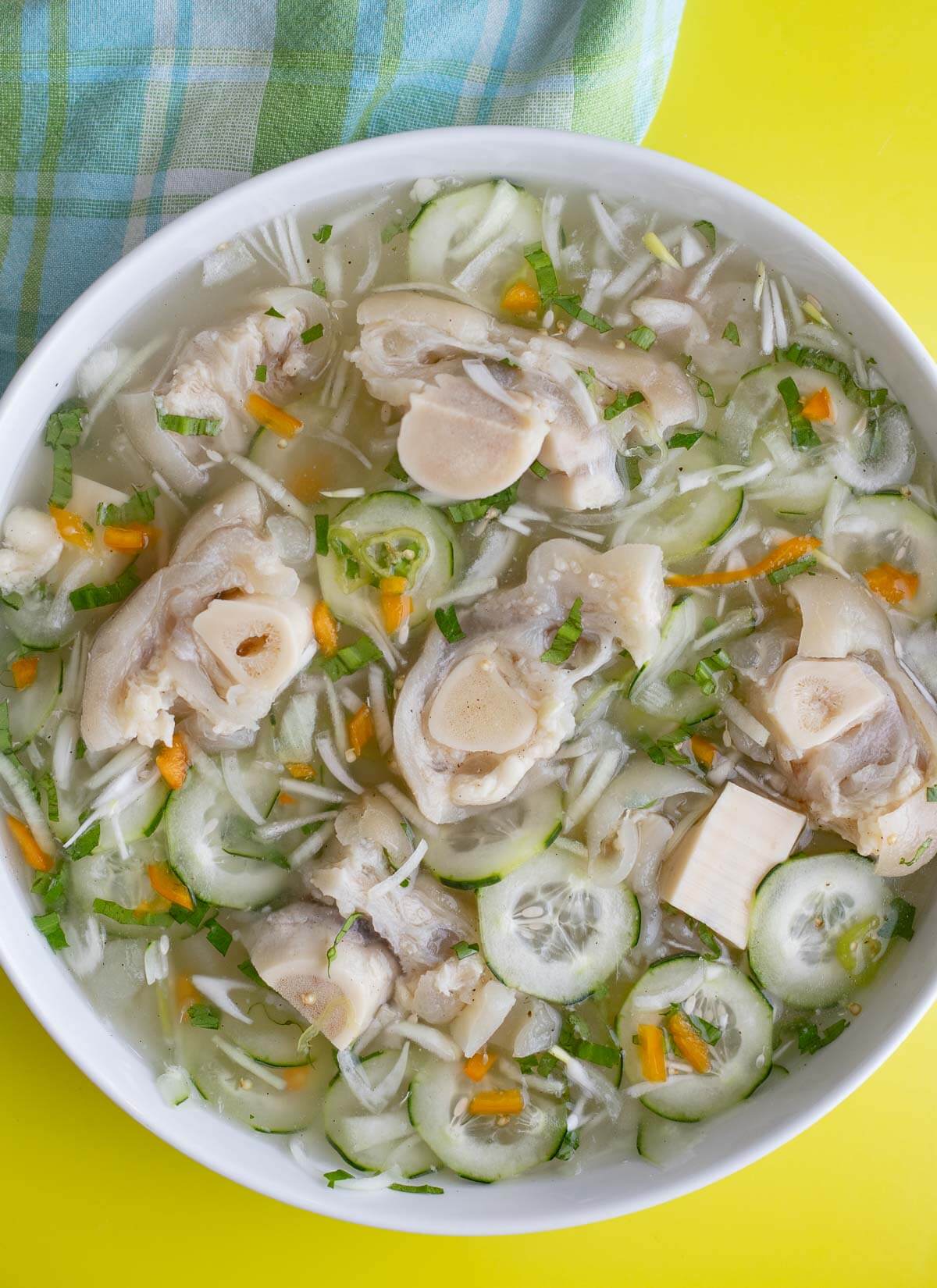
Cow heel souse is a tangy and spicy Caribbean favorite made with tender cow heel, fresh herbs, cucumber, lime, and pepper. It’s especially popular on weekends and at limes, served with plenty of that seasoned souse water.
Growing up in Trinidad and Tobago, heading to events in Shaw Park always came with one major perk—the food!
And nothing hit the spot quite like a cup of cow heel souse, or sometimes chicken foot souse served up fresh, tangy, and flavorful.
There’s just something about the gelatinous goodness of cowheel soaking up the citrus, hot pepper, and chadon beni that makes it an absolute must-have at limes and weekend gatherings.
What is souse?
Souse is a popular dish across the Caribbean where the main ingredient is cooked and then soaked in a seasoned mixture of water, citrus, herbs, onion, cucumber, and pepper.
While some islands are known for pork souse, in Trinidad and Tobago you’ll find different variations, including chicken foot souse, green fig souse, and cow heel souse.
For cow heel souse, the cow heel is cooked until tender but not falling apart, then combined with the seasoned souse water and left to soak up all that lime, chadon beni, and pepper.
How to make delicious cow heel souse
Key ingredients you’ll need
The recipe comes together in two parts. First, you’ll cook the cow heel until tender, then use fresh water, lime juice, seasonings, and vegetables to make the souse.
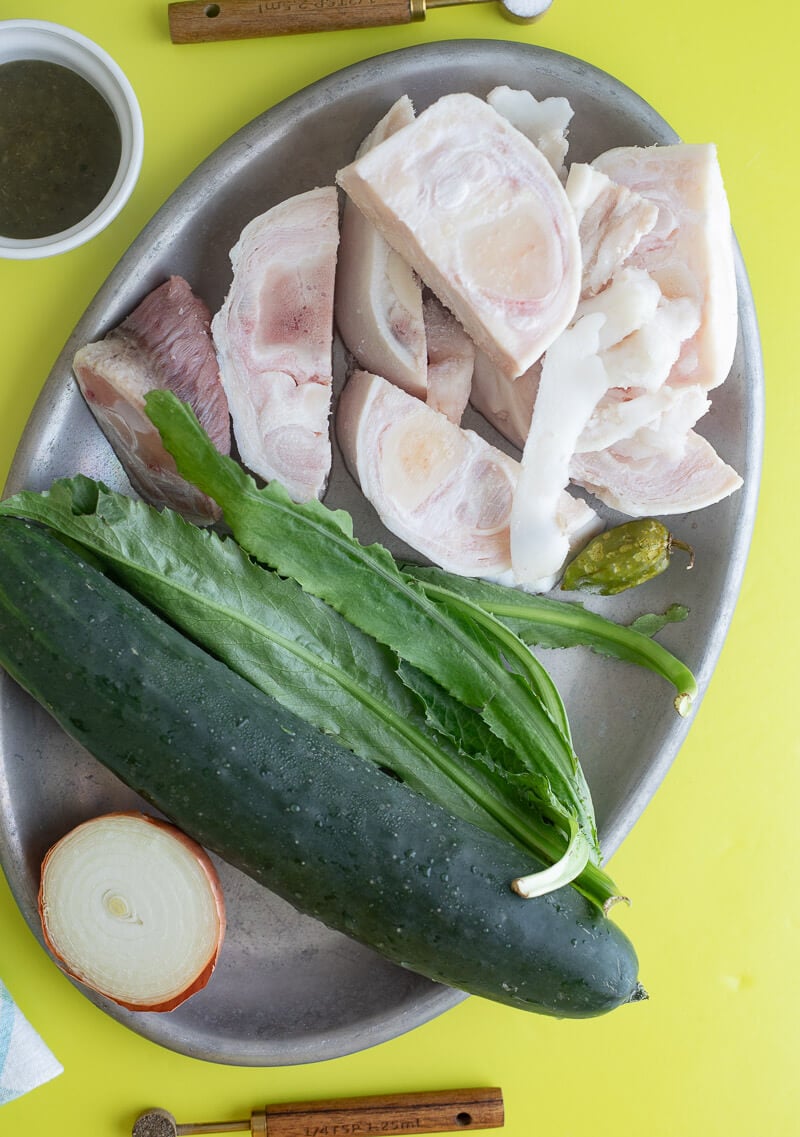
For tenderizing the cow heel: You’ll need cow heel, green seasoning, garlic, salt, and lime juice. Cook the cow heel in enough water to cover it until tender but still holding its shape.
For the souse: You’ll need fresh water, more green seasoning and lime juice, cucumber, onion, chadon beni, black pepper, salt, and thinly sliced hot pepper. The lime, herbs, and pepper give the souse its tangy, fresh, and spicy flavor.
I discard the water used to cook the cow heel and rinse the pieces before making my souse with fresh water. Some people keep the cooking liquid, but I find it makes the souse water too gelatinous. And personally, I do not want sticky lips while drinking my souse. 😂
My dad would reserve about a cup of the cooking liquid and use a little of it to season the fresh souse water. You can do that if you want some of that extra flavor without using all of the cooking liquid.
Instructions
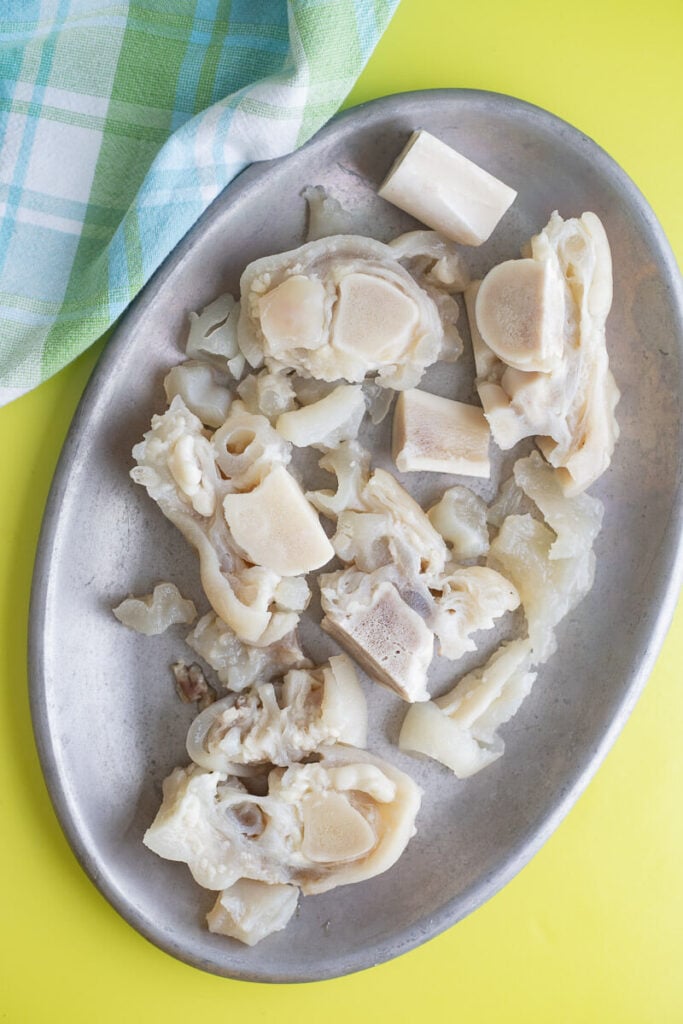
- Cook the cow heel. Wash the cow heel and remove any debris. Add it to a deep pot with green seasoning, garlic, salt, and lime juice. Cover with water and boil until tender but still holding its shape. You can also pressure cook it in an Instant Pot.
- Drain and rinse. Drain the cooked cow heel and discard the cooking water. Rinse the pieces before adding them to your souse.
- Make the souse. Place the cooked cow heel in a large bowl with fresh water, cucumber, onion, chadon beni, sliced hot pepper, green seasoning, black pepper, and lime juice.
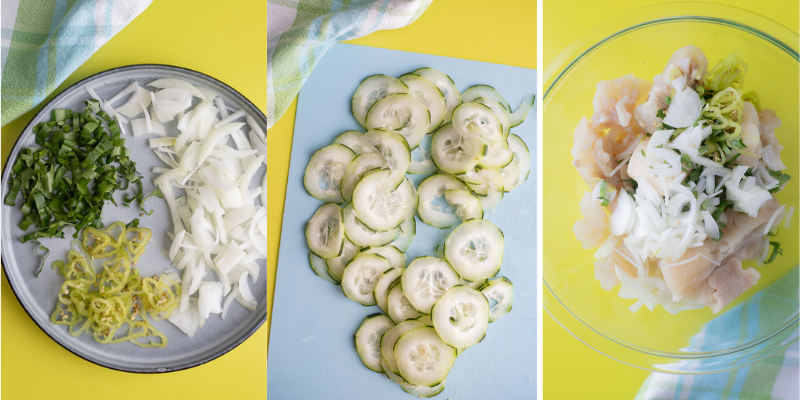
- Season to taste. Add salt and taste the souse water. Adjust the lime juice, salt, and pepper until it tastes the way you like it.
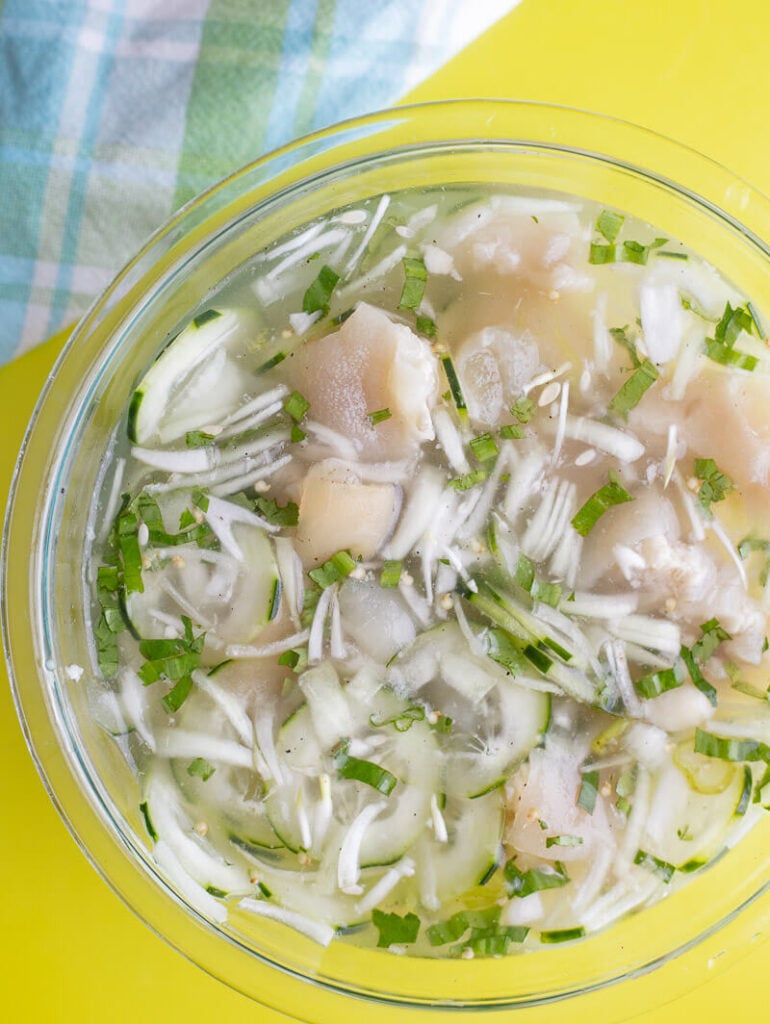
- Let it rest. Allow the souse to sit for at least 30 minutes before serving. If you have more time, let it sit for a few hours so the flavors can develop even more. You can also refrigerate it overnight.
- Serve. Enjoy your cow heel souse at room temperature or chilled. I prefer mine closer to room temperature, so if it has been refrigerated, I let my serving sit out for a few minutes before eating.
How to serve cow heel souse
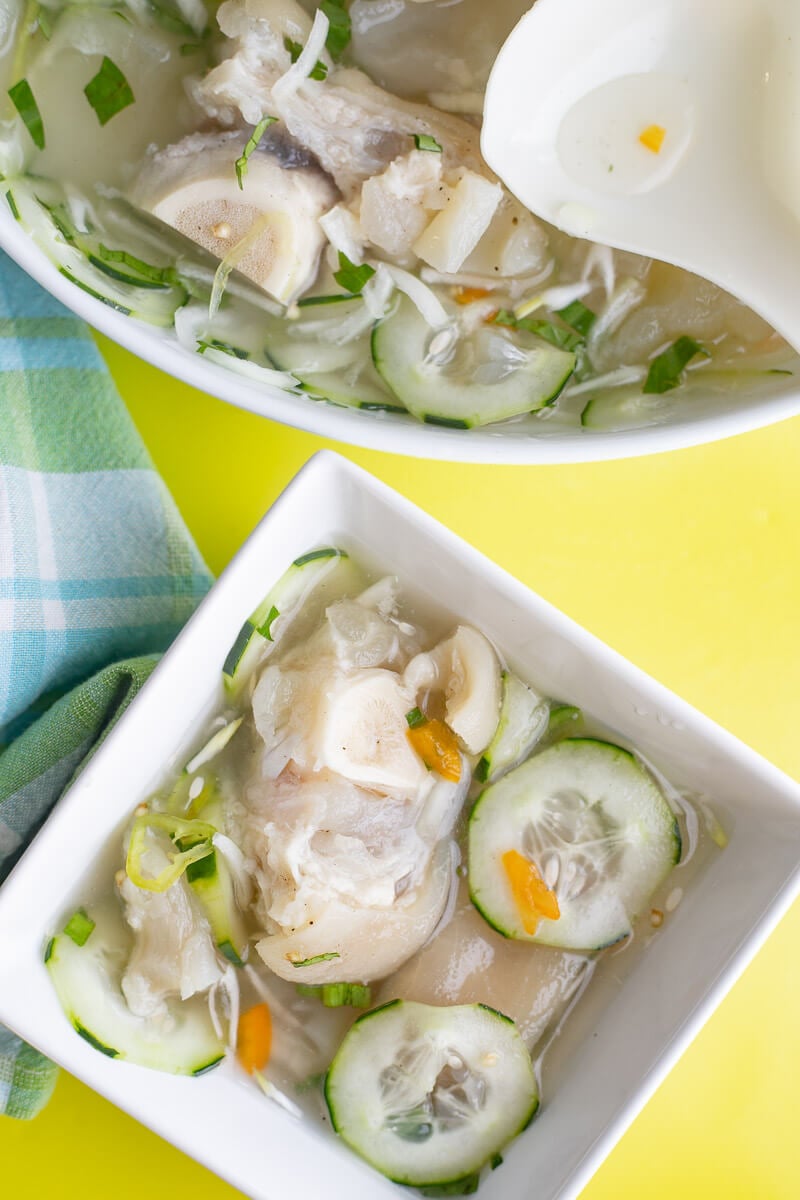
Cow heel souse can be served in a cup or bowl with plenty of the seasoned souse water. I prefer mine closer to room temperature, but you can also serve it chilled.
Serve it with hops bread or coconut bake on the side. A cold glass of mauby also goes well with it.
How to store cow heel souse
Store leftover cow heel souse in an airtight container in the refrigerator for up to 3 days. The flavors will continue to develop as it sits.
There’s no need to reheat souse. You can eat it chilled or let your serving sit out for a few minutes to take the chill off before eating.
I don’t recommend freezing cow heel souse. Freezing and thawing can affect the texture of the cow heel and the fresh cucumber and other ingredients.
More Caribbean Souse & Soup Recipes
Love souse? Try these other variations:
Frequently Asked Questions
The cow heel should be tender enough to eat easily but still hold its shape. You don’t want it cooked so soft that it starts falling apart. Cooking time can vary depending on the cow heel, so use the texture rather than time alone to determine when it’s ready.
No. Some people use the cooking liquid when making their souse, but I prefer to discard it and use fresh water because I don’t like my souse water too thick or gelatinous. My dad would reserve about a cup of the cooking liquid and add a little to the fresh water for extra flavor, which is another option.
Yes. I make my cow heel souse with lime juice, but you can use vinegar instead. Some people also use a combination of lime juice and vinegar. Adjust whichever you use to suit your taste.
It can be. I use thinly sliced hot pepper in mine, but you can adjust the amount depending on how spicy you want your souse.
If you make this cow heel souse, let me know how you like yours. And yes, you can tell me if you keep the cow heel water. Just know I am still choosing no sticky lips.
Recipe
Cow Heel Souse
Ingredients
Method
- Wash the cow heel and remove any debris.
- Add it to a deep pot with the green seasoning, garlic, salt and lime juice. Add enough water to cover by about 2 inches.
- Stovetop: Boil until tender but still holding its shape, about 45 minutes. Check as it cooks since the time can vary depending on the cow heel.
- Instant Pot: Pressure cook on high for 20 minutes, then manually release the pressure and check for tenderness. Cook a little longer if needed.
- Drain and discard the cooking water. Rinse the cow heel to remove that excess gelatin from the surface.
- Add the cow heel to a large bowl with the cucumber, onion, chadon beni, hot pepper, green seasoning and black pepper.
- Add about 3 cups fresh water and 1/4 cup lime juice. Mix, taste, then add more lime juice and salt as needed.
- Let the souse sit for at least…
Nutrition
Notes
Recipe Printed From ThisBagoGirl.com