
Easy fresh mango juice recipe – how to make it at home
This fresh mango juice recipe is made with just three simple ingredients and ripe mangoes for a naturally sweet, refreshing drink. If you’ve ever wondered how to make homemade mango juice, all you need is a blender and a few minutes. It’s an easy recipe that’s perfect for cooling down on hot summer days and a great way to enjoy fresh mangoes during mango season.
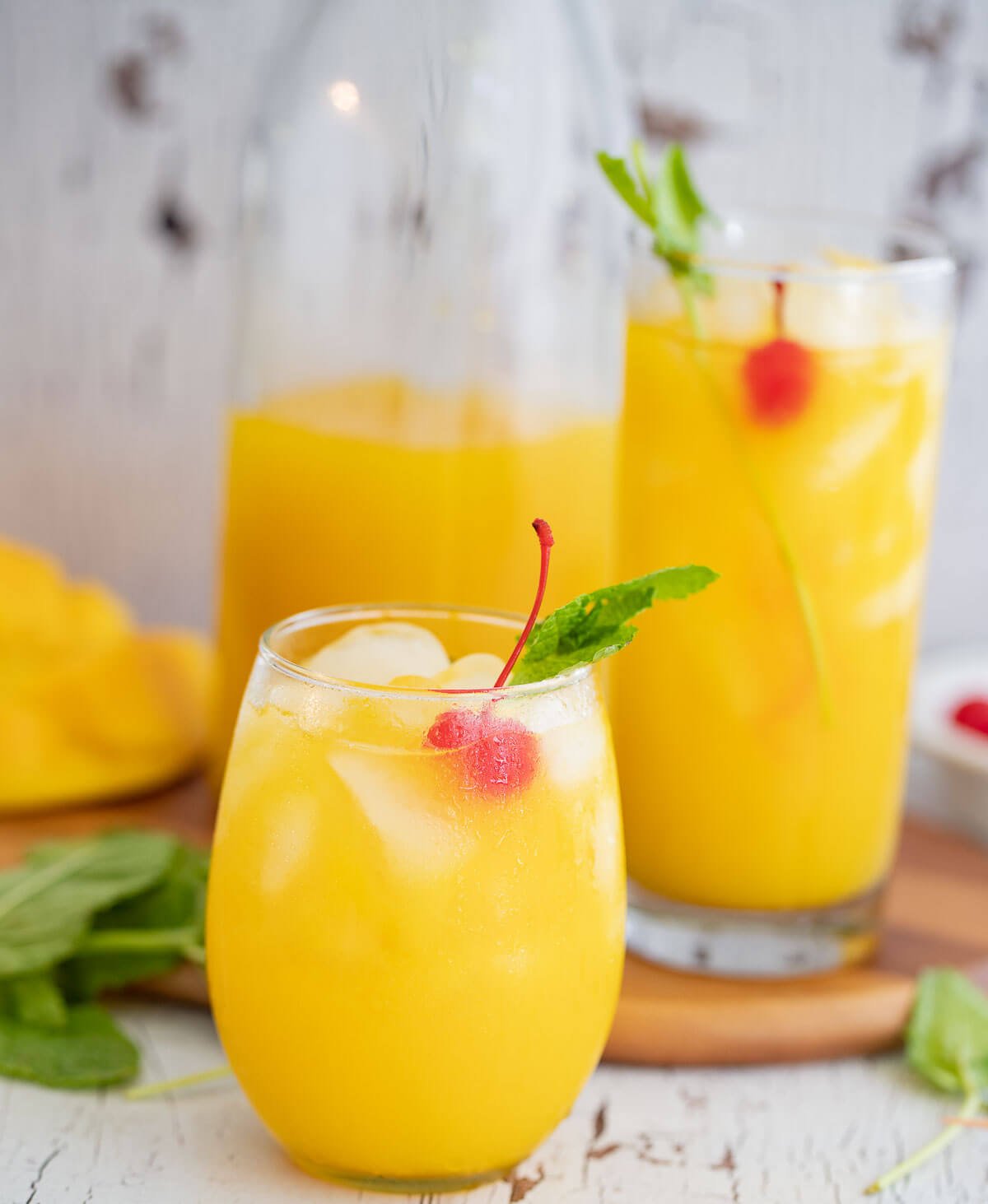
The heat of summer can be brutal, and on days like that, homemade juice is always my first choice. It’s cold, refreshing, and one of the easiest ways to enjoy fresh fruit when it’s in season.
The heat of summer can be brutal, and on days like that, homemade juice is always my first choice. It’s cold, refreshing, and one of the easiest ways to enjoy fresh fruit when it’s in season.
While orange juice might be the first thing that comes to mind, homemade mango juice is just as refreshing and packed with sweet tropical flavor. It’s also surprisingly easy to make, and you can adjust the sweetness and thickness exactly how you like it.
Mango season is a big deal in the Caribbean. People wait all year for mango season, and once it starts, buckets of mangoes seem to magically appear at everyone’s house. We don’t just eat them fresh, though. We turn them into everything from mango juice and mango ice cream to mango bread, mango sour, mango cheese, and even mango sponge cake.
I grew up surrounded by mango trees and all kinds of different mango varieties, so finding ways to use every last mango was just part of life. We used ripe mangoes and green mangoes at every stage, whether for drinks, snacks, or desserts. Homemade mango juice has always been one of my favorite ways to enjoy them.
Of course, you can buy mango juice at the grocery store, but nothing beats making it fresh. The flavor is brighter, you control the sweetness, and it’s one of the best ways to enjoy ripe mangoes during mango season.
Best mangoes for homemade mango juice
The best mango juice starts with ripe, sweet mangoes. Look for fruit that gives slightly when gently squeezed and has started to develop darker patches on the skin, which usually means it’s fully ripe. If possible, choose mangoes with very little fiber or string, since they’ll produce a smoother juice and require less straining. Save the green, unripe mangoes for recipes like chow or mango sour.
Avoid ones where the skin is bruised or split, as they could be rotting of the mango pulp.
If you have access to mango trees, I would pick the mangoes when they are just about ripe, and then leave them to ripen inside. This would help avoid birds picking at them as they ripen, then falling on the ground and rotting.
Try to find large mangoes so that you can use less than having to get a lot of small ones. So I would avoid mangoes like little par or starchies.
How to make fresh mango juice at home
This homemade mango juice comes together with just three simple ingredients. Here’s what you’ll need.
Ingredients needed
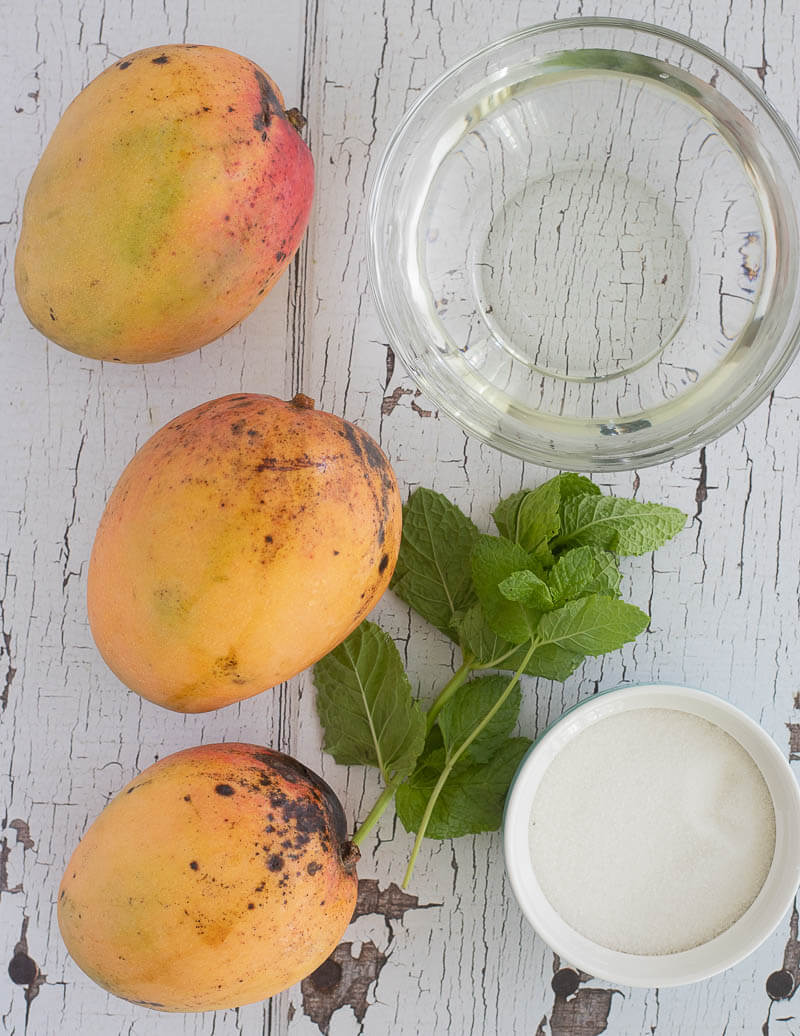
This is a very simple recipe with just three main ingredients. Here are some details on the main ones.
- Mangoes. Choose ripe, naturally sweet mangoes with as little fiber as possible. I like using Big Beef, Honey (Ataulfo), Alphonso, or Julie mangoes, but any sweet variety will work.
- Sugar – I prefer to use granulated sugar over brown sugar so that I get a light-coloured drink, but any sweetener can be used. Other sweetener options can be maple syrup, honey, or agave.
Instructions
This is really an easy recipe. It can be made in less than thirty minutes. I’ve broken down the process into grouped steps to make it easier.
How to remove mango flesh for juicing
To make this juice, our main concern is getting the mango flesh off the pit so that we can blend it. There are two ways I do it.
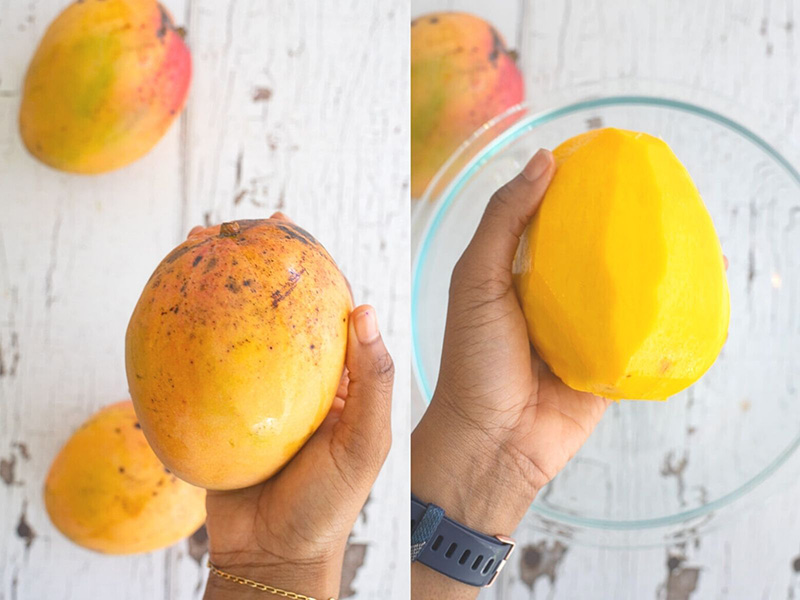
Peel First
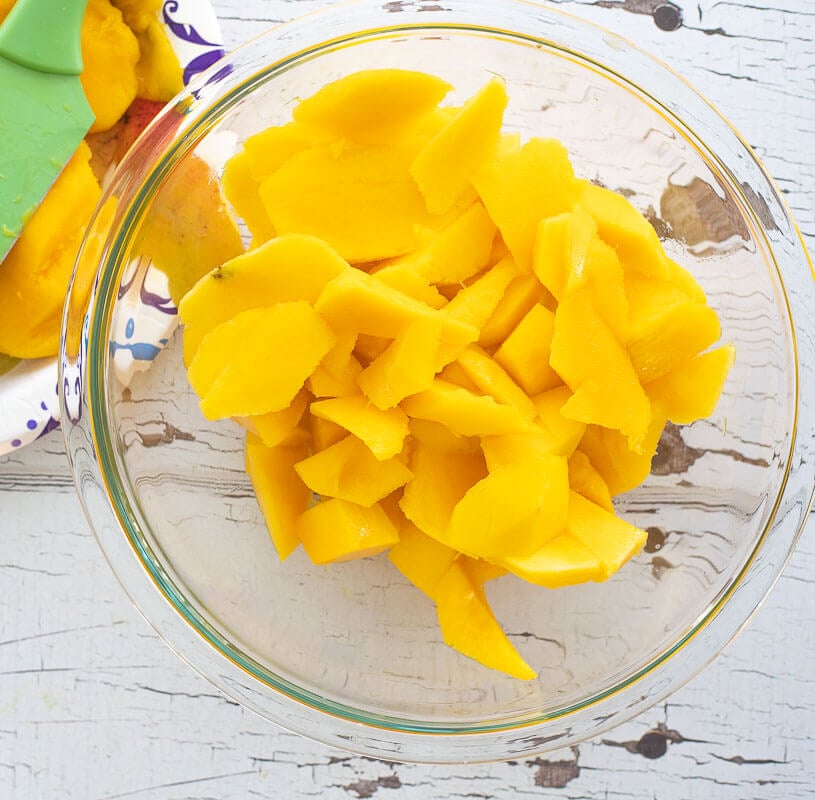
Peel the skin off the mango. Then cut a cheek off and cut that into chunks. Do the same for the other cheek. Then, remove any excess flesh of the remaining mango as close to the seed as possible.
Scoop Method
This method doesn’t require you to peel the skin. Cut the cheeks of the mango off with the skin on. Then take a spoon, dig into the flesh, and scoop it out in small pieces. Try not to dig too deep into the skin. Then, remove the rest of the skin from around the seed and remove as much remaining flesh as you can.
Making the juice
- Add all of the mango flesh to a blender and blend until completely smooth. If your mangoes are very thick or fibrous, add a small splash of water to help everything blend more easily.
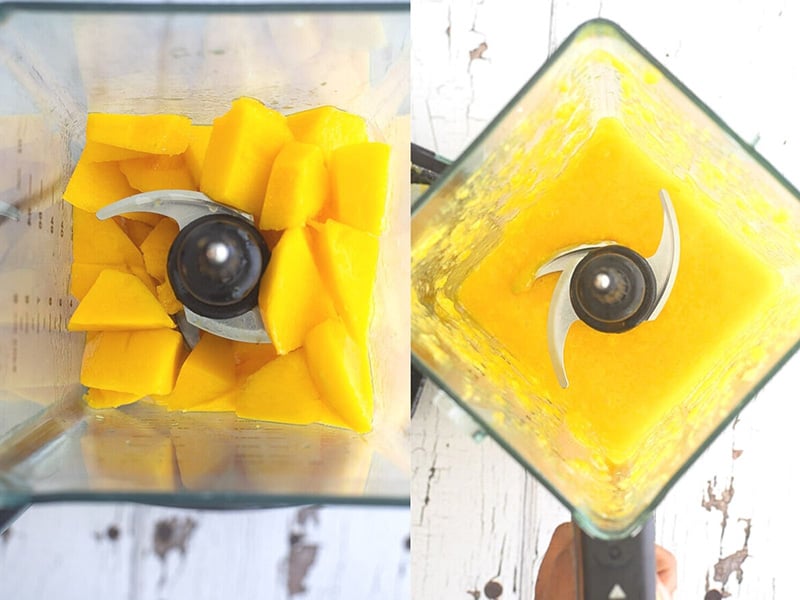
- Pour the mango puree through a fine-mesh strainer if you prefer a smoother juice. If your mangoes aren’t very fibrous and you enjoy a thicker drink, you can skip this step. I like a thinner juice, so after straining, I pour about 1 cup of water over the remaining pulp and press it through the strainer to extract even more juice before discarding the pulp.
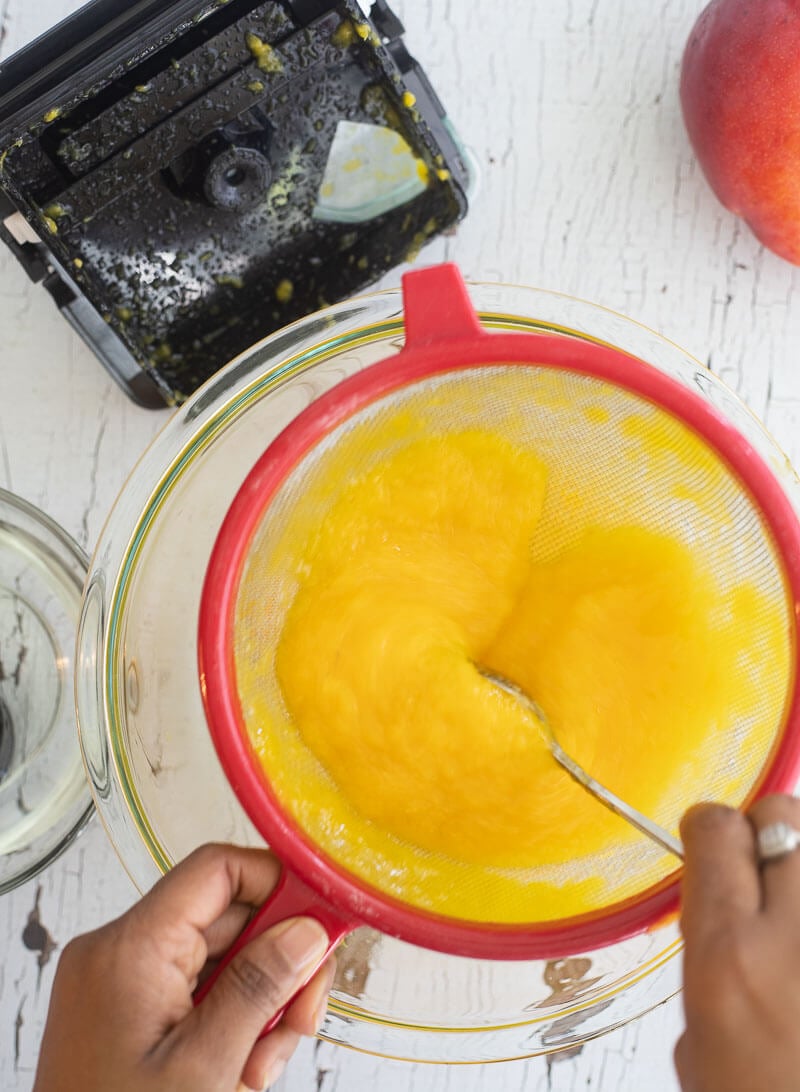
- Stir in the sugar, then gradually add water until the juice reaches your preferred sweetness and consistency. Taste and adjust before serving.
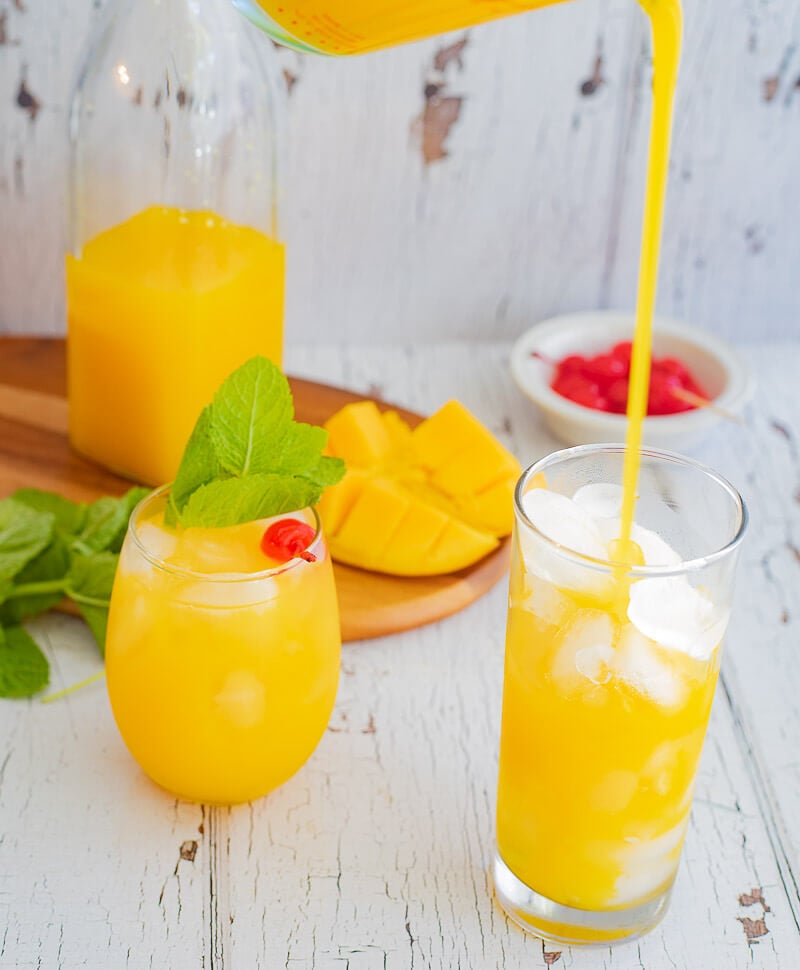
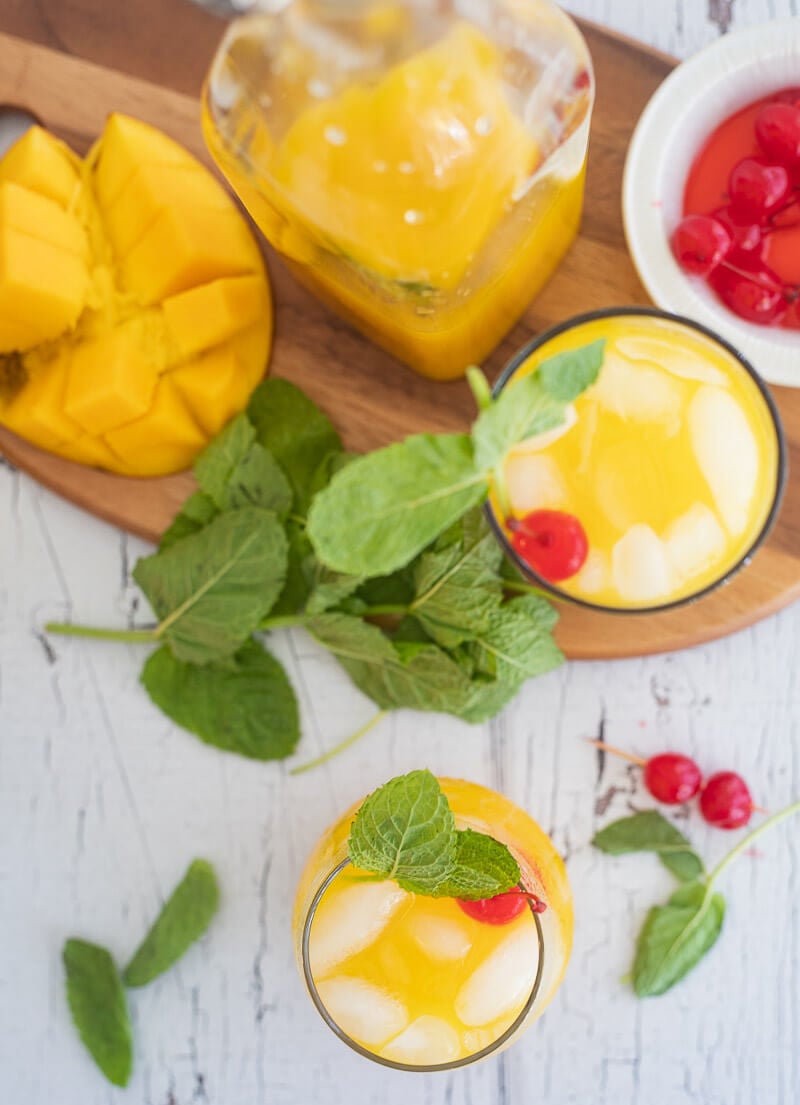
- Chill and serve your glass of mango juice over ice, and garnish with fresh mint leaves and cherries.
And if you’re looking for some more fresh fruit juices? Then check out this lime juice, papaya juice, cucumber juice, soursop juice, tamarind juice, and pineapple cucumber juice.
Tips
- Every variety of mango is different. Some are sweeter, juicier, or more fibrous than others, so start with less water and sugar, then taste and adjust as needed. It’s much easier to add more than to take it away.
- If you want this to be chilled right away, after straining, add the pulp back to the blender, along with some sugar, ice, and water, and blend it all together.
Storage
Though I usually drink this within a day or two, it will keep in an airtight container in the refrigerator for up to 5 days. Give it a good stir or shake before serving, as some separation is completely normal.
You can also freeze mango pulp for later use. If I get an abundance of mangoes, I take the pulp and then freeze it to be used at some other time to make mango juice.
You can freeze it in a Ziploc bag, or use an ice cube tray and freeze them into blocks, then store them.
Add-ins and Variations
Here are some other ingredients that can add some additional flavor.
- Coconut water – Water is used to help thin out the juice. A great replacement for water would be some coconut water. It would also add some more nutrition to the drink.
- Lime or lemon juice – A squirt of lime into the glass when you are just about to serve also adds a nice tanginess to the drink.
- Fresh ginger – Add a knob of ginger when blending to add a hint of spiciness and additional tropical flavor.
- Pineapple juice – Add some fresh pineapple to the mango juice to give it some additional flavor.
- Passion fruit – Add some passion fruit juice to make a great mango passion fruit combination.
- Essence and bitters – you can add a little vanilla essence and/or a dash of Angostura bitters to help elevate the taste.
More fresh juices
Looking for even more island drinks? Browse my Best Caribbean Drinks collection for more juices, punches, and Caribbean favorites.
Fresh Mango Juice FAQs
The best mango juice recipe uses ripe, sweet mangoes and minimal ingredients, so the natural flavor shines. Fresh mango juice is simple to make and doesn’t need much added sugar when the mangoes are fully ripe.
You can use frozen mango, the one with no artificial flavor or added sugar. If not, then mango nectar is another substitute.
If the type of mango you use is not stringy, then you do not have to strain the drink. If you make it a thick drink (don’t use as much thinner like water/juice/coconut water), then you can serve it over ice cubes so that as it melts, it thins out the drink, making it easier to consume.
Yes. Fresh mango juice can be made up to a few days in advance and stored in the refrigerator. Since it’s made without preservatives, it’s best enjoyed within 5 days. Give it a quick stir or shake before serving because natural separation is normal.
Yes. While you can scoop the flesh directly from the skin, the skin itself shouldn’t be blended into the juice because it has a bitter taste and a tough texture.
Absolutely. If your mangoes are very ripe and naturally sweet, you may not need any added sugar at all. Taste the juice after blending before deciding whether to sweeten it.
If you give this fresh mango juice recipe a try, I’d love to hear what you think! Leave a comment and a rating below, and let me know what variety of mango you used.
Recipe
Fresh mango juice
Ingredients
Equipment
Method
- Wash mangoes then peel and remove all flesh from the seed.
- Add the mango pulp to your blender.
- Blend until fine.
- Strain blended pulp. Use some water to assist straining.
- Add water to get the consistency you want. More water will make it thinner; less water thicker.
- Sweeten to your liking (will vary depending on how sweet your mangoes are).
- Served chilled over ice.
- Garnish with mint or cherries.
Nutrition
Notes
Recipe Printed From ThisBagoGirl.com


keep up the fantastic work…love the simplicity…
Thank you!!
While I enjoy this refreshing drink, nothing beats a bowl of fresh, ripe mangoes. Sinking into them while the juice runs down your hand.