
Cassava Pone Recipe (Gooey Center & Crusty Edges)
You’ll want a slice, or three, of this Caribbean cassava pone. Made with grated cassava, coconut milk, coconut, and warming spices, it bakes up with a soft, gooey center and those coveted crusty, caramelized edges.
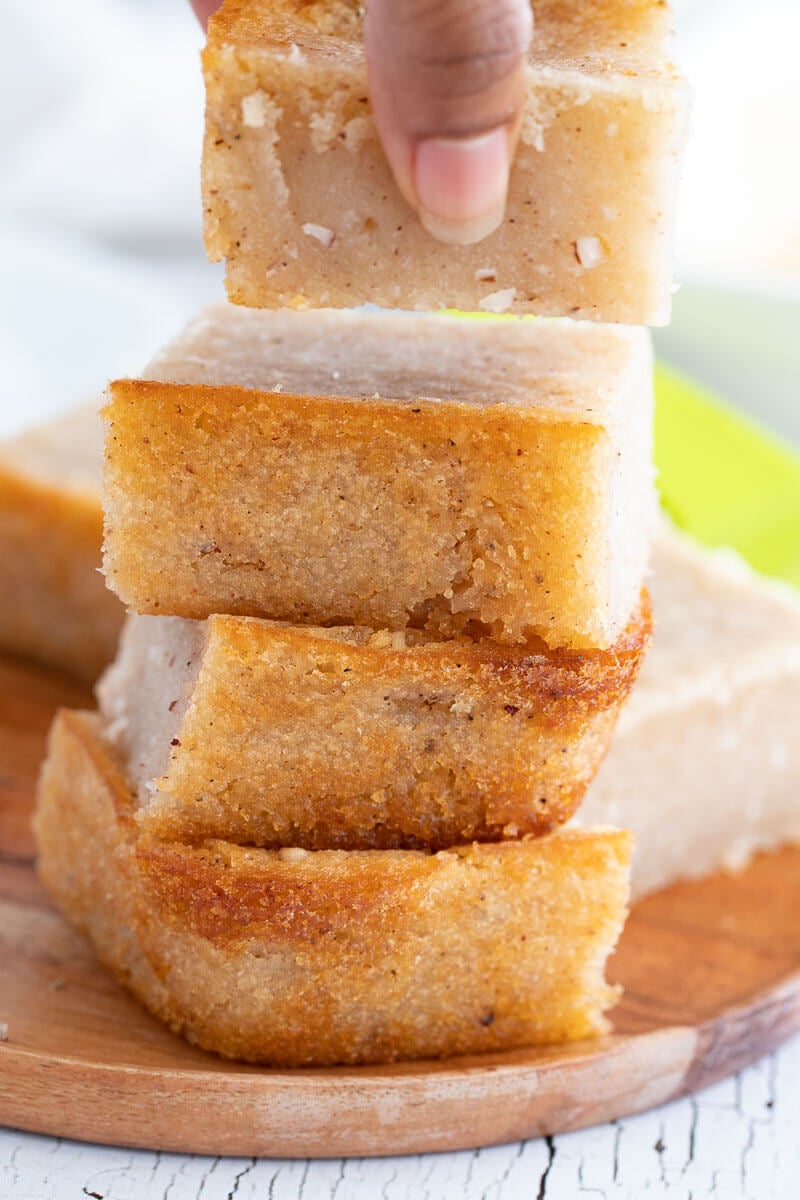
Cassava pone is one of those old-school Caribbean treats where everybody has a favorite piece. Some people want the soft middle. Some are fighting for the crusty edges. Me? Give me both.
This simple cassava pone recipe gives you that dense, slightly chewy texture pone is known for without a complicated process. And if you’ve never made it before, I’ll show you what the mixture should look like and how to tell when it’s properly baked.
Cassava is a staple in Caribbean kitchens, and we use it in everything: dumplings, butter cassava, cassava black cake, and even drinks. It’s truly a versatile root.
What is Cassava Pone?
Cassava pone is a dense, baked Caribbean dessert made with grated cassava, coconut, sugar, spices, and other ingredients that can vary from island to island and family to family.
The texture falls somewhere between a pudding and a cake. It’s dense, moist, slightly chewy, and spiced, with a soft center and caramelized edges. Other types of pone can be made with ingredients like sweet potato, pumpkin, cornmeal, or a combination of provisions, like my Caribbean mixed provision pone made with cassava, pumpkin, and sweet potato.
What is Cassava?
Cassava (aka yuca) is a starchy root vegetable used widely in Caribbean, African, and Latin American cooking. It’s one of the ingredients we commonly refer to as ground provisions. If you’re unfamiliar with the term, my guide to Caribbean ground provisions explains the different types and how we use them.
We boil, mash, fry, and bake cassava, and you’ll find it sold fresh, frozen, or grated in many Caribbean and international markets. If you want more ideas for using it, check out my collection of cassava recipes for everything from savory dishes to desserts and drinks.
Important: Don’t eat cassava raw. It contains naturally occurring compounds that must be reduced through proper preparation and cooking. Once properly prepared and cooked, it’s ready to enjoy.
Ingredients You Need
Cassava pone doesn’t need a long list of ingredients. Most of the flavor comes from the cassava, coconut, and warm spices.
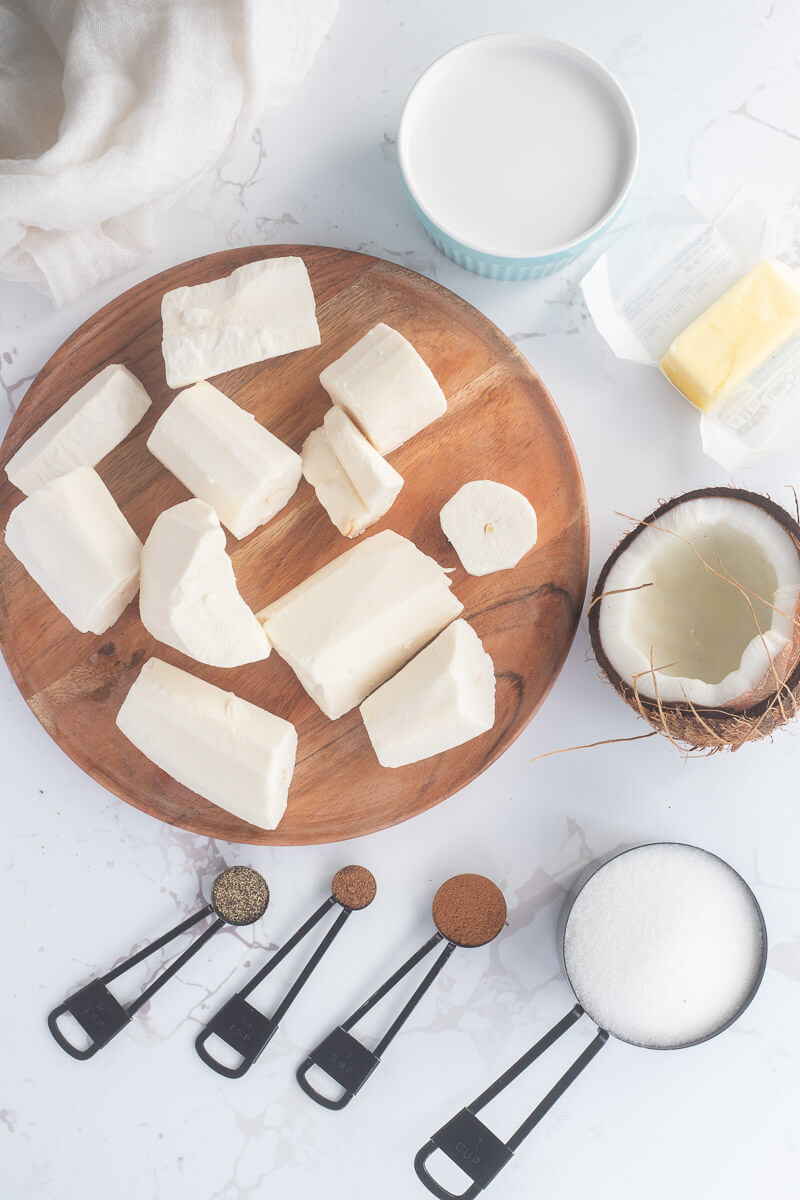
- Cassava: I usually make cassava pone with either fresh cassava or frozen cassava that I thaw and grate myself. Both work well. If using fresh cassava, peel it before grating or processing.
- Coconut milk: Adds richness and moisture to the pone. Canned coconut milk works well, but fresh homemade coconut milk is always a win if you have the time.
- Grated coconut: Freshly grated coconut gives you the best flavor, but unsweetened desiccated coconut also works. If using desiccated coconut, I like to pulse it briefly in the food processor.
- Sugar: You can use granulated or brown sugar. Brown sugar gives the pone a slightly deeper flavor and darker color.
- Spices: Cinnamon, nutmeg, and a little black pepper give cassava pone its warm, spiced flavor. Freshly grated nutmeg is especially good here.
- Salt: Just a little helps balance the sweetness and bring out the other flavors.
- Butter: Melted butter adds richness and helps with the texture. Salted or unsalted works. Just adjust the added salt if needed.
- Mixed essence: A Caribbean pantry favorite that adds that familiar aroma and flavor. If you don’t have it, vanilla or almond extract can be used instead.
Equipment
- Ovenproof baking dish
- Mixing bowl
- Grater or food processor
How to Make Cassava Pone With a Gooey Center & Crusty Edges
- Prepare the cassava. Peel and core fresh cassava, or thaw frozen cassava. Chop into manageable pieces, then grate or process until fine and slightly mushy. This helps the pone hold together and gives you a smoother texture.
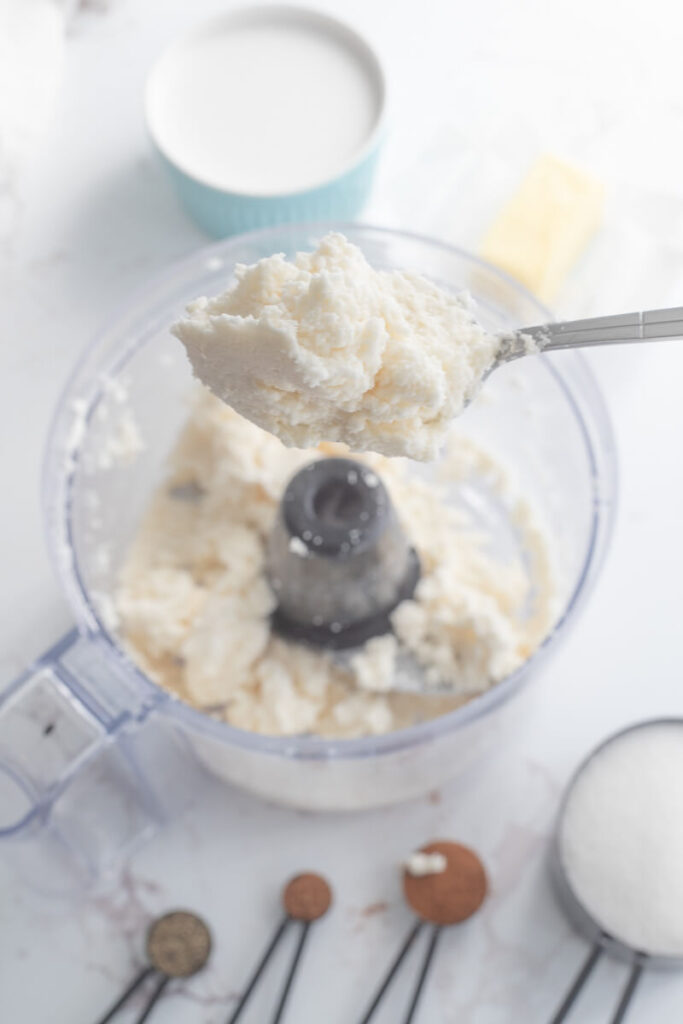
- Grate the coconut. Grate or process the fresh coconut until fine. If using desiccated coconut, pulse it briefly in the food processor.
- Combine the dry ingredients. In a large bowl, mix the grated cassava and coconut with the sugar, nutmeg, cinnamon, and salt.
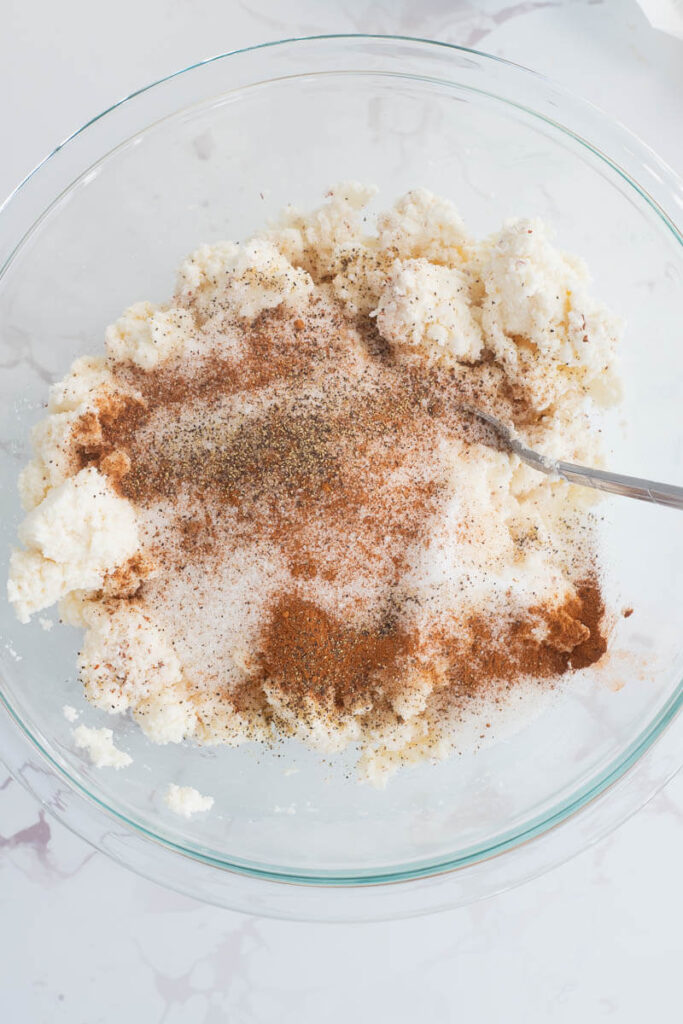
- Add the wet ingredients. Melt the butter and combine it with the coconut milk and mixed essence. Stir into the cassava mixture until everything is evenly combined. The mixture should be loose and moist, but not watery. That moisture helps give the pone its soft, gooey center.
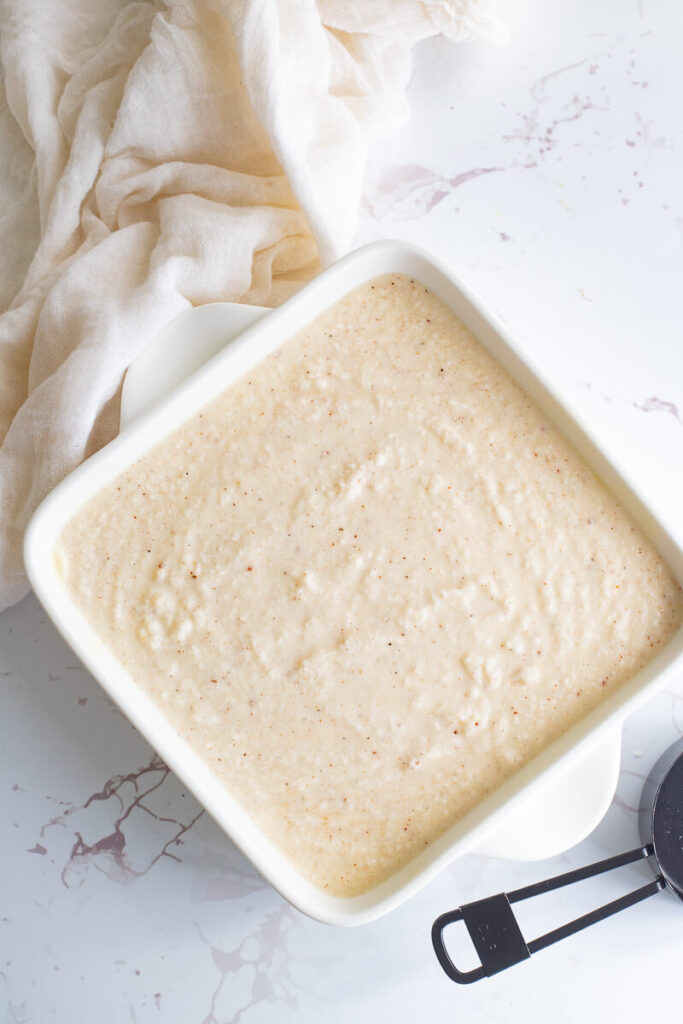
- Prepare the pan. Grease an 8×8-inch baking dish well, making sure to get the sides and corners. Pour in the cassava mixture and smooth the top.
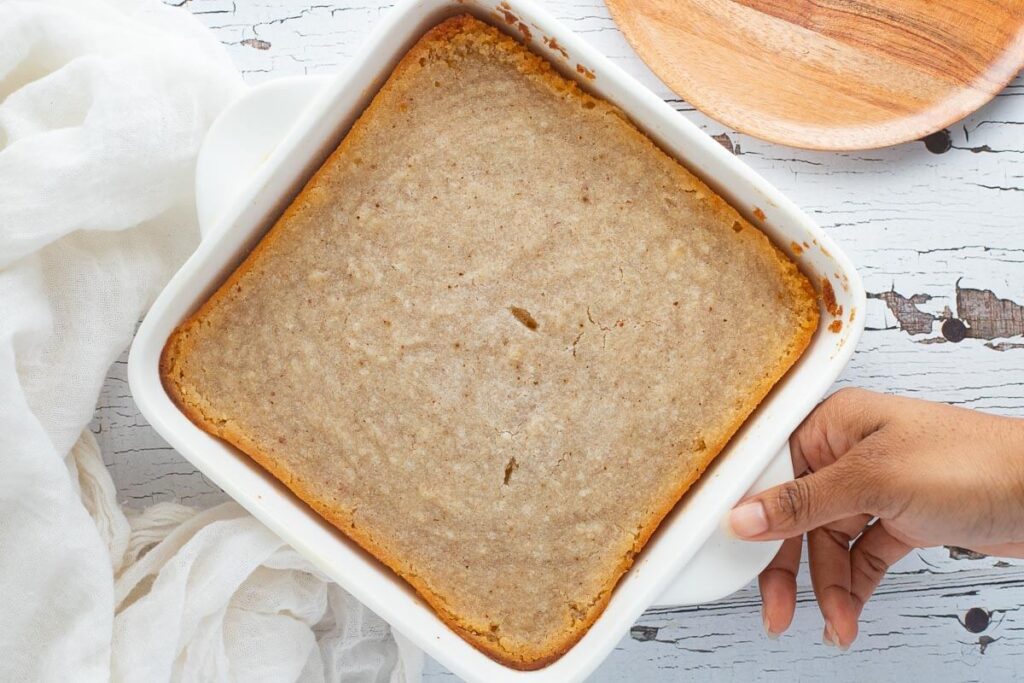
- Bake. Bake at 350°F on the center rack of oven for about 1 hour. The top should be golden brown, with darker, caramelized edges that begin to pull slightly away from the pan. A knife inserted into the center should come out mostly clean, but don’t continue baking until the center becomes dry.
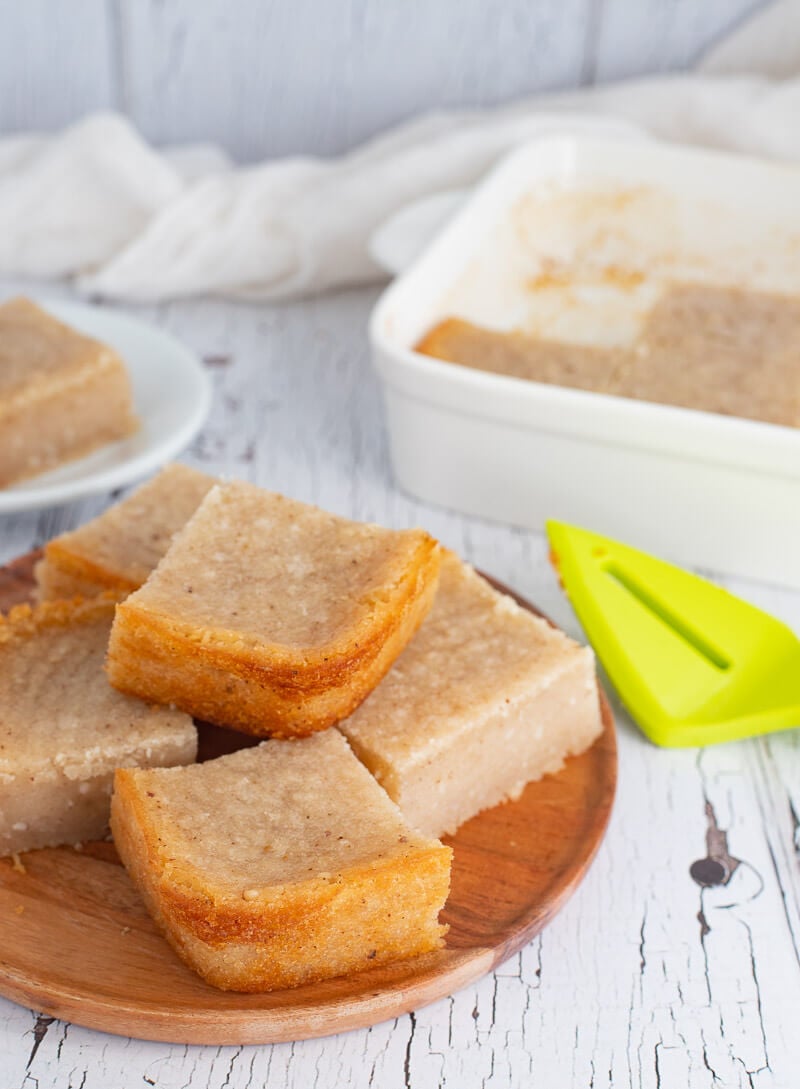
- Cool and slice. Let the cassava pone cool before slicing so the center has time to set. For the cleanest slices, allow it to cool completely. If you can’t wait that long, give it at least 10 minutes before digging in.
Variations & Add-Ins
Cassava pone varies across the Caribbean and from family to family, so there are plenty of ways to make it your own.
- Pumpkin or sweet potato: Add some grated pumpkin or sweet potato for a slightly different flavor and texture. You can also try my [mixed provision pone] if you want a version made with cassava, pumpkin, and sweet potato.
- Ginger: Add a little freshly grated ginger if you like a bit of extra warmth alongside the cinnamon and nutmeg.
- Raisins: If raisins are your thing, toss some into the mixture before baking for little bursts of sweetness.
- Brown sugar: Use brown sugar instead of granulated sugar for a deeper flavor and slightly darker pone.
- Make it vegan: Replace the butter with your favorite plant-based butter. The recipe already uses coconut milk, so that’s the only swap you need.
Tips for the Best Cassava Pone
- Watch the consistency. The mixture should be loose and moist before baking, but not watery. If it starts out too dry, the finished pone can be firm rather than soft and gooey in the center.
- Don’t process the cassava too finely if you like more texture. A finer texture gives you a smoother pone, while slightly coarser cassava gives it a little more bite.
- Don’t overbake it. Start checking around 45 minutes since ovens and baking dishes vary. You want a golden top, caramelized edges, and a center that is set but still moist.
- Let it cool before judging the texture. Cassava pone continues to set as it cools, so a soft center straight from the oven doesn’t necessarily mean it’s underbaked.
- Use an 8×8-inch pan for this recipe. That’s the size I use and what the baking time is based on.
How to Store Cassava Pone
Once completely cooled, store cassava pone in an airtight container or resealable bag.
- Room temperature: Keep for up to 1 day.
- Refrigerator: Store for up to 1 week.
- Freezer: Wrap individual slices well and place them in a freezer-safe bag or container. Freeze for up to 2–3 months and thaw overnight in the refrigerator.
- To reheat: Enjoy it cold, bring it to room temperature, microwave it briefly, or warm it in a toaster oven to bring back some of those crusty edges.
More desserts to try:
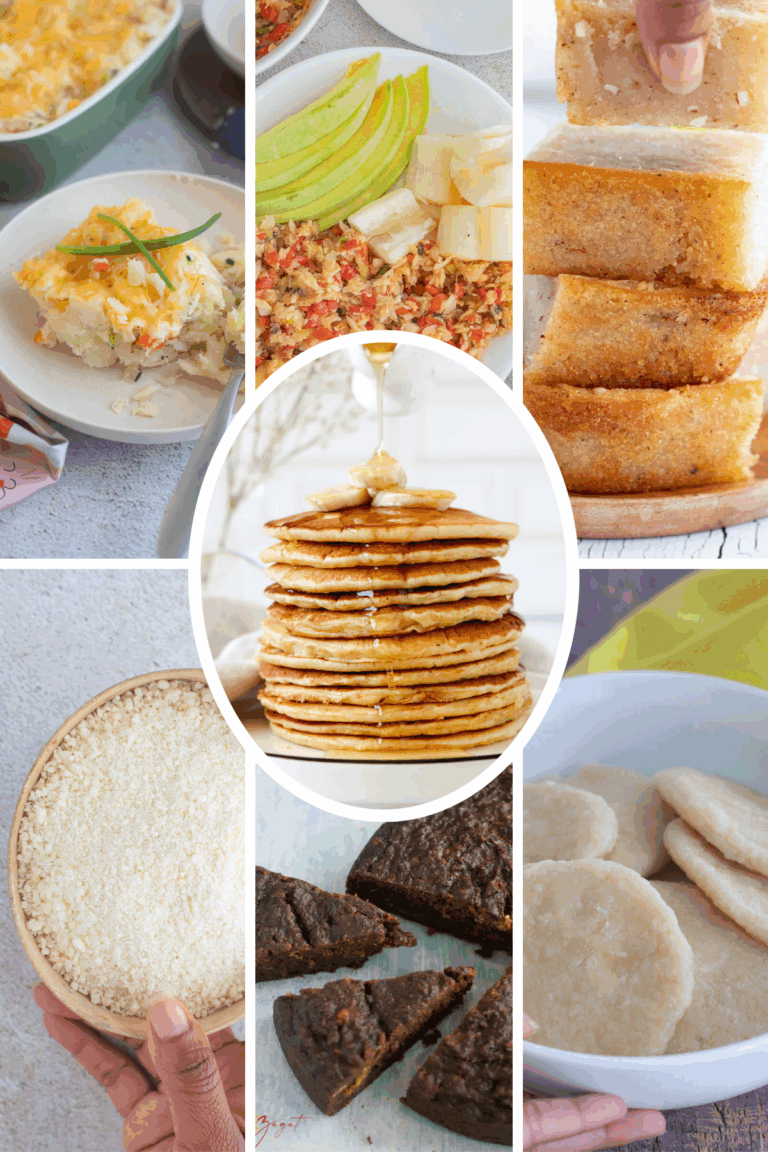
Ready to dive into more island sweets? Try one of these next—and don’t forget to drop a comment if you’re team crusty edge or team soft center!
Frequently Asked Questions
Cassava pone is sweet, coconutty, and warmly spiced, with a dense, slightly chewy texture. When properly baked, the center stays soft and moist while the edges become darker and caramelized.
The top should be golden brown, the edges should be caramelized and beginning to pull away from the pan, and a knife inserted into the center should come out mostly clean. The center can still feel soft while hot because cassava pone continues to set as it cools.
It may have been baked too long or the mixture may not have had enough moisture. The cassava mixture should be loose and moist before it goes into the oven, and the pone should be removed once the center is set but still moist.
Yes. Once completely cooled, wrap individual slices well and freeze them in a freezer-safe container or bag for up to 2–3 months. Thaw overnight in the refrigerator before serving or reheating.
Yes. I regularly use frozen cassava for this recipe. Thaw it first, then grate or process it just as you would fresh cassava.
Recipe
Cassava Pone Recipe
Ingredients
Method
- Preheat oven to 350°F. Grease an 8×8-inch baking dish well.
- Melt butter and set aside.
- Grate or process the cassava until fine. You should get about 2½ cups, loosely packed.
- Grate the coconut until fine; about 1 cup.
- In a medium bowl, mix cassava and coconut.
- Add sugar, cinnamon, nutmeg, and black pepper.
- Stir in melted butter, essence, and coconut milk until fully combined. The mixture should be loose and moist, but not watery.
- Pour the mixture into a well-greased baking dish.
- Bake for 1 hour to 1 hour 15 minutes, or until golden brown, the edges are caramelized and beginning to pull away from the pan, and a knife inserted in the center comes out mostly clean.
- Allow to cool before slicing so the center has time to set.
Nutrition
Notes
- Want a chunkier texture? Don’t grate the cassava too fine. Just add a little more liquid to help it cook through.
- Baking time may vary depending on the depth of your dish.
- Fresh or frozen cassava both work—if using frozen, be sure to fully defrost (overnight in the fridge or water).
Recipe Printed From ThisBagoGirl.com

Hi! There is no mention in the list of ingredients or in the recipe itself about When to add the Mixed Essence or How much to use. Please let me know. I’m looking forward to trying this recipe. I love pone!
Patricia, I’ve update the recipe card. Thanks for pointing it out!!