What Is Ground Provision? Caribbean Foods & Examples
Ground provision is a staple in Caribbean cuisine, and if you grew up in the region, you’ve probably had some version of it on your plate. Cassava, yam, dasheen, sweet potato, green fig, plantain, and breadfruit are some of the provisions we boil, roast, fry, mash, and use in everything from side dishes to desserts.
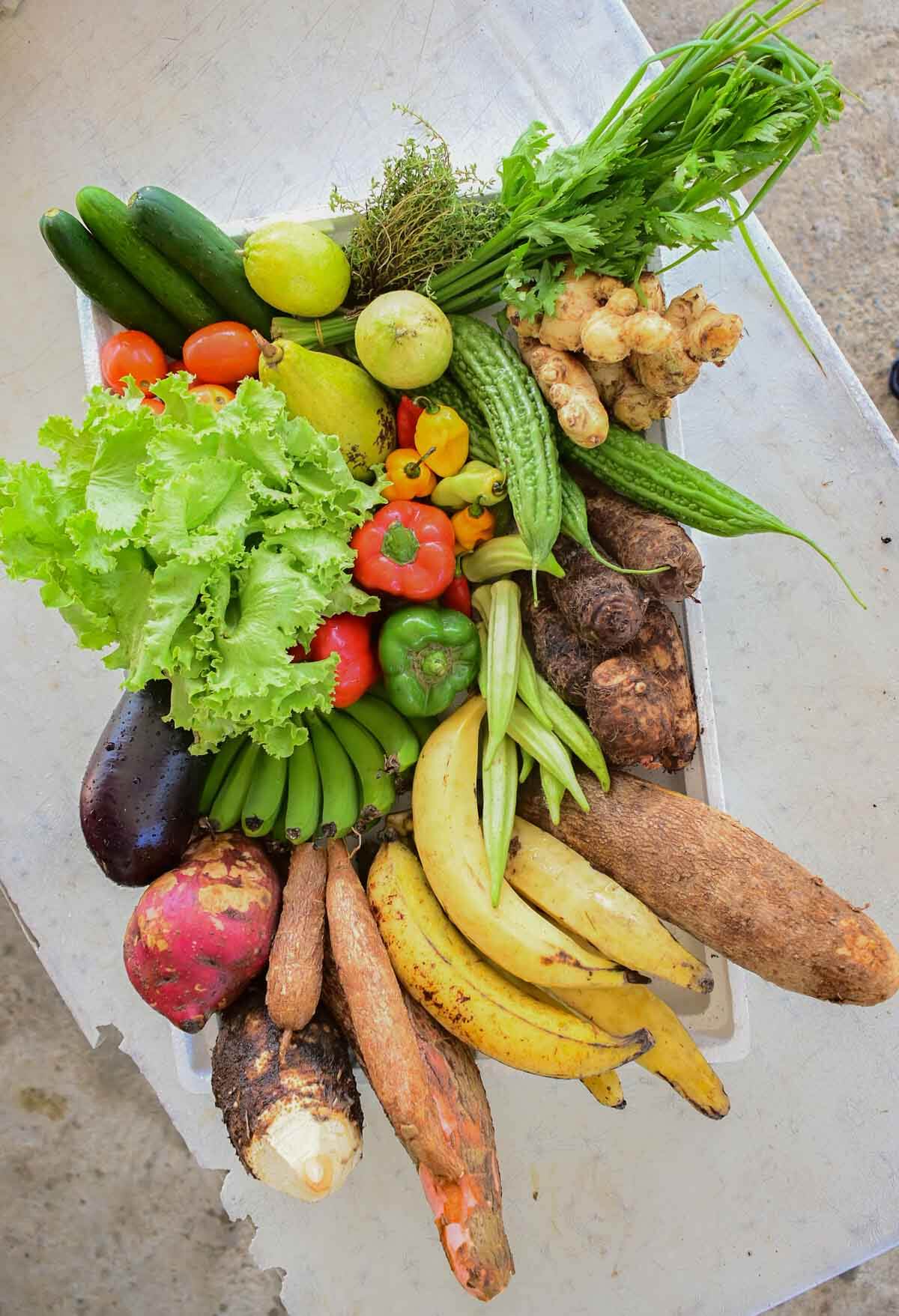
These starchy foods can show up at just about any meal, from breakfast to dinner, and even in drinks and desserts. But what exactly counts as ground provision? Let’s get into what the term means, some of the most popular examples, and the different ways we use them.
What is ground provision?
Ground provision is a term used throughout the Caribbean for a group of starchy root vegetables and tubers, including cassava, yam, dasheen, eddoes, and sweet potato.
However, not everything we consider provision actually grows underground. Plantains, breadfruit, and green bananas are also commonly grouped with ground provisions in Caribbean cooking because they’re often prepared and served in similar ways.
Ground provisions have long been an important part of the Caribbean diet and can be served at just about any meal. The simplest and one of the most common ways to prepare them is to boil them in water until fork-tender, then serve them alongside meat, fish, or other dishes.
And they aren’t limited to the Caribbean. Many of these same starchy foods are also commonly used throughout West Africa and Latin America, although how they’re prepared and what they’re called can vary from place to place.
How to cook ground provisions
Boiling is one of the most common ways to cook ground provisions. Depending on the type, they can also be roasted, fried, baked, mashed, or added to soups and stews. Once cooked, they’re often served as a side with meat, fish, or other Caribbean dishes.
Some provisions, like cassava, dasheen, and yam, take a little extra work to peel and prepare, but they can be used in plenty of different ways beyond simply boiling them.
You’ll also find ground provisions used in less traditional ways, from ice cream and drinks to flours, pizza crusts, and other doughs.
The most popular ground provisions
There are many types of ground provisions used throughout the Caribbean. Some of the most common include cassava, yam, dasheen (taro), eddoes, tania, sweet potato, green banana (green fig), plantain, and breadfruit.
The names and varieties can differ from island to island, but you’ll find many of these prepared in similar ways. Let’s look at some of the most popular ground provisions and how they’re commonly used in Caribbean cooking.
Plantain
Plantains are part of the banana family and can easily be mistaken for large bananas. Unlike the bananas typically eaten as a snack or with breakfast, plantains are starchier and are usually cooked before eating.
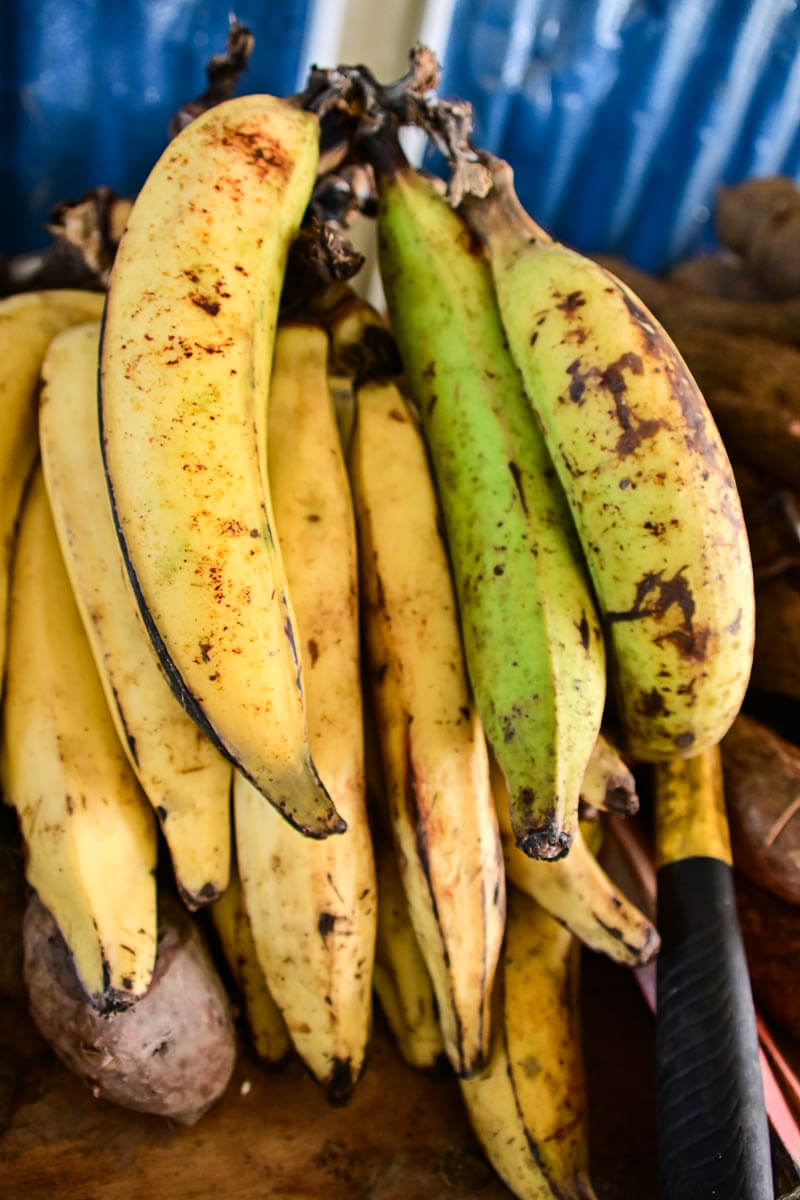
Green plantains are firm and starchy with a more savory flavor, while ripe plantains become softer and sweeter as the skin turns yellow and eventually black. Their thicker skin can also make them a little tougher to peel, especially when green.
Plantains can be boiled, fried, baked, roasted, or mashed, depending on their stage of ripeness and how you plan to use them.
Here are a few different ways to use plantains:
Potatoes
Potatoes are probably one of the most familiar ground provisions on this list. They have a mild, starchy flavor that makes them easy to pair with different seasonings, sauces, meats, and fish.
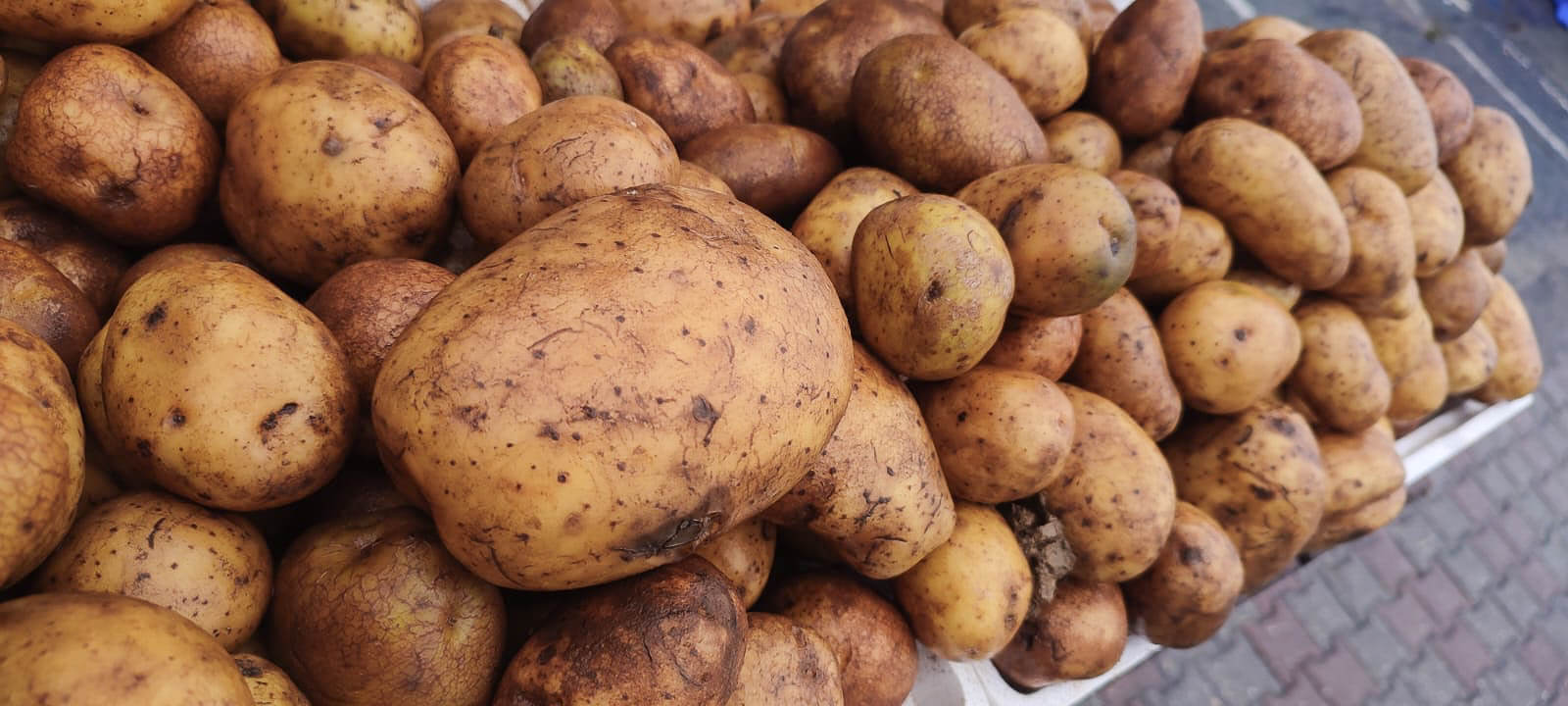
In Caribbean cooking, potatoes can be boiled, fried, baked, mashed, or added to soups, stews, and curries. When served as part of a traditional plate of ground provisions, they’re usually peeled, chopped, and boiled until tender.
You can also use them to make dishes like Caribbean potato salad and Trinidad potato pie.
Sweet Potato
Sweet potatoes are starchy root vegetables with a naturally sweet flavor. Although they’re called potatoes, sweet potatoes aren’t the same as regular potatoes. Depending on the variety, the flesh can range from white or cream to yellow, orange, or purple.
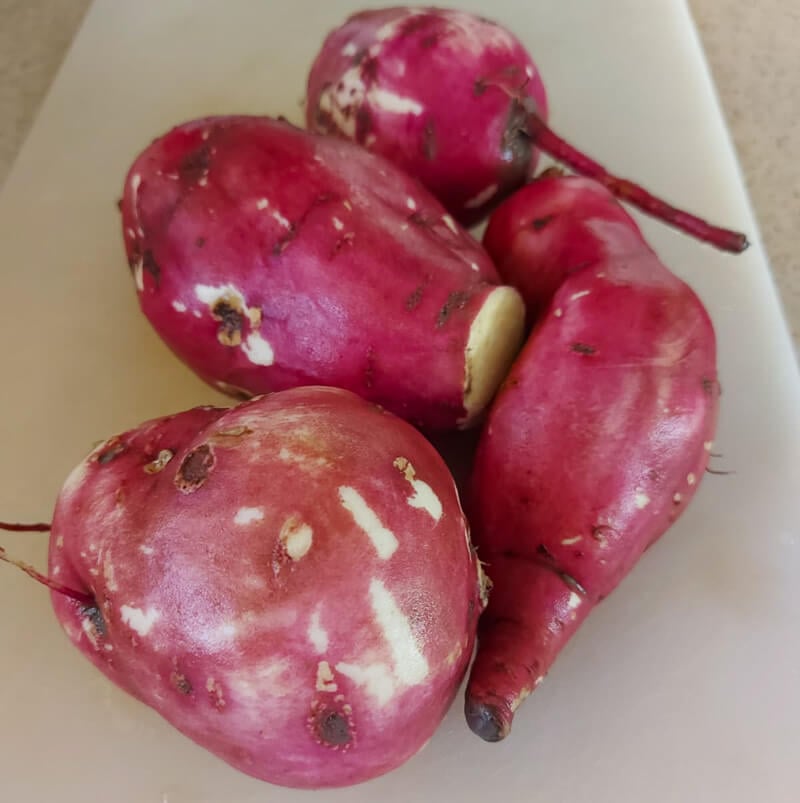
Sweet potatoes can be boiled, baked, roasted, fried, or mashed and are used in both savory and sweet Caribbean dishes. I also use sweet potato along with other provisions in my ground provision pone, which is a great example of how these starchy vegetables can be turned into dessert.
Yams
Yams are starchy tubers that are often confused with sweet potatoes, but they’re completely different plants. True yams belong to the Dioscorea genus and usually have rough, bark-like skin with white, cream, or yellow flesh.
Throughout the Caribbean, yams are commonly peeled, boiled until tender, and served with other ground provisions, soups, meats, or fish. Different varieties are available depending on where you live, but here in South Florida, I tend to see yellow yam more often than white yam.
Green banana
Green bananas, also called green figs in Trinidad and Tobago and some other Caribbean islands, are simply bananas picked and cooked before they ripen. At this stage, they’re firm and starchy rather than soft and sweet, so they’re treated more like a vegetable.
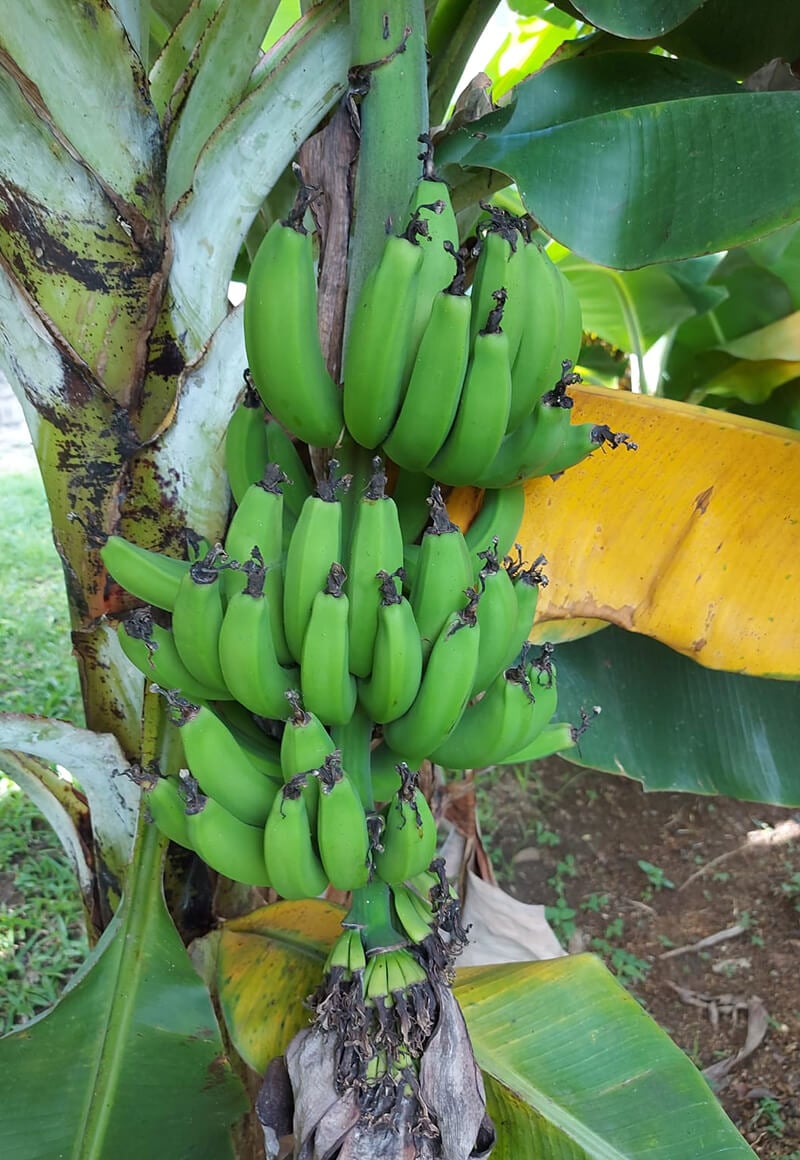
Green bananas are commonly boiled until tender and served alongside other ground provisions, meat, or fish. They can also be used in salads, pies, soups, and other savory dishes.
Some dishes using green fig include:
Green bananas are also a source of starch and dietary fiber. Beyond boiling, they can be fried, mashed, or made into green banana salads and fries.
Dasheen
Dasheen, also known as taro, is a starchy Caribbean provision from the arum family. It has a slightly sweet, nutty flavor and must be cooked before eating. It’s commonly boiled and served alongside other ground provisions, but it can be prepared in plenty of other ways.
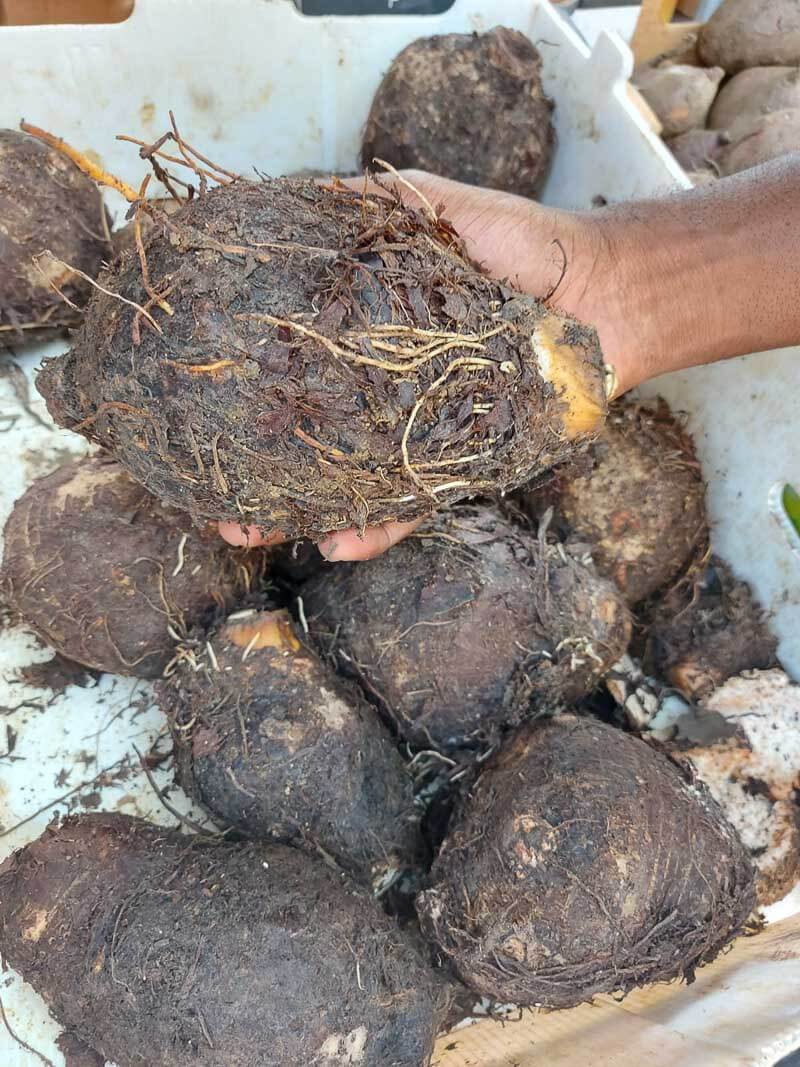
Some ways we use dasheen include:
- Dasheen ice cream.
- Taro smoothie
- Dasheen wine
- Dasheen black cake
- Dasheen chips
The leaves of the dasheen plant are also used to make dishes like callaloo.
In Tobago, dasheen is popularly referred to as “blue food.” It’s such an important part of our food culture that we have an annual Tobago Blue Food Festival, celebrating dasheen with all kinds of creative dishes.
Breadfruit
Breadfruit is a large, round, starchy fruit that grows on tropical trees and is commonly treated like a vegetable in Caribbean cooking. Although it doesn’t grow underground, it’s often grouped with ground provisions because it’s prepared and served in many of the same ways.
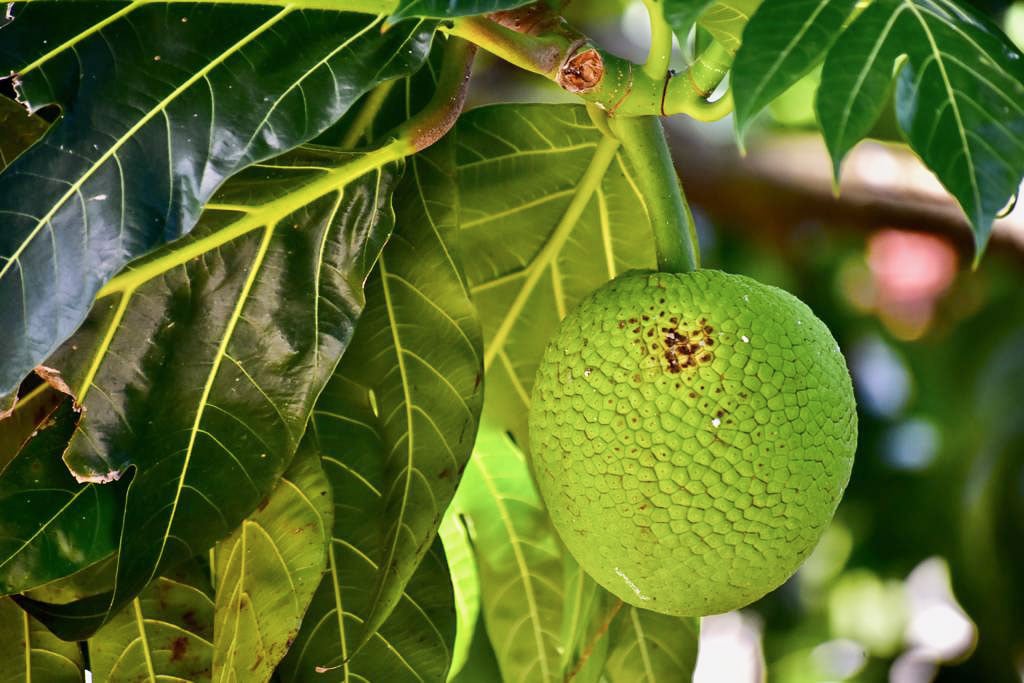
Breadfruit can be cooked at different stages of maturity, and its flavor and texture change as it ripens. Mature, unripe breadfruit is firm and starchy with a mild flavor, while ripe breadfruit becomes softer and sweeter.
It can be boiled, roasted, fried, or baked and is also processed into breadfruit flour.
Popular ways to prepare breadfruit include:
- Fried breadfruit
- Breadfruit salad
- Roasted breadfruit
- Breadfruit fries
Cassava
One of my favorites, cassava, is probably one of the most versatile ground provisions. Also known as yuca, cassava is a starchy root vegetable that can be boiled, baked, fried, grated, or processed into flour and used in both savory and sweet dishes.
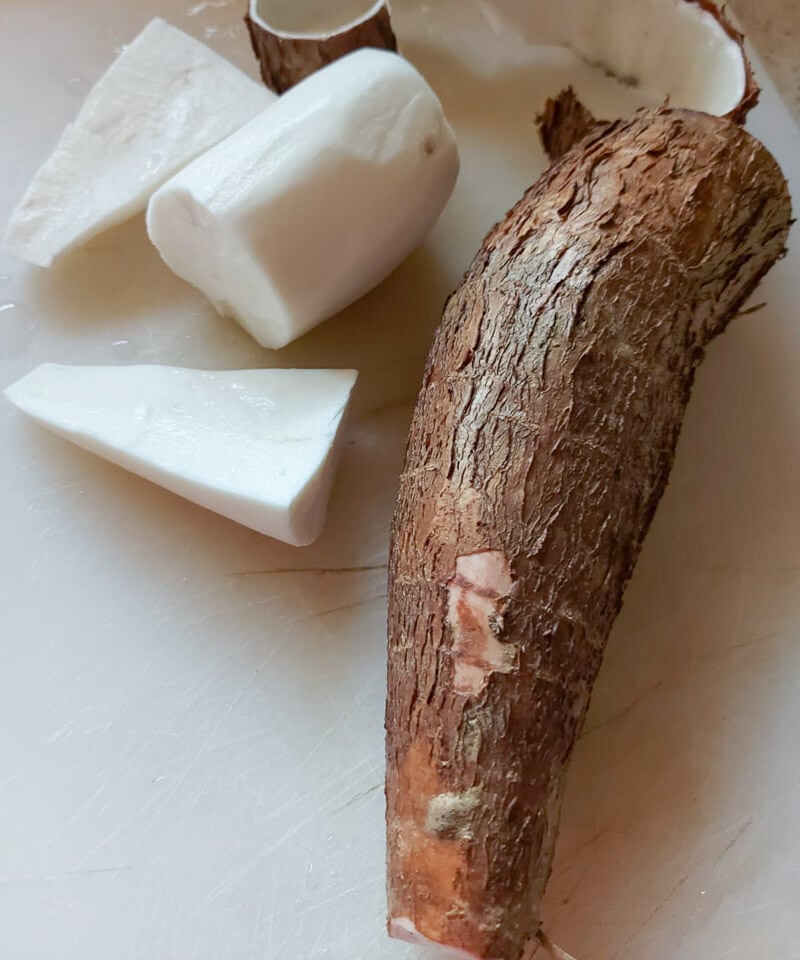
There are two main types of cassava: sweet and bitter. Cassava should never be eaten raw because it contains naturally occurring compounds that can release cyanide. It needs to be properly prepared and thoroughly cooked before eating.
You can find cassava fresh or frozen. Although I usually encourage using fresh ingredients, finding consistently good-quality fresh cassava can be difficult. I often have better luck with frozen cassava, although I find the flavor isn’t quite as intense as fresh.
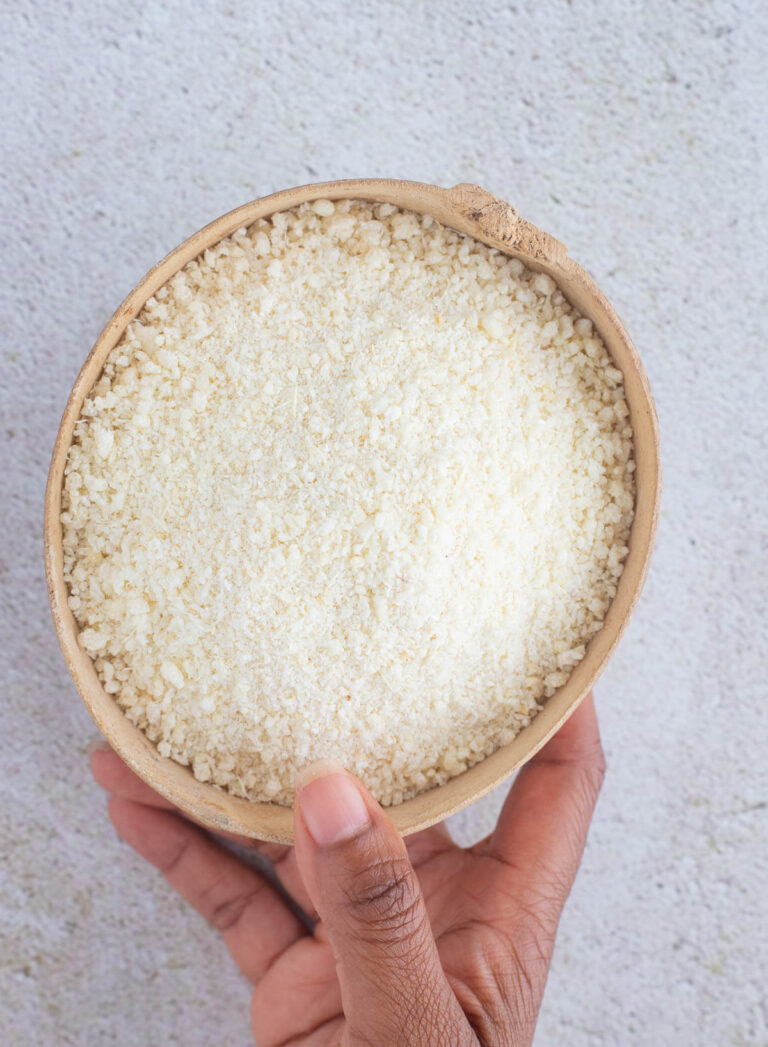
One of the simplest ways to prepare cassava is to boil it until tender, and it’s especially good served with saltfish. Cassava is also processed into products like flour and farine, and can show up in everything from dumplings and pancakes to cakes and other desserts. If farine is new to you, I have a full guide explaining what cassava farine is and how it’s used in Caribbean cooking.
Other recipes you can make with cassava:
- Cassava pone
- Butter cassava
- Cassava flour cookies
- Cassava dumplings
- Cassava pancakes
- Cassava black cake
Ground provisions are such a regular part of Caribbean cooking that there are plenty of ways to enjoy them beyond simply boiling them for a side dish. Whether it’s cassava, yam, dasheen, green fig, or breadfruit, these staples show up across our meals in everything from soups and sides to drinks and desserts.
If you’re learning more about Caribbean ingredients and cooking, check out some of these other guides:
More Caribbean cooking guides
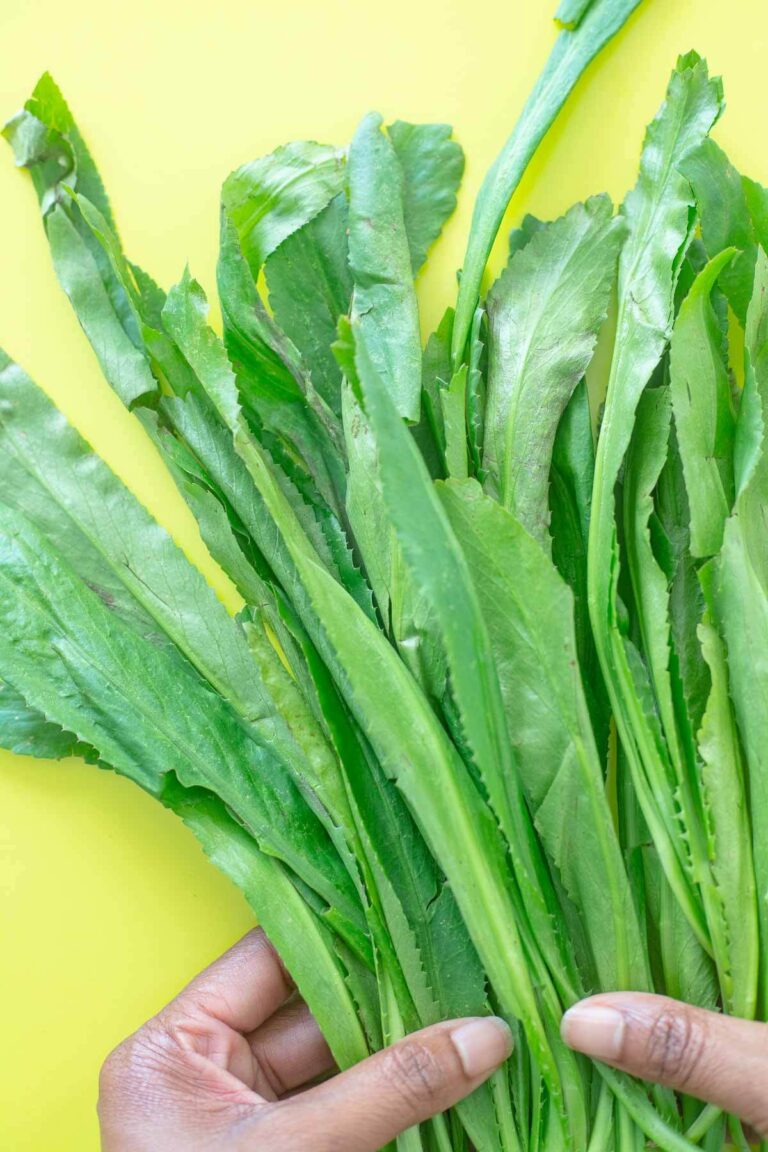
- What is chadon beni?
- What is saltfish?
- What is conch?
- What is pimento pepper?
- Caribbean pantry staples?