
Trinidad Pepper Sauce Recipe
Trinidad pepper sauce is a fiery homemade hot sauce made with fresh hot peppers, vinegar, garlic, herbs, and spices. Every Trini family seems to have their own version, and this is my dad’s recipe. It’s packed with heat, balanced with bold flavor, and perfect for pelau, doubles, soups, and just about anything that needs a spicy kick.
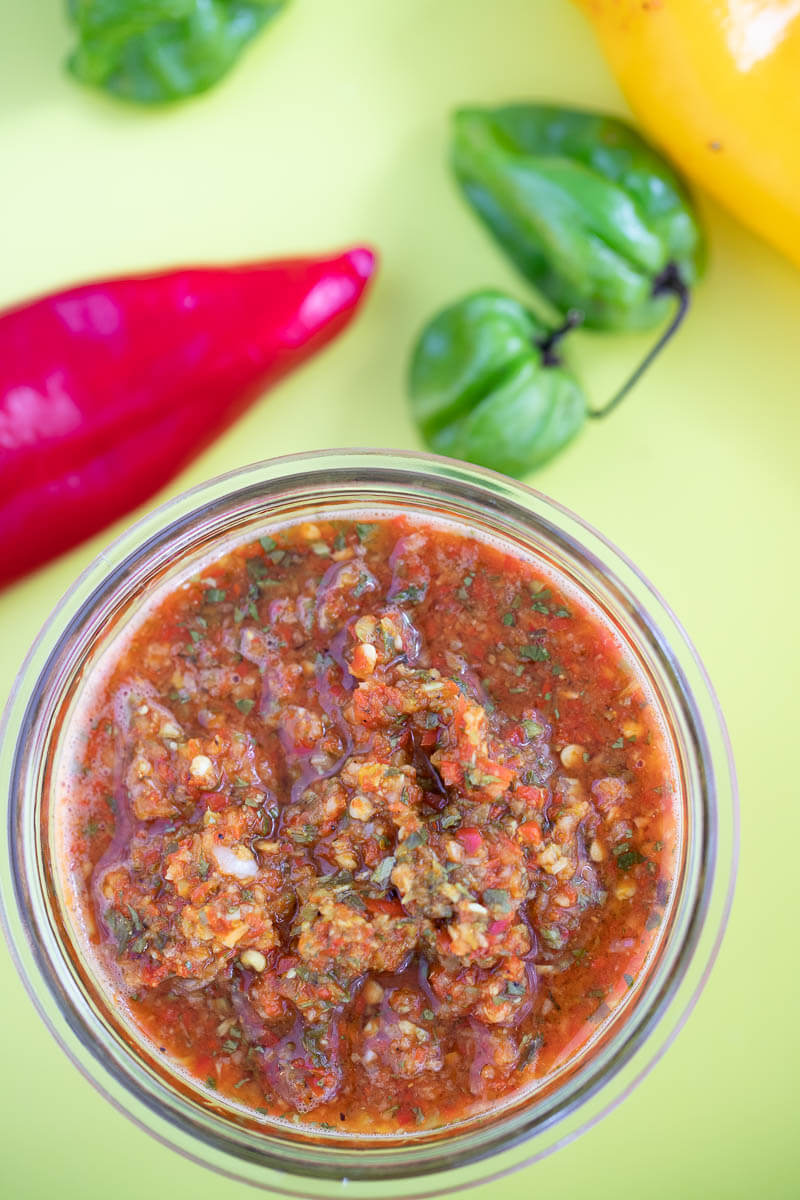
I come from a country that LOVES spicy food. We use pepper in some form in just about everything. If you don’t have some kind of pepper sauce in your kitchen… are you even cooking?
Homemade pepper sauce, or peppa sauce as we’d call it, isn’t for the light-hearted. My dad puts it on everything, whether the food is already spicy or not. Me? I prefer a little heat rather than mouth-on-fire heat, so I use this one a little more sparingly.
This is his homemade Trinidad pepper sauce recipe. It’s definitely hot, but the peppers, herbs, spices, and vinegar give it plenty of flavor too.
And if you love homemade Caribbean condiments, try his homemade green seasoning recipe too.
What is Trinidad Pepper Sauce?
Trinidad pepper sauce is a homemade Caribbean hot sauce made with fresh hot peppers, vinegar, garlic, herbs, and spices. Unlike many bottled hot sauces, homemade Trini pepper sauce is often thicker and made to add plenty of flavor along with the heat.
Every Trini family seems to have their own version. Recipes can vary depending on the peppers, herbs, spices, and even fruits used, so you’ll rarely find two homemade pepper sauces that taste exactly alike.
We use pepper sauce on everything from pelau and soups to doubles, fried foods, and grilled meats. A good Trinidad pepper sauce isn’t just about making your mouth burn. The vinegar, aromatics, herbs, and spices balance the peppers to make a flavorful sauce you’ll want to add to just about everything.
How to make Trinidad pepper sauce
Ingredients
A good Trinidad pepper sauce gets its flavor from more than just hot peppers. Herbs, aromatics, vinegar, and spices round out the heat and give the sauce its distinctive flavor.
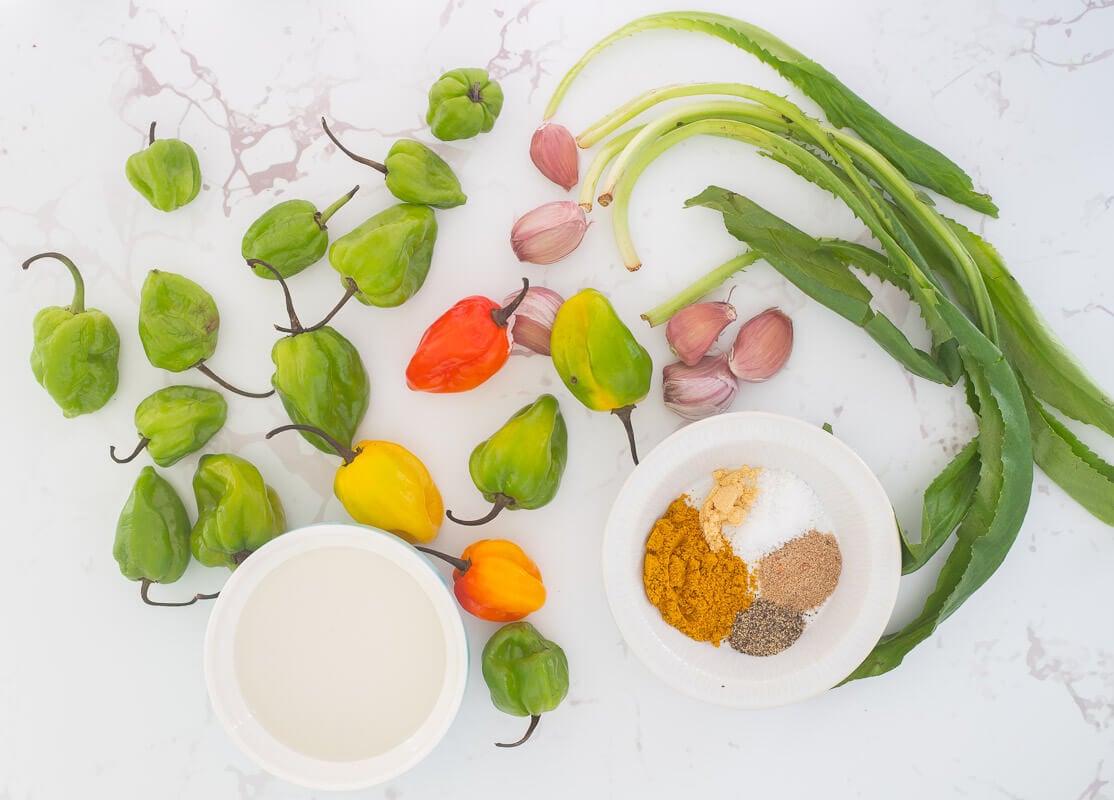
- Scotch bonnet peppers – These bring plenty of heat along with a fruity pepper flavor. I use a mix of red, green, and yellow peppers when possible.
- Chadon beni (culantro) – Adds that familiar herby flavor we use in so many Trini dishes.
- Garlic – Adds savory flavor to balance the peppers.
- White vinegar – Adds acidity and provides the liquid needed to blend the sauce.
- Curry powder – Adds another layer of seasoning and flavor.
- Mustard powder – Gives the pepper sauce a subtle mustard undertone.
- Cloves – Just a little adds a warm, earthy flavor.
- Seasonings – Black pepper, onion powder, and salt round everything out.
See the full list of ingredients and quantities in the recipe card below.
Best peppers for Trinidad pepper sauce
This recipe uses Scotch bonnet peppers, which have a fruity flavor along with plenty of heat. I like using a mix of red, green, and yellow Scotch bonnets when I can find them.
You can also make Trinidad pepper sauce with other hot peppers or a combination of varieties, depending on what’s available and how much heat you want. Some options include Congo peppers, habaneros, and Trinidad Moruga Scorpion peppers.
For a milder pepper sauce, replace some of the Scotch bonnets with pimento peppers. You’ll still get plenty of pepper flavor without quite as much heat.
Instructions
Wear disposable gloves when handling the Scotch bonnet peppers. The oils can linger on your skin, and touching your eyes or face afterward can be extremely painful.
- Wash the peppers well and discard any that are damaged. Roughly chop the peppers, garlic, and chadon beni, so they’re easier to blend.
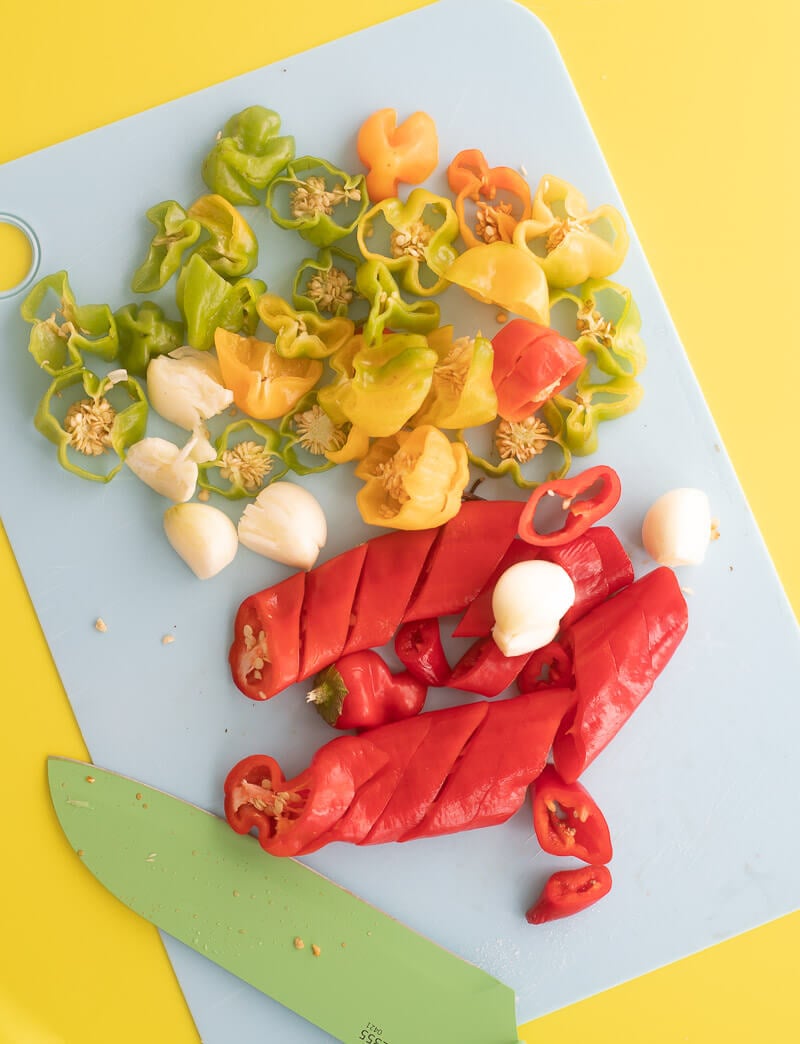
- Add the peppers, garlic, and chadon beni to a blender and blend until broken down.
- Pour in 4 ounces of the white vinegar.
- Add the curry powder, black pepper, salt, onion powder, cloves, and mustard powder.
- Blend until the pepper sauce reaches your preferred consistency. Add more of the remaining vinegar as needed to help it blend.
- Pour the pepper sauce into a saucepan and bring it just to a boil.
- Immediately remove it from the heat and allow it to cool completely.
- Transfer the cooled pepper sauce to a clean, airtight bottle or jar and refrigerate.
This pepper sauce needs to be brought to a boil because the recipe uses curry powder, which needs to be cooked. Once the sauce comes to a boil, immediately remove it from the heat and allow it to cool before bottling.
Tips for Making Trinidad Pepper Sauce
- Use fresh peppers. Fresh Scotch bonnets give the sauce the best flavor and color. Avoid peppers that are wrinkled, damaged, or starting to spoil.
- Adjust the heat. For a milder pepper sauce, replace some of the Scotch bonnets with pimento peppers. Remember, you’re starting with 12 Scotch bonnets, so even a little adjustment can make a difference.
- Wear gloves. Hot pepper oils can linger on your skin, so avoid touching your eyes or face while working with them.
- Open the blender carefully. Give the pepper fumes a moment to settle before removing the lid completely. Your nose and eyes will thank you.
- Adjust the consistency gradually. Start with the 4 ounces of vinegar, then add more as needed while blending. This helps prevent the pepper sauce from becoming too thin.
- Expect the color to vary. Red, yellow, and green peppers will change the color of your finished sauce. I prefer letting the peppers create the natural color, although some people add a little food coloring for a brighter sauce.
Ways to Customize Your Trinidad Pepper Sauce
Every family makes pepper sauce a little differently, so you can easily adjust this basic recipe to suit your taste.
- Add fresh ginger. Blend in a small piece for another layer of flavor.
- Add a little sweetness. A small amount of sugar can help balance the vinegar and heat.
- Add fresh fruits. Mango or pineapple can add sweetness and fruity flavor while complementing the hot peppers.
- Mix your peppers. Try combining Scotch bonnets with other hot peppers, such as Congo peppers or Trinidad Moruga Scorpion peppers, to change the flavor and heat level.
What to Serve with Trinidad Pepper Sauce
Homemade pepper sauce goes with just about any savory Trini meal. Start with a little and add more depending on how much heat you can handle.
Some of my favorite ways to use it include:
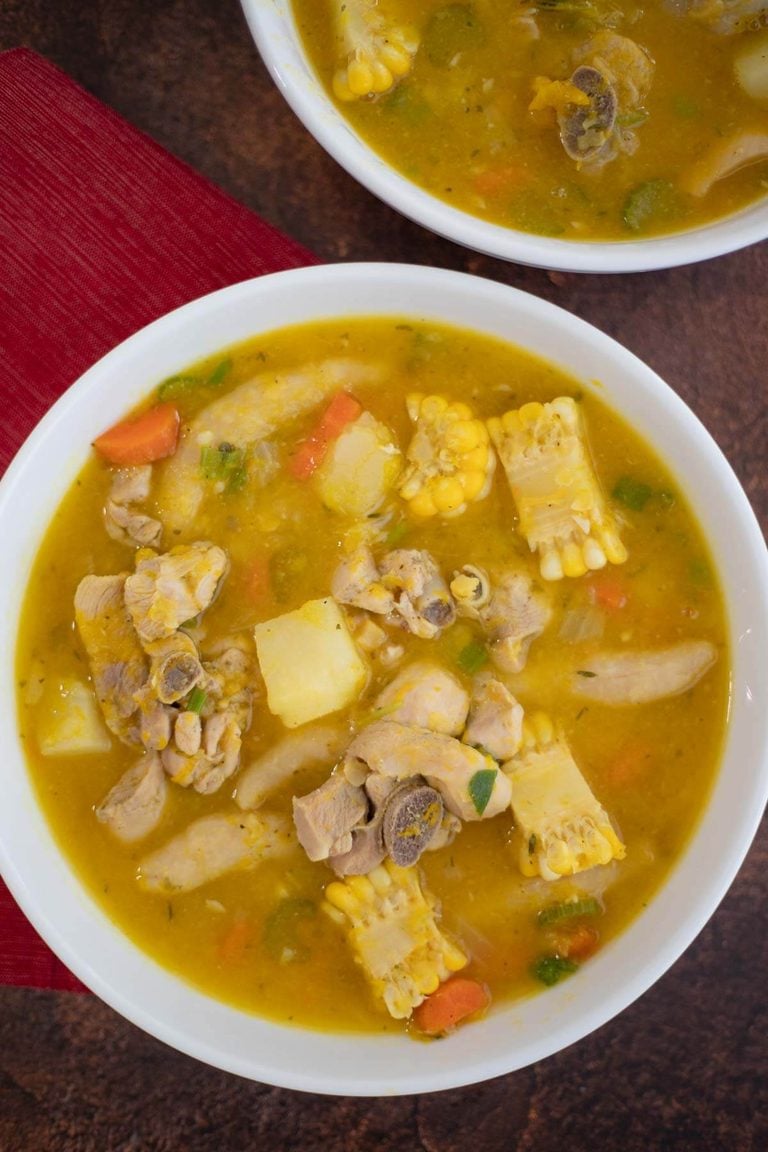
- Stir a little into corn soup for extra heat.
- Drizzle it over pelau.
- Add it to doubles along with cucumber chutney.
- Serve it alongside fried or grilled fish.
- Spoon it over bake and shark.
- Add a little to callaloo, soups, and stews.
- Serve it with grilled chicken or seafood.
- Mix a little into marinades and stews for an extra kick.
My dad kept a bottle of this pepper sauce on the table almost every day, so there was a good chance it ended up on whatever he was eating.
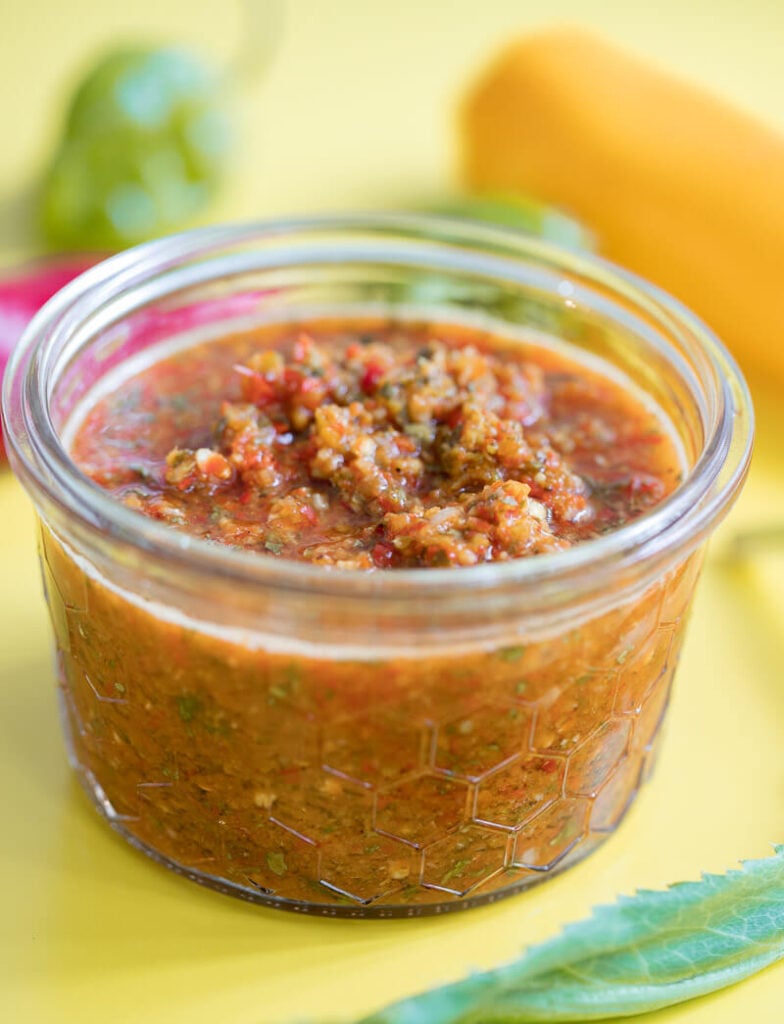
How to Store Homemade Pepper Sauce
Allow the pepper sauce to cool completely, then transfer it to a clean, airtight glass bottle or jar and store it in the refrigerator.
To help keep your pepper sauce fresh:
- Always use clean utensils when scooping sauce from the bottle or jar.
- Avoid introducing food or moisture into the container.
- Keep the pepper sauce refrigerated when you’re not using it.
- Discard it if you notice mold, an unusual smell, unexpected bubbling, or other signs of spoilage.
Many Trinis simply shake the bottle directly over their food or into the pot. Just be careful. Sometimes one shake turns into half the bottle!
How to Get the Pepper Smell Out of Your Blender
Hot pepper oils and smells can linger in your blender even after a regular wash. Clean it as soon as possible after making the pepper sauce rather than letting the mixture dry inside.
Fill the blender with warm water and a little dish soap, then run it briefly before rinsing well. If the pepper smell is still hanging around, add some vinegar and warm water, let it sit for a few minutes, then wash and rinse the blender again.
Let the blender air dry completely before storing it.
Frequently Asked Questions
Yes. This recipe uses curry powder, so the pepper sauce needs to be cooked. Bring it just to a boil, then immediately remove it from the heat and allow it to cool completely before bottling.
Keep homemade pepper sauce refrigerated in a clean, airtight bottle or jar. Because this is a homemade recipe rather than a tested canning recipe, I don’t recommend storing it at room temperature. Discard the sauce if you notice mold, an unusual smell, unexpected bubbling, or other signs of spoilage.
Yes. Congo peppers, habaneros, and other hot peppers can be used depending on what’s available to you. You can also combine different peppers to adjust the flavor and heat.
Replace some of the Scotch bonnet peppers with pimento peppers. This reduces the heat while keeping plenty of pepper flavor.
Too much vinegar added at once can make the sauce thin. Start with the 4 ounces called for in the method, then add more of the remaining vinegar gradually while blending until you reach the consistency you want.
Yes. Freeze the pepper sauce in small freezer-safe containers, leaving a little room for expansion. Thaw it in the refrigerator before using.
More Caribbean Condiments to Try
Once you start making your own condiments, it’s hard to go back to store-bought. Here are a few more Caribbean favorites from my kitchen.
Recipe
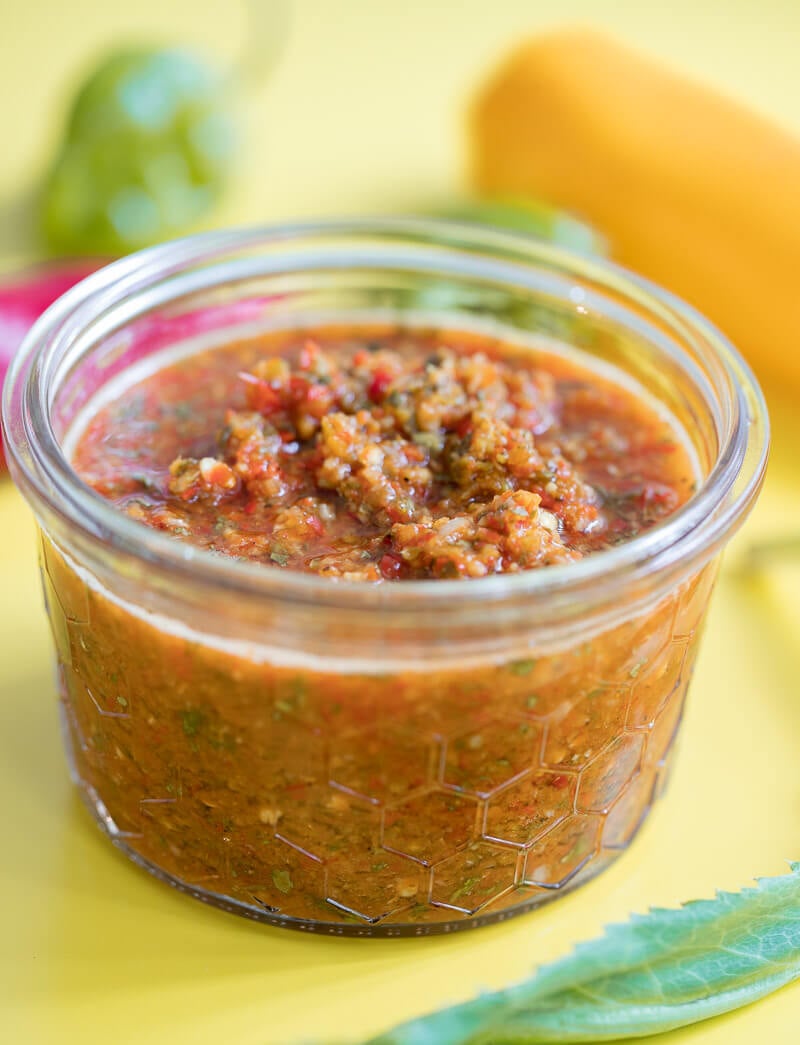
Trinidad Pepper Sauce
Ingredients
Method
- Add the Scotch bonnet peppers, garlic, and culantro to a blender and blend until broken down.
- Add 4 ounces of the white vinegar.
- Add the curry powder, black pepper, salt, onion powder, cloves, and mustard powder.
- Blend until the pepper sauce reaches your preferred consistency, adding more of the remaining vinegar as needed.
- Pour the pepper sauce into a saucepan and bring it just to a boil.
- Immediately remove from the heat.
- Allow the pepper sauce to cool completely.
- Transfer to a clean, airtight bottle or jar and refrigerate.
Nutrition
Notes
- Wear disposable gloves when handling the Scotch bonnet peppers and avoid touching your face or eyes.
- This recipe uses curry powder, so the pepper sauce needs to be cooked. Bring it just to a boil, then immediately remove it from the heat.
- For a milder pepper sauce, replace some of the Scotch bonnet peppers with pimento peppers.
- Start with 4 ounces of vinegar and add more only as needed to reach your preferred consistency.
- This recipe makes approximately 12 ounces of pepper sauce. The exact yield may vary slightly depending on the peppers used and how much vinegar you add while blending.
Recipe Printed From ThisBagoGirl.com

Where are the cloves??
How long will this last in fridge?
I get up to 3 months with it in the fridge Peter.
Turned out delicious! Thank you 🙂
Thank you!!
This my go to recipe. I just mad a batch with a kilo of peppers. I added some fresh pineapple as well. Delicious!
Tim oye!! Thanks for letting me know. I love the idea of the pineapple. I’ll be trying that with my next batch for sure.